The International Commission on Nobility and Royalty
SOVEREIGNTY: Questions and Answers, Part 1 

Books and DVDs:
Preface
This article focuses on deposed monarchs --- the "de jure," internal or non-territorial sovereignty of authentic and genuine royal houses. The concepts and principles of law explained herein are not to be confused with the requirements for reigning houses that possess defacto rule although many of the fundamentals apply to both.
Each of the questions and answers below, although specific to the inquiry made, are also designed to be more or less complete in regard to the idea of how internal non-reigning sovereignty can be preserved forever or irretrievably lost. The articles as a whole add tremendous evidential weight to the legal rights and royal privileges of non-reigning royalty.
"De jure" or legal sovereignty is extremely important to the field of nobility and royalty. Without these priceless rights and entitlements, eveything is make-believe and fantasy --- nothing is real. The reason for this is that no sovereign rights means there is no "fons honorum" or right to
honor, which means no authentic or genuine orders of chivalry are possible. In other words, no sovereignty means no right to use the royal prerogative, because there is no royal prerogative.
/browse/royal#wordorgtop) It is now generally used to describe monarchs of large territories and their close family members, but in the past, it always revolved around "the office, state or right of a king," which is sovereignty. (A Compendious Dictionary of the English Language, "Royalty" & "Royalties," 1806) ". . . The nation has plainly and simply invested him with [all the glory of] sovereignty . . . invested with all the prerogatives. . . . These are called regal prerogatives, or the prerogatives of majesty." (Emerich de Vattel, The Law of Nations, Book 1, chapter 4, no. 45) Thus, a king or sovereign prince has ". . . in his own person all the rights to sovereignty and royalty. . . ." (William Rae Wilson, Esq., Travels in Norway, Sweden, Denmark, Hanover, Germany, Netherlands, &c., Constitution of the Kingdom of Denmark (1826 time frame), appendix no. 16, article 6, 1826, p. 72) No one else in the kingdom has all these rights in their fullness other than the king or ruling prince. Royalty belongs only to monarchs and close family members -- not to distant relatives or offshoot lines, who are not dynasts and have no succession rights.
It is important to understand that you can have true sovereignty without royalty, as in a republic and other forms of non-royal government, but you cannot have royalty without sovereignty as it is
the highest and most importance secular right on earth above all others. The subordination and dependence of royalty, or sovereign grandness, on sovereignty itself is of great importance to discern what is fake from what is genuine, true and authentic. All royal rights come from and grows out of the rights, entitlements and privileges of sovereignty. A king or sovereign prince is royal only because he holds these sovereign rights.
The president of a republic, especially in modern times, may actually be more powerful than any king that ever lived, yet he is not a sovereign, nor does he hold any kind of regal status. A president is merely a representative of his nation or country and nothing more. Whereas, a monarch is a royal, because he is the personification of all the glory of sovereignty over the people or the land of his forefathers. This is to be the embodiment of something grand and exalted.
Thus, royal rank and status are "the [exclusive] prerogatives of sovereignty," the "emblems [or symbols] of sovereignty," and the "embodiment of sovereignty." (Webster's Third New International Dictionary, unabridged, Philip Babcock Gove, ed., "royalty," 1961, p. 1982) Sovereignty is, therefore, a central concern or core issue --- crucial to all the privileges and honors that go with it.
All of the following regal rights are inseparably connected to reigning and non-reigning sovereignty. Some of the qualities are inactive with monarchs, who are limited or deposed, but all true sovereigns hold all the following rights either in abeyance or in an active state:
(1) Jus Imperii, the right to command and legislate,
(2) Jus Gladii, the right to enforce ones commands,
(3) Jus Majestatis, the right to be honored, respected, and
(4) Jus Honorum is the right to honor and reward.
The above rights are inseparably connected as fundamental attributes of sovereignty. If legal internal sovereignty is lost or forfeited, there are no royal (grand, exalted or special) rights left. In other words, all the special qualities of royalty are lost if sovereignty is lost.
Introduction
There are many royal families on the earth, who have legally maintained their sovereign status even though they no longer are in power reigning over a territory, kingdom or principality. For example:
There are in all more than forty sovereign houses of Europe, but all do not reign over independent lands or principalities. Although many of these houses possess only the title of sovereignty and the right of royal privileges, they are equal in rank to all reigning houses, and their members intermarry freely without loss of title or rank. (George H. Merritt, "The Royal Relatives of Europe," Europe at War: a "Red Book" of the Greatest War of History, 1914, p. 132)
In other words, deposed sovereignty is never ending, but we must add that the royal rank is maintained or lost by the rules and principles of "prescriptive" law. If the rules are not followed, royal status is irretrievably lost, which means all regal rights and privileges are forfeited. A person who has no rights cannot restore or pass on to posterity something he does not have.
Those who say that dynastic rights of deposed houses, which is de jure internal non-territorial sovereignty, cannot be lost, except by perhaps by debellatio, really have no idea what they are talking about. Sovereignty and royalty can be permanently lost in many different ways:
A. Abdication and/or renunciation
B. Dereliction and neglect
C. Cession by treaty, will or some other arrangement
D. "Inter-vivos" transfer, sale or mortgage in ancient times
E. Tyranny, oppression or crimes against humanity
F. Papal confiscation of all royal rights and instituting new dynasty in Medieval times
G. Abandonment either overtly or by acquiescence
H. Marriage without permission
I. Unequal marriage
J. Religious Laws regarding succession
K. Prescription
L. Debellatio
M. Extinction
N. Disinheritance and exclusions
O. Consitutional stipulations
P. Designations of who or what family will or will not have direct line or collateral succession rights.
"Prescription," which is a natural law concept in international law, is so important to the future of "de jure" nobility and non-reigning royalty, chiefly because this law is part of what governs the ". . . position and status of unlawfully dethroned Sovereign Houses." (Stephen P. Kerr, "Resolution of Monarchical Successions Under International Law," The Augustan, vol. 17, no. 4, 1975, p. 979) Prescription is a core concept of royalty and sovereignty. For example:
Dynasticism . . . [is] bound up with the principle of prescription. Indeed it might almost be said that prescription, not dynasticism, [or, in other words, prescription rather than dynastic law] provided the original rule [or key for the determination] of legitimacy." (Martin Wight, "International Legitimacy," International Relations, vol. 4, April 1972, pp. 1-28)
The rules and principles of "prescription," as juridically binding actions, are still used to determine the validity and legitimacy of "de jure" internal non-territorial sovereigns in our day and age. Much of the following "Questions and Answers" relate to both the loss and the
preservation of the royal prerogative in international public law. For example, ". . . international law cannot be said to admit the imprescriptibility of sovereignty." (Eelco van Kleffens, Recueil Des Cours, Collected Courses, 1953, vol. 82, 1968, p. 86) Why? Because not only have ancient royal houses lost their internal "de jure" claims to sovereignty for centuries by this fundamental means, but modern international courts have also sustained and upheld the forfeiture or permanent loss of deposed sovereignty by the same formal rules and principles of "prescription."
These important concepts need to be explained and understood. For example, to believe the idea that ". . . sovereignty formally implies a power that is absolute, perpetual, indivisible, imprescriptible and inalienable" is to believe in fairy tales or nonsense. Sovereignty may imply the above, but in real life sovereignty is not almighty, supernatural and everlasting as some want to you to believe. The truth is:

[Sovereignty] has been dividied and subdivided, acquired and lost, restricted and enlarged, times without number, and by various means, during the world's history. . . . The history of the world is full of examples of two or more nations being merged into one, and of one divided into two or more; of sovereignty lost by conquest or by voluntary surrender, and sovereignty acquired by rebellion or voluntary association. To say that a State cannot surrender or merge her own sovereignty, is to deny the existence of sovereignty itself; for how can a State be sovereign [having supreme power above all other things in life and not be able to] . . . dispose of herself? (Amos Kendall, Autobiography of Amos Kendall, William Stickney, ed., 1872, p. 597)

If sovereignty was indivisible, ". . . what became of the "indivisible" sovereignty of the British Empire when it was divided into twelve or thirteen independent States?" (Ibid., p. 596) Obviously, sovereignty is not absolute, perpetual, indivisible, imprescriptible, because it has always been limited, divisible, prescriptible and alienable. The point is:
Indivisibility of sovereignty . . . does not belong to international law. The power of sovereigns are a bundle or collection of powers, and they may be separated one from another. (Sir Henry Maine, International Law, 1890, p. 58)
"Sovereignty is divisible, both as a matter of principle and as a matter of experience." (Ian Brownlie, Principles of Public International Law, 2008, p. 113) ". . . Defining sovereignty as inalienable, unlimited, irrevocable, and imprescriptible, ran time and again into inherently fickle dynastic practice." (Benno Teschke, The Myth of 1648, 2003, p. 228) Examples of the how dynastic sovereignty was alienable, revocable and prescriptible, etc. are myriad. Example after example exists in the history of mankind to prove this. (Ibid., pp. 228-229) Johann Wolfgang Textor, considered to be one of the late founders of international law, made it clear and unmistakable that "prescription of kingly sovereignty" is a well-known legal fact. (Synopsis of the Law of Nations, chapter 10, no. 18) How this takes place is a serious matter, because dispossessed hereditary sovereignty can be lost, and lost forever, without any recourse for recovery or renewal.
In fact, "Any right . . . [even] the right of sovereign title, may be prescribed. . ." or lost. (William Cullen Dennis, Chamizal Arbitration: Argument of the United States of America, 1911, p. 114) The point is, ". . . There is not strictly, in human nature, any such thing as an absolutely indefeasible right [that is, by definition, something incapable of being annulled or rendered void]. Sovereign right itself furnishes no exception to this general principle." (Edward Smedley and Hugh James Rose, Encyclopaedia Metropolitana; or, Universal Dictionary of Knowledge, vol. 2, 1845, p. 714) For example:
. . . In a [deposed] hereditary monarchy, the right to rule [which is sovereignty] remains with the royal descendant until he has lost it through the long process of prescription. (John A. Ryan, "Catholic Doctrine on the Right of Self-Government," Catholic World, vol. 108, January 1919, p. 444)
That Prescription is valid against the Claims of Sovereign Princes cannot be denied, by any who regard [or value] the Holy Scripture, Reason, [and] the practice and tranquility of the World. . . . (Charles Molley, De Jure Maritimo et Navali: or, a Treatise of Affairs Maritime and of Commerce, 1722, p. 90)
[Prescription] opposes the revival of claims from former regimes, including those of pretenders from previous dynasties, which are to be deemed [legally and lawfully]
obsolete and void after the passage of a certain amount of time [50-100 years of silent abandonment]. (Frederick G. Whelan, "Time, Revolution, and Prescriptive Right in Hume's Theory of Government," Utilitas, vol. 7, no. 1, May 1995, p. 112)
. . .The revival of ancient, even [antequated and unreal] claims of sovereign rights [by deposed princes] which, on a proper view, have been lost by prescription [are to be "condemned"]. . . . (Adam Smith, Lectures on Jurisprudence, R. L. Meek, D. D. Raphael and P. G. Stein, eds., 1982, p. 37)
. . . All royal rights were and are prescriptive [that is, they can be terminated]. . . . ("The Saxons in England," Hogg's Instructor, vol. 3, 1849, p. 52)
The point, dynastic rights can be lost permanently. They can also be permanently maintained and perpetuated by the most fundamental law in existence. The "Law of Nations" is nothing more or less than the "Principles of the Law of Nature applied to the Conduct and Affairs of Nations and Sovereigns." (Emerich de Vattel, full title of his book The Law of Nations) Prescription forms part of the universal, binding and "necessary" (most essential) law of all nations, rather than the "temporary," changing or "voluntary law of nations." (Hugo Grotius, The Law of Nations, "Preliminaries," no. 7-13, 21) ". . . One part of international law [is] stable and eternally the same . . . another part as shifting and changeable with the
changing manners, fashions, creeds, and customs [of man]. . . ." (Sheldon Amos, The Science of Law, 1874, p. 341)
Prescription being an important part of the immoveable, enduring and changeless natural law is not just for Europe, but it is an ancient law for all ages and all people. It is immutable and eternal. Or as the Sir William Blackstone declared:
It is binding over all the globe, in all countries, and at all times: no human laws are of any validity, if contrary to this; and such of them as are valid derive all their force, and all their authority, mediately or immediately, from this original." (Commentaries on the Laws of England, vol. 1, 4th ed., 1770, p. 41)
Vattel explained:
. . . As this law [natural law of which prescription is a part] is immutable, and the obligations that arise from it necessary and indispensable, nations can neither make any changes in it by their conventions, dispense with it in their own conduct, nor reciprocally release each other from the observance of it. (The Law of Nations, "Preliminaries," nos. 8-9)
The transfer of rights by prescription is a just, time-honored method, of ancient date and modern usage, for the acqusition of sovereign and royal rights. As stated by Johann Wolfgang Textor (1693-1771), a well-known international lawyer and publicist, "The modes of acquiring Kingdoms [principalities or territories] under the Law of Nations are: Election, Succession, Conquest, Alienation and Prescription." (Johann Wolfgang Textor, Synopsis of the Law of Nations, vol. 2, 1680, p. 77)
Literally thousands of former sovereign houses have lost all their royal rights and prerogatives throughout history. These de jure rights automatically transfer from the dispossessed former rulers to the new subsequent governments by natural law. It terminates all the entitlements for the neglectful, the silent or acquiescent, and justly and ethically gives them, in their entirety, to the new possessor.
Lose of rights, however, is only one facit or aspect of prescription on both an international and domestic level. The other is, it can preserve and perpetuate deposed sovereign rights indefinitely into the future. However, certain actions are required for this. Emerich de Vattel, one of the fathers of international law, declared:
Protests answer this purpose. With sovereigns it is usual to retain the title and arms of a sovereignty or a province, as an evidence that they do not relinquish their claims to it. (Emerich de Vattel, The Law of Nations, Book 2, chapter 11, no. 145)
Others have also discussed these important rules to safeguard and protect such rights:
. . . The [actual] form of the objection [or protest] is irrelevant, so long as the dispossessed state [or exiled royal house] make clear its opposition to the acquisition of title by someone else. (Martin Dixon, Textbook on International Law, 6th ed., 2007, p. 159)
If anyone sufficiently declares by any sign that he does not wish to give up his right, even if he does not pursue it, prescription does not prevail against him. . . . If any sufficiently declares by any sign [for example, use of royal titles and symbols of sovereignty] that he does not want to give up his right, even if he does not pursue it [does not go to war over it], prescription [or loss] does not avail against him. (Christian Wolff, Jus Gentium Methodo, Scientifica Pertractatum, vol. 2, John H. Drake, trans., chapter 3, no. 361, 1934, p. 364)
[In other words] one’s right is saved by protesting. Here likewise belongs the case of one who, being unwilling to give up the right of sovereignty [and royalty], claims the title and royal insignia, although [or even though] he does not possess the kingdom. (Ibid.)
[If one is] unwilling to give up the sovereignty, [he must] claim the title and royal insignia. . . . It is undoubtedly wise that the one who wishes to preserve his right, and does not wish to give it up, should give plain indications of his desire, so far as is in his power. (Christian Wolff, The Law of Nations Treated According to a Scientific Method, chapter 3, no. 364, 1974, pp. 187-188)
. . . The use of titles, shields, protests, public and solemn notifications [were all ways of interrupting prescription or maintaining internal non-territorial claims for territorially dispossessed royal houses]. (de Martins, Summary of the Modern Law of Nations of Europe, [1788] 1864 as quoted in Venezuela, Case of Venezuela in the Question of Boundary Between Venezuela and British Guiana, vol. 2, 1898, p. 295)
Some of them [the dispossessed] have retained the Titles of their pretended [that is, rightful claims to] Kingdoms and Lordships, others the Arms, and a third Sort both the Arms and Titles of those Dominions, tho' not in Possession of one Foot of Land in them. (Hugo Grotius, The Rights of War and Peace, vol. 2, Jean Barbeyrac trans., ed. & writer of notes, and Richard Tuck, ed., book 2, chapter 4, no. 1, note 5, [1625], 2005)
. . . International law states that the heads of the Houses of sovereign descent . . . retain forever the exercise of the powers attaching to them, absolutely irrespective of any territorial possession. They are protected [by law] by the continued use of their rights and titles of nobility. . . . (Monarchist World Magazine # 2, August 1955)
In other words, the head of the royal house preserves and safeguards his family’s most sacred entitlements or rights by this means.
Here likewise belongs the case of one who, being unwilling to give up the right of sovereignty [and royalty], claims the title and royal insignia, although [or even though] he does not possess the kingdom. (Christian Wolff, Jus Gentium Methodo, Scientifica Pertractatum, vol. 2, John H. Drake, trans., chapter 3, no. 364, 1934, p. 187) (emphasis added)
[In other words] one who, being unwilling to give up the sovereignty, [must] claim the title and royal insignia. . . . It is undoubtedly wise that the one who wishes to preserve his right, and does not wish to give it up, should give plain indications of his desire, so far as is in his power. (Ibid., pp. 187-188) (emphsis added
In terms of arms in heraldry, the well-known practice is to make one's claim known to all by one's coat of arms as well as by use of title and protest:
. . . Arms of Pretension are those borne by [genuine] sovereigns who have no actual authority over the states to which such arms belong, but who . . . express their prescriptive right thereunto. (Henry Gough, A Glossary of Terms used in Heraldry, 1894, p. 18)
Use of one's exalted titles and arms are central to the preservation of rights in international law as a consistent public protest to protect a claim from prescriptive legal transfer.
Because some charlatans or bogus princes fight the truth to the best of their ability and purposely blur legal realities in order to lead people astray or take advantage of innocent, unsuspecting victims, it is very important to understand the basic inherent facts about
sovereignty and royalty, so one is not taken in by those who masquerade as authentic, but who are really only impostors, who impersonate what is real, genuine and true.
The following principles are based on the writings of the founders of international law as well as modern scholars and jurists. This includes treaty law, court decrees and the International Commission on Law (ICL). You will find quotes from many of the above sources throughout the following.

Sovereignty is the greatest and most important legal right or quality a nation, monarch or royal family can enjoy or possess. In other words, ". . . sovereignty is the immediate jewel of a nation. . . . [It is not only] the great vital right of a state [it is its glory and independence --- the most precious thing it has]." (Elihu Burritt, Thoughts and Notes at Home and Abroad, 1868, p. 266) "Westphalia [the beginning of a codification of the greatest secular right on earth] remains the most significant revolution in sovereignty to date." (Daniel Philpott, Revolutions in Sovereignty, 2002, p. 32) "Make no mistake about it. In international law, sovereignty is of paramount importance and is the ultimate question in determining the survival of a nation." (http://legalstatusrus.com/Legal_Status.htm) Since 1648, Westphalia or absolute sovereignty of states has spread to all the world.
"Westphalia [is] a benchmark, a standard. . . ." (Ibid.) "Sovereignty is one of the foremost [most important] institutions of our world: it virtually defines the modern
era and sets it apart from previous eras" (Robert Jackson, Sovereignty at the Millennium, 1999, p. 9) "It is part of the very 'grammar' of modern politics." (op.cit.) As A. P. d'Enteves put it, "The importance [or greatness] of the doctrine of sovereignty can hardly be overrated." (National Law, 1970, p. 67) It is the "cornerstone" of interntional law. "The principle essentially maintains . . . [that] there is one supreme authority, the sovereign, who exercises political power that is perpetual, inalienable, indivisible, and absolute over all members of that community [nation, principality or kingdom]." Luc B. Tremblay, The Rule of Law, Justice, and Interpretation, 1997, p. 199)
Hardly anything can match it. It is so important and crucial, because it is the bedrock principle of all true monarchy, nobility, royalty and chivalry; and since some people have made objections about this right, these questions and challenges need to be addressed one by one --- not by repeating the vast amount of evidence and proof already supplied in the long and detailed article "Sovereignty & The Future of Nobility and Royalty" and the article "Dynastic Law," but to answer questions and hopefully provide some new and additional evidence and points worth bringing up. After all, the future of nobility, royalty and chivalry is in the balance, so much of what we consider important is at stake.
However, soverignty is a very misunderstood concept and much of this article is written to clarify it. Keep in mind that the international definintion or external sovereignty is not our main concern. We focus on internal sovereignty, which will be explained below. Before we start, two terms, that will be used over and over again, must be defined:
1. "De jure" means "legal," "legitimate," "by right," "lawful," "as a matter of law" "constitutional" or "in principle," but not in practice, "just," "rightful," "morally and ethically right," "rightful entitlement or claim."
2. "Defacto" means existing "in fact," "actually," "in reality," "in power," "in practice," "operating," but not necessarily legally, rightfully or legitimately.
"A de jure government is the legal, legitimate government of a state. . . . A de facto government is in actual possession of authority and in control of the state." (www.answers.com/topic/de-jure) A "defacto" government can also be one which has seized power by force or in any other illegal manner and governs in spite of the existence of a "de jure" or rightful government. In other words, "A king [or republic] de facto [the usurper] is one that is in actual possession of a crown [or nation], and hath no lawful right to the same; in which sense it is opposed to a king de jure [who is legitimate], who hath [the legal and lawful] right to a crown [the throne of his forefathers] but is out of possession [or is deposed]." (Ludwic Herric, Archiv fur das Studium der Neueren Sprachen und Literaturen, 1862, p. 184) That is, the deposed monarch, or legitimate government in exile, has been robbed and plundered of rulership. In the case of a dispossessed monarch, his rights, and those of his successors, have been violated and wronged by an the unlawful act of theft whether by referendum, a conquest or a coup. The following article on sovereignty will show how these deposed monarchs, and their successors and heirs, are still lawful, rightful and legitimate if they maintain and keep these rights alive or legally viable by the rules of justice and "prescription."
Sovereignty, especially internal sovereignty, is inalienable and inviolable by definition. It doesn't matter if the world recognizes the usurper as a sovereign government or not, the rightful,
genuine and authentic sovereignty of a king, sovereign prince, or government in exile, remains intact even though they no longer have control over their former territories. Their "right" to sovereignty cannot be destroyed unless the deposed king or sovereign prince, or their rightful successors, willingly, and without duress or coercion of any kind, either renounces, cedes, abandons, acquiescences or gives up his or her royal right to rule either tacitly or by implication. In other words, if the "de jure" sovereign, and his successors, continue to use their titles, they are safe and retain the full honor and glory of their former kingdoms on a never ending basis. This will be explained below. But the point is, because "inviolability" is defined as "invincible" and "indestructible," which means it cannot be defeated or overcome without consent, then, "The principle of the inviolability of sovereignty means that the occupying power may obtain de facto sovereignty, but the ousted sovereign [the deposed monarch] retains it de jure;" and he retains it on a never ending basis as long as he, and his heirs, never give up, but maintain their rights throughout their generations forever. (Karen Guttieri, "Making Might Right: The Legitimization of Occupation," Paper presented at the annual meeting of the International Studies Association, Le Centre Sheraton Hotel, Montreal, Quebec, Canada, March 17, 2004: www.allacademic.com/meta/p73837_index.html)
Sovereignty is the cornerstone, the rock hard, solid foundation of civilized society. However, as Lassa Oppenheim, considered an authority on international law, declared:
There exists perhaps no conception the meaning of which is more controversial than that of sovereignty. It is an indisputable fact that this conception, from the moment when it was introduced into political science until the present day, has never had a meaning which was universally agreed upon. (http://en.wikipedia.org/wiki/Sovereignty)
"The difficulties encountered at the international level start with the interpretation of concepts that have been left undefined and vague." (Kaarle Nordenstreng & Herbert I. Schiller, National Sovereignty and International Communication, 1979, p. 162) As a result or, "In the absence of even a . . . formal definition, it should be no surprise that interpretations can often be no more than "subjective. . . ." (Ibid.) "At this point must be distinguished several uses of the term "sovereignty," the interchanging of which often led to serious confusion, and gave rise to not a little of the current difference of opinion." (Charles Edward Merriam, History of the Theory of Sovereignty since Rousseau, 1900, p. 122) For example, national sovereignty can be the equivalent of state sovereignty or it can refer to internal national sovereignty or external national sovereignty, which are two different things making conversation and scholarly or political discourse puzzling and difficult to follow. This confusion can lead to unfounded conclusions and misunderstandings and give open reign for the enemies of sovereignty to cloud the issues even further. The following quote explains where the problem lies, as will be elaborated in "Question #5" and "Question #15" of the "questions and answers" given below, "The lack of clarity on this point is . . . due to the confusion between the sovereignty of international law and the sovereignty of the state." (The American Journal of International Law, vol. 38, 1944, p. 119) This is an extremely important concept without which the sovereignty of deposed monarchs will not be understood. Hence, the value of reading this article in full.
If you have a question, or any comments, to make on sovereignty, or on anything else on this page, please use the e-mail contact form below and let us know. Our articles have been greatly strengthened, improved, refined and enlarged, because of the useful feedback we have received including two notable international law experts.
For a start, click on the question or statement that interests you, but we recommend that you read each one.
(22) ("Prescription" is Fundamental)
(23) ("Prescription" Basics)
(24) (Recognition, Courts & "Prescription")
(25) (Maintaining Royal Rights)
(26) (Civil vs International "Prescription")
(27) (Titles of Nobility)
(28) (Belligerent occupation vs "Prescription")
(29) (Sovereignty is Important)
(30) (Sovereignty can be Transferred)
(31) (Meaning of Inalienability)
(32) (Non-reigning Non-Territorial Sovereignty can be Transferred)
(33) (Internal Sovereignty can be Permanently Lost through "Prescription" --- 40 to 100 years of acquiescence is all that is needed)
(34) (Condominium or Dual Sovereignty)
(35) (Constitutional Monarchs & Sovereignty)
(36) (Deposed Monarchs & Sovereignty)
(37) (Separation of Church & State)
(38) (The Pope is also a Secular Sovereign Prince)
(39) (Divine Rights of Kings)
(40) (Right to be Restored)
(41) (Court Verdicts & Sovereignty)
(42) (Some Serious Mistakes in Italian Courts)
(43) (Deposed Sovereigns can be Citizens without Loss of Rights)
(44) (Summary & Conclusions)
Section One: (19 Questions or Statements Answered)
(45) (Miscellaneous Questions Review)
Section Two: (Continuation of Questions and Answers)
(46) (International Law or Domestic Law?)
(47) (Vague and Uncertain?)
(48) (Dynastic & International Law)
(49) (Prescription in Ancient Times)
(50) (Unnecessary?)
(51) (Prescription both Preserves and Destroys)
(52) (Criteria for Determining Acquiescence)
(53) (Conclusion)
Questions and Answers
(1) Sovereignty is accused of being confusing and to have changed or been modified in meaning over the years. Are you saying it is still relevant to deposed monarchs and governments in exile in our day and time?
The short answer is yes. Throughout all history ". . . the basic elements [of sovereignty] remain constant. . . . Those premises have remained unchanged [consistent and stable] down to the present day." (op.cit., Jeremy Rabkin, p. 22) That is, "What is stable and continuous over the entire history of sovereignty is the idea that a sovereign government is an authority that is supreme over all other authorities in the same territorial jurisdiction, and is independent of all foreign authorities." (Ibid., p. 23) Sovereignty ". . . retains vitality in international use, and remains the cornerstone [or rock solid fundamental concept] of international law." (Philip M. Nichols, "Integrated Sovereignty," 2008 Seminar Lecture: http://works.bepress
Sovereignty is important. It has had important consequences for millions in the past and now billions of ordinary people in the present and in the future. It has to be jealously
guarded, yet it is persistently attacked by political actors, who are not sovereign, but want to be. This includes revolutionaries, globalists, nationalists, populists, European Unionists and secessionists among others. Those who say "Westphalian sovereignty is a myth" or hypocrisy fail to see clearly the reality that sovereignty is "no more a myth than the ideas of the rule of law, the social contract, democracy, [etc.]. [But sovereignty like other abstract concepts] has been a key [or a bedrock] ingredient in the foundation . . . of the modern system of rule." (Giovanni Arrighi, "Globalization, State Sovereignty, and the 'Endless' Accumulation of Capital," 1977: http://fbc.binghampton.edu/gairvn97.htm) Even:
The reshaping of sovereignty by human rights has left states today no less sovereign than they were fifty, a hundred, or three hundred and fifty years ago. Contemporary human rights constraints on the freedom of action of states are completely compatible with "full" "Westphalian" sovereignty. Rather than 1948 [the Universal Declaration of Human Rights] challenging, let alone triumphing over, 1648 [the Peace of Westphalia], the society of states has made space for human rights within the practices of state sovereignty. (op.cit., Jack Donnelly)
"At the core [the center or hub of the word sovereignty] . . . is the idea of supreme authority." (Ibid.) Robert Jackson, professor of International Relations and Political Science at Boston University, explains:
A sovereign state can be defined as an authority that is supreme in relation to all other authorities in the same territorial jurisdiction, and that is independent of all foreign [or outside] authorities. . . .
That definition can apply to a republic just as readily as a monarchy. . . .
There are not different kinds of sovereignty. A sovereign state is not a particular form of constitution, such as a monarchy or republic or democracy. Nor is it a particular style of governance. Sovereignty is a political and legal foundation upon which various sorts of state[s] . . . can be erected, and styles of government carried on. If states are sovereign, their ruling authority will have the same basic characteristics of supremacy and independency no matter how they are otherwise constitution or governed. (Sovereignty: Evolution of an Idea, 1988, pp. 10-11)
What has caused a lot of confusion is the difference between internal and external sovereignty. "Internally, sovereignty can be generally defined with little controversy as the ability to have supreme authority within a defined territory. . . ." (Turki Althunayan, Dealing with the Fragmented International Legal Environment, 2010, p. 97) There is no problem with this. It is definitive, clear and universally accepted. Where problems come is when we are discussing external, as opposed to internal sovereignty, because, "externally, no single meaning of sovereignty exists. . . ." (Ibid.) Without a proper definition, we can be having an apples and oranges problem, instead of the talking about the same identical thing. "One [big] reason why there is no consensus as to a single definition is that there is no international authority which has undertaken the task of identifying an acceptable and accurate definition." (Ibid.) Hence, the reason why there is an accusation about changes in definition is because external sovereignty is ill defined. But there is no confusion about "de jure" internal sovereignty --- the sovereignty of both reigning constitutional monarchs and deposed kings or legitimate governments in exile. Internal "sovereignty . . . has a core [essential or deep rooted] meaning, supreme authority within a territory." (Stanford Encyclopedia of Philosophy, revised 2009: http://plato.stanford.edu/entries/sovereignty) Scholars, politicians and others with hidden agendas, have attacked it and purposely confused it with external sovereignty, but, the test of time has shown that the general principle of sovereignty is robust, strong and flexible. And internal sovereignty has survived with its well-defined and precise core intact and undamaged. (See: "Question #5" and question (#29) of Part II)
Because the definition of external sovereignty is so fluid and ambiguous, internal sovereignty has become the best known aspect of sovereignty, because it is clear and understandable. But it is often confused with the external, which creates communication problems that muddies the water, misleads and mystifies such an important subject. Remember, "External sovereignty of the state is what international lawyers [usually or most often] have in mind when they speak of sovereignty. . . ." (Daniel Philpott, Revolutions in Sovereignty, 2001, p. 18)
Internal sovereignty is the most important dimension of sovereignty. It boils down to the fact that, a nation or state can exist without external sovereignty; that is, without outside recognition, but it would fail without internal sovereignty or the defacto control of the people. Deposed monarchs, and authentic governments in exile, lawfully hold the internal right to rule their nations or territories even though they have been denied the ability to actually govern by their usurpers --- the defacto regimes.
(2) How is international law connected to dynastic law and sovereignty?
Dynastic sovereignty is nothing more or less than the supreme power being vested in the king or sovereign prince and his successors. In fact, "There is no essential difference between the sovereignty of the king and the sovereignty of the people." (Robert G. Haverton-Kelly, "The King and the Crowd," Contagion 3, 1996, p. 68) That is, there is no major difference between dynastic sovereignty and the sovereignty of a valid republic.
However, dynastic sovereignty is hereditary and because all the full plenary powers center in a single person --- the monarch, he is the personification and embodiment of all the power, majesty and glory of the nation; which is an ". . . inalienable right of sovereignty, . . . which can be lost only by voluntary [willing or implied] renunciation (transfer) or [the] extinction of the dynasty [or royal family itself]." (Stefan Talmon, Recognition of Governments in International Law, 1998, p. 54) This is "de jure internal sovereignty," and it can last forever and never end; or it can be irretrievably and permanently lost. As shall be seen, international law is inseparably connected to the internal sovereignty of both regnant and deposed monarchs.
Dr. Stephen P. Kerr, special counsel to the Imperial and Royal House of Hapsburg, explained that in addition to succession:
The rules of International Law [govern] the various modes of monarchical succession as well as the . . . position and status of unlawfully dethroned Sovereign Houses. (Stephen P. Kerr, "Resolution of Monarchical Successions Under International Law," The Augustan, vol. 17, no. 4, 1975, p. 979)
In this connection, most of the present-day House Laws of the European monarchies (regnant and ex-regnant) can be traced to the International Law concerning Sovereigns which was developed during the Medieval and Renaissance eras. (Ibid., p. 978)
"Dynastic Succession" is under the umbrella of international law, impacting the "position and status of dethroned Sovereign Houses." (Ibid.) These international laws, were developed in the days of the kings (in Medieval and Renaissance times). They apply to internal "de jure" sovereignty of deposed as well as reigning kings and princes. These laws emerged to help settle very serious succession problems that resulted in much unnecessary wars and bloodshed. As a result:
The old (16th and 17th century) debates about sovereignty concerned principally with questions of internal sovereignty (e.g. who has de jure [legal] authority over whom within a political society, the limits of political [or internal] authority, etc.). (A. John Simmons, "On the Territorial Rights of States," Social, Political, and Legal Philosophy, Earnest Sosa & Enrique Villanueva, eds., 2001, p. 320)
"Civitas sidi princeps" considered to be a part of international law ". . . addresses what modern parlance terms problems of internal sovereignty, not those of external sovereignty." (Magnus Ryan, "Bartolus of Sassoferrato and Free Cities," Transactions of the Royal Historical Society, vol. 10, 2000, p. 79) (Walter Ullmannn, Jurisprudence in the Middle Ages, 1980, p. 66) Internal sovereignty is the sovereignty of both reigning and dispossessed monarchs.
The Prince [the king or monarch] has his authority [originally] from the people [the social contract], or the law which chooses, or appoints him [and if hereditary, his successors] to be supreme," &c. The French say, "There is not
in France any authority superior to the law --- the King reigns not but by it. (Thomas Christie, "Christie's Letters on the Revolution of France," The Monthly Review, vol. 5, Article 16, 1791, p. 446)
In other words, the "law" is what gave dynasties the ownership of their rights of supremacy and prominence --- the right to rule and govern.
When monarchs claimed to rule legitimately and lawfully by heredity, by inheritance, by marriage contract, etc. . . . . such claims are conventionally labeled as 'prescriptive.' (Robert H. Jackson, Sovereignty: Evolution of an Idea, 2007, p. 62)
"Prescription" is a prominent rule of international law, which is from ancient antiquity, and has a powerful effect on the ". . . position and status of unlawfully dethroned Sovereign Houses." (op.cit., Kerr) In fact, ". . . It might almost be said that prescription, not dynasticism, [prescription rather than dynastic law] provided the original rule [or key] of legitimacy." (Martin Wight, "International Legitimacy," International Relations, vol. 4, April 1972, pp. 1-28)
The most important qualities of dynastic laws are secular laws. And what is created by law can also be destroyed by law. (See "Question #11" on how sovereigns are created legally, and "Question #6" and (#33) in Part II on the fact that these rights can be permanently forfeited)
"International prescription," for example, not only preserves, but destroys the royal prerogative (sovereignty) for the negligent deposed monarch, and/or his successors, who do not appreciate their dormant or latent royal rights enough to maintain them and keep them alive. This is an important example of how international law can impact internal sovereignty or the sovereignty of deposed monarchs. (See "Question #15" for the "prescription" / internal sovereignty connection, and "Question #16" for details on the limits international law puts on internal sovereignty)
Treaties are considered a part of international law and can impact internal affairs. In other words, ". . . internal sovereignty [via treaties] . . . are subject to international law, i.e. to obligations owed to other States under international law." (Mohammed Bedjaoui, International Law: Achievements and Prospects, 1991, p. 600)
Under the subtitle of "Dynastic Rules of Succession as Public International Law," the author of the book The Myth of 1648 states:
Given the vagaries of family dynastic relations, the fixation of rules of succession and inheritance became a matter of international concern; their internationally recognized codification was a form of preventative action. . . . In this context, 'private' family law [of a dynasty] became part and parcel of not only constitutional but also international public law. (Benno Teschke, 2003, p. 227)
This meant taking power and rights away from individual monarchs and ". . . investing it in codified laws of succession. . . ." (Ibid.) However, these ". . . succession rules and
partition schemes were often secretly agreed upon. . . ." (Ibid., p. 229) Shrouded or not, these ". . . succession rules formed the 'hidden' . . . 'public' international law.'" (Ibid.) They were designed to prevent further wars and bloodshed.
International law was originally ". . . directed at the conduct of Sovereigns. . . ," that is, to their internal sovereignty rights and privileges as they so powerfully impacted international stability and continuity. No wonder it applies to them so specifically and curtailed their rights. (op.cit., Simmons, p. 977)
The principles of International Law relating to monarchical succession were codified in the definitive works of Hugo Grotius (Father of modern International Law), Emerich Vattel (second in authority to Grotius), Samuel von Puffendorf (noted for his works regarding Sovereigns in International Law), Johann Wolfgang Textor, and Christian Wolff. In our own day there is Professor J. H. W. Verzijl's monumental nine-volumn treatise on International Law, International Law in Historical Prespective, which treats the application of International Law in great depth, and the works of Henry Wheaton, the most outstanding U. S. international lawyer of the last century. (Stephen P. Kerr, "Resolution of Monarchical Successions Under International Law," The Augustan, vol. 17, no. 4, 1975, p. 978)
In other words, international law was and still is very comprehensive and inclusive. It included everything of any significance in dynastic law.
Monarchical renunciations, abdications, exclusions or disinheritances, and testamentary designations are all authorized by the principles of International Law in relating to monarchical succession. . . . (op.cit., Kerr, p. 87)
Loss of dynastic rights or sovereignty is a reality which international law addresses. It should be understood that "monarchical succession" of both regnant and deposed monarchs is all about the loss and the lawful preservation of royal rights into the future, which is why this is so important. In this regard:
It should be noted that under Article 38 of the Statute of the International Court of Justice (World Court) the writings of the publicists, the customary practices of States, the general principles of law recognized by civilized nations (i.e. Natural Law), and international conventions are considered as sources of International Law. (Ibid.)
But the question is, how does that international law impact succession. Dr. Kerr wrote, "The history of the various reigning Houses of Bourbon amply illustrates the applications of all the various modes of succession in practice." (Ibid., p. 989) He then listed a number of examples showing:
Disinheriting lawful successors,
Transferring (ceding) sovereignty
Abdication and renunciation
Exclusion of a lawful successor or family (destroying their dynastic rights), and
Designating who or what family line will succeed to the throne. (Ibid.)
These are called "juridical acts," which are intentional acts to effect some kind of change, which creates or terminates legal rights. Such acts are "an expression of will that is intended to have legal consequences." (http://research.lawyers.com/glossary/juridical-act.html) Such binding acts rarely involves court adjudication, because they are legally binding in and of themselves. For example, a contract is a binding juridical act.
In terms of sovereignty and the royal prerogative, ". . . Royal Status, Rights of Succession, and Membership in Royal Houses can be created or lost by an appropriate Juridical Act. . . ." (op.cit., Kerr, p. 988) The principles of acquiescence or implied consent, silence, when one should speak up in protest to usurpation, as well as using one's royal and exalted titles and arms are all parts of "prescription" in international law, which both create and destroy internal "de jure" sovereignty. They are considered to be implied "juridical acts" forfeiting rights by implicit abandonment of the internal "de jure" right to rule, which is the also called the royal prerogative or the intangible right of supremacy and sovereignty. In other words, "A juridical act is any statement or agreement or declaration of intention, whether express or implied from conduct. . . ." (http://www.trans-lex.org/output.php?docid=400270) Both implied and explicit
"juridical acts" can ruin all rights or preserve them. International law does have a profound impact on deposed sovereigns and their exalted claims to royal and imperial privileges. For example:
It is widely accepted that the head of a royal house retains his rights of fons honorum whether reigning or not. He may continue to confer orders of a discontinued monarchy, or he may institute new ones. (Dr. J. Robert Carroll, The Augustan Society Committee on Chivalry, "Recognition of Orders of Knighthood and of Institutions of Chivalric Nature" The Augustan, vol. 13, no. 6, November - December 1970, p. 298)
However, if the royal house has lost its dynastic sovereignty, it can no longer legitimately and lawfully confer any honors or rightfully use titles that imply that they have such an exalted privilege. To do so would be to impersonate royalty or counterfeit what is real, genuine and true.
Much of the following "questions and answers" in this article directly address these important concerns providing much needed understanding of this subject, which is at the very heart and soul of "de jure" sovereignty. Both Part I and Part II of this article describes the sovereign rights of both reigning and deposed monarchs and their rightful and legitimate successors. (For more on this special subject, see also the articles: "Dynastic Law," "Sovereignty & The Future of Nobility and Royalty," and "Sovereignty in the Holy Roman and Byzantine Empires")
(3) Isn't it true that there is a legal impasse that puts “on hold” all rightful claims of deposed monarchs and governments in exile until a competent world court with proper jurisdiction is established?
Wrongfully deposed monarchs and legitimate governments in exile are unjustly denied the right to bring their grievances to any court on earth --- only recognized nations can participate in international tribunals. Louis A. M. Mendola, who has written a number of articles on heraldry, chivalry and royalty, declared, ". . . The underlying issue here is that in international law non-regnant royal families are sovereign de jure and therefore no juridical authority is empowered to settle [their] . . . dispute[s]." ("In Defence of (Real) History:" 2009: www.regalis.com/2sicilieshead.htm) Because, "Only states are subjects of international law, the bearers of international legal obligations and powers." (Evgeny Pashukanis, "Selected Writings on Marxism and Law," P. Beirne & R. Sharlet, editors, 1980, pp.168-83, 184-5) Therefore, "In the international court of justice, only governments have standing." (Justice Richard J. Goldstone, "What We have Learned," Dilemmas of Reconciliation: Cases and Concepts, Carol Anne Leuchs Prager & Trudy Govier, editors, 2003, p. 344) The problem with domestic and municipal courts is a matter of incompetent jurisdiction. Therefore, "de jure" claimants cannot ". . . transfer their quarrels to the area of the jurisdiction of its municipal Courts.” (G. J. M., "International Law. Recognition De Facto. Requisition of Ship by Both De Jure and De Facto Government," The Cambridge Law Journal, vol. 7, no. 2, 1940, p. 271) There are, in fact, no courts to take these cases, except perhaps in Italy where pretenders used to be prosecuted. (See questions (#41) and (#42) in Part II) Deposed monarchs are left completely out of having any forum to protect, safeguard or reclaim theirs rights.
And even if they could go to an international court, these courts are voluntary, that is, ". . . international law is dependent upon the voluntary participation of states in its formulation, observance, and enforcement." (Nelson Dordelly-Rosales, "State
Sovereignty and the Protection of Human Rights," Paper presented at the Annual Meeting of the The Law and Society Association, Montreal, Quebec, Canada, May 27, 2008: www.allacademic.com
/meta/p235808_index.html) International law is "agreement law." It ". . . is binding only because it is agreed to." (Steven Lee, "A Puzzle of Sovereignty:" www.bu.edu/wep/Papers/Poli/PoliLee.htm) The "defacto" or usurping government, in power and possession of the nation and its resources, could simply ignore the Court or any decision they made.
No court, in the here and now, is likely to ever take on a "de jure" royal or imperial case involving the right to rule. Over 99% of modern laws, conventions and courts, etc. are completely irrelevant or lack competence when it comes to "de jure" claims of ousted governments. In addition, there is a powerful bias against former monarch's rights to the throne, which is extremely formidable and acts as a gigantic deterrent. So what is left? --- international law and philosophy, which is a mixture of the words of scholars, jurists, treaties, court decisions and relevant historical practices. The past, where monarchs ruled and dominated practically all countries, is fertile ground for the principles that are most suited to enlighten us on what is authentic and genuine. Modern conventions still support these same fundamental principles of
fairness and justice. For example:
Protests [which will be explained in questions 6 through 12] are sufficient to avoid prescription [the total loss of all sovereign and royal rights] and there is no requirement [in international law] to refer [this kind of] a dispute to international tribunals or other settlement mechanisms. (Jessup worldwide Competition for International Law, "Bench Memorandum 2010," p. 12)
We are, as explained on our "Home Page," a private, non-government organization, similar to a number of others organization that also function to promote the ideals of constitutional monarchy, nobility, royalty and chivalry. We act in a capacity similar to an accrediting association. Just as an educational accrediting association would not accredit a "diploma mill," we will not certify as authentic something that is merely fantasy or make believe, nor do we give credibility to unproven or unprovable claims, or anything else not based on correct principles.
(4) The public thinks you are basing everything you do on solid legal ground when you are really basing your decisions on legal philosophy. The sayings of the ancients are not immutable or enforceable.
Very good observation. We have built our judgments and standards on the systems of law created when monarchy and nobility ruled the earth. They are from ancient times, but were more particularly articulated in the 14th to the 19th centuries. But the rules we use regarding sovereignty have been incorporated into modern international sovereignty law and are therefore still applicable and binding.
However, the principles of justice and law in regard to "de jure" (or deposed) monarchs, or their successors, are not enforceable, because international courts do not allow such cases to be tried. (See "Question #3") Only nations can participate in the International Court of Justice or Tribunals.
Therefore, all we can do is give our opinions based upon the standards of known principles of what is just and lawfully right. The fact is that some of the most important principles we espouse, although recognized in international law, are recognized only in "breach" or in an inactive or dormant manner. That is, no "de jure" (or deposed) governments, such as, a legitimate government-in-exile or monarch are officially recognized. Nevertheless, in effect, the laws are still on the books. For example, it is recognized in international law that a government-in-exile has the following powers:
. . . undertake many types of actions in the conduct of their daily affairs. These actions include:
becoming a party to a bilateral or international treaty
amending or revising its own constitution
maintaining military forces
retaining (or "newly obtaining") diplomatic recognition by sovereign states
issuing identity cards
allowing the formation of new political parties
instituting democratic reforms
holding elections
Yet, no nation on earth will recognize or validate as "de jure" and rightful any of them, even though some of these organizations, like the exiled government of the Dalai Lama of Tibet, has great respect and influence worldwide. Nor will the world officially respect or acknowledge the authentic and genuine rights of deposed monarchs and their rightful successors. The problem is, ". . . who is [externally] sovereign, de jure or defacto, of a territory [internationally] is not a judicial, but a political question, the determination of which is by the legislative and executive departments. . . ." (Anthony J. Colangelo, "De facto Sovereignty: Boumediene and Beyond," The George Washington Law Review, vol. 77, no. 623, April 2009, p. 638) Being a political question, what is ethical is rarely considered, but what is popular at the time is what is important when it comes to politics. That is, recognition becomes a matter of whim or expediency. It is not usually a matter of what is right, just or true. The rule of law is thus subverted and contaminated by the capriciousness and notoriously corrupt decisions of politicians. For example, President Richard Nixon for political reasons granted Chairman Mao and Red China "de jure" recognition or legitimization even though this corrupt and wretched man killed or slaughtered 80,000,000 people to get control of this beautiful and ancient land and its people. You can't get much worse. Yet, in spite of what political decisions are made, ". . . permanent allegiance is owed only to a 'de jure' sovereign." (Hersch Lauterpacht, editor, International Law Reports, 1954, p. 84) Why? --- because we owe allegiance only to what is just and true. What is meant by "de jure" in a broad legal sense is "by right," "fitting," "fair," "legitimate," "authentic," "real," "genuine," "lawful" and "true." "De jure sovereignty . . . [is the] time-tested yardstick of international law [and it] should be applied in determining
the status of a geographical area and its inhabitants." (Ibid.) But sadly this is not the way it is being done. Hence, when politics determines that a nation is "de jure," then a political "de jure" right is established, but on the other hand, international law principles recognize there can be a real and valid "de jure" sovereign --- a government-in-exile and/or deposed and rightful king whose rights were violated by usurpation. In other words, there is a contradiction. We have politics dominating or running rough shod over the rule of law in complete disregard to the demands of justice.
As a result of a lack of enforcement of what is fair and just and true, a newer definition of "de jure" sovereignty uses the word "opinion." For example, it is now that, "A de jure government [or monarch] is one which, in the opinion of the one using the phrase, ought to possess the powers of sovereignty, though at the time it may be deprived of them." (Herbert W. Briggs, "De Facto and De Jure Recognition: The Arantzazu Mendi," The American Journal of International Law, vol. 33, no. 4, October 1939, p. 689) Yet, this concept of "de jure," legal and deposed sovereignty is extremely important. The key principle thereof is fundamental, or at the very heart of the lawful right to bear legitimate royal titles and give out regal honors and awards --- from authentic dynastic orders of chivalry, etc. That is, the only way that such can have any meaning legally is because the giver is a true "fons honorum" or fountain of honor. Without "de jure" or rightful sovereignty, no claimant's cause is valid, worthwhile or genuine. So even though this critical concept is dormant, it is lawful and represents recognized equity and justice. For example, "A government of a country invaded by the enemy remains the legitimate government, even if it takes up residence abroad.” (Ernst Wolff, "The International Position of Dispossessed Governments at Present in England," The Modern Law Review, vol. 6, no. 4, December 1943, p. 215) And, "No recognition of . . . the exiled government . . . is necessary." (Ibid., p. 208) Professor Stephen Kerr explained:
. . . de jure Sovereignty [that is, deposed monarchs and governments in exile] represents the moral principle that "might does not make right," it is [therefore] entitled to [full] recognition by other sovereigns [and all nations and all people] adhering to the moral [and ethical] principles implicit in International Law. ("King and Constitution in International Law," The Augustan, 18:4, 1977, p. 126: see: www.augustansociety.org
However, like most rules [or glorious standards] this [one] is usually observed in its breach [that is, in an unrealized form, such as, a broken promise] . . . in modern law. It is nevertheless, recognized as the Ideal [or what is both morally and ethically right]. (Ibid., p. 125)
For example, a man may violate your right to your property by taking it away from you, but your right to that property has not been alienated [you still hold the right], i.e., you are in the right and the robber is in the wrong. (www.capitalism.org/faq/rights.htm)
A right is something to which one has a just claim. It is the legal or moral entitlement that belongs to a person by law, nature, or tradition. They are moral, proper and just whether they are
respected or not. In one article, a new term has been applied to such inequities as a reminder of what is fair and just. It is called "de recto sovereignty" meaning "sovereignty by moral principle or right." (Joseph P. Kalt & Joseph William Singer, "Myths and Realities of Tribal Sovereignty" 2004: www.hks.harvard.edu/hpaied/docs/JOPNA-Kalt_Singer.pdf) The International Commission on Nobility and Royalty will uphold what is morally and ethically right and still lawful, even if the laws have been put on the self by modern practices or are now dormant. After all, a "right" is by definition, "A just claim, either moral or legal, upon a society.” (A Team of Experts, Advanced Learner's Dictionary of Political Science, 2000, p. 253) And monarchy is a just and ethical claim important to society. (See: "Briefly, the Benefits of Constitutional Monarchy," "Ideals," and "Advantages")
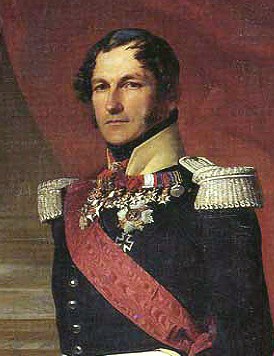
The "de jure" rights of sovereigns are only inactive, because it is not "politically correct" to right the wrongs perpetrated against deposed monarchs, who have had their rights stolen from them. This bias has been active for over a hundred years. We, however, as an organization, will uphold the ideals and truths about deposed monarchs. In addition, certain international legal principles, still supports and protects royal rights as supreme, legitimate and rightful above all others. What is just, right and true cannot be destroyed if the rules of justice are followed.
So even though the laws are merely "implicit in international law," they have been unheld by court decisions in this century and legal experts relying on the law have been very adamant about the fact that deposed monarchs have valid and authentic legal rights to sovereignty. For example, Professor Stephen P. Kerr states unequivocally:
Public international law recognizes that the inheritance of dynastic rights of succession to a usurped crown conveys a valid claim to Sovereignty over that Country. (See Hugo Grotius, De jure belli ac pacis libri tres, Book I, Chapter 4, Nos. 15-19; and Johann Wolfgang Textor, Synopsis juris gentium, Chapter 10, Nos. 9-11) (Stephen P. Kerr, "A Discussion by Prof. Kerr of the Original 1973 Analysis of the Disputed Bourbon-Two Sicilies Succession under the Doctrines of Public International Law, part 1:" http://web.archive.org/web/20050208083648/dynastic-law.com/1973b.html)
He also stated, "Such claimants [dethroned and dispossessed monarchs] are de jure Sovereigns and, as such, Head of the Government-in-Exile of their country. Governments-in-Exile are subjects of public international law. . . ." (Ibid.) For court decrees supporting the legality of deposed rights, see Questions (#41) and (#42) in Part II.
(5) What laws are in "breach" that violate the principles of justice or the cause of "de jure" internal sovereignty?
Other than the denial by practically all courts of law to enforce their rights as already discussed, there is a "breach" in the practice of official "recognitions" for deposed monarchs and governments in exile. The United Nations and separate modern nations only recognize whoever is in control of a country regardless of the ethical considerations involved. For example, by its very nature, a usurper or revolutionary regime is illegal and in the wrong, and no rule of logic can change this. It is treason. Yet, the "de jure" rights of a lawful, ousted government will be completely neglected and ignored. There is nothing right about this, but countries now pay little or no attention as to whether a regime is legitimate. Nor do they consider the validity, or rightfulness, of the claims of dispossessed governments or monarchs. The sad result is "de jure" and lawful governments in exile and "de jure" kings and sovereign princes, who have been robbed of their lawful rights are forgotten; and justice, one of the greatest principles known to mankind, is violated. This is reprehensible, but this breach of equity and truth is being ignored; such that, "According to international law, there is no way for a government in exile [or deposed monarch] to obtain [international] legitimacy [or recognition] other than by returning to its ‘original location’ and reasserting its governance there." (Richard W. Hartzell, "Questions of Sovereignty --- the Montevideo Convention and Territorial Cession," November 2005: www.taiwanadvice.com/harintmcexc.htm)
Many countries side-step these important responsibilities to properly label "de jure" those who are lawful governments from those who are merely "defacto," by using the 1930 Estrada doctrine or something very similar. They do this:
. . . because many States view it as politically difficult to announce publicly, one way or another, whether they "recognise" a new government, and would prefer simply to open diplomatic channels or otherwise develop relations with the new government without issuing a pronouncement that could be construed as approval [or disapproval] of the new government. (Sean D. Murphy, "Democratic Legitimacy and the Recognition of States and Governments," The International and Comparative Law Quarterly, vol. 48, no. 3, July 1999, p. 567)
There are usually two reasons for doing anything. The one that sounds good and then the real reason. Nations often choose what will promote their economic growth and development above the principles of justice and truth. They give the good sounding justification that they are promoting international peace and stability, when the real reason, or hidden agenda, is the profit motive. There is nothing wrong with the profit motive if it is done with integrity, but countries, without conscience, marginalize and discredit the higher values and ideals of civilization to prosper. It is understandable, but morally objectionable.
As a result, ". . . the government de facto is one which is actually in possession of power [and is officially recognized] while a government de jure is one which ought (apparently in law) to possess it [is denied or disregarded]." (Ibid., p. 10) Thus, those who "ought" to be recognized are flushed down the sewer, denigrated, discarded and thrown away, as though no injustice took place. Thus the great ideals of all time and eternity are swept under the rug for the sake of getting along or in the interests of commercial gain.
Because nation-states cannot be forced to practice just recognitions, the practice of politically motivated recognitions, that fail to recognize lawful deposed monarchs or governments, will continue even though this practice has been recognized to be problematic.
"Recognition" is not a codified duty, nor an exact science. Every country is free to recognize or not to recognize. There are no regulations or guidelines to make it clear what each should do. Every practice of it is left open, or allowed to be flexible; such that, ". . . Recognition [has become merely]. . . expressing an opinion on the legal status of an entity . . . ." (Stefan Talmon, "Recognition Of States and Governments in International Law," Azerbaijan Diplomatic Academy --- Biweekly, vol. I, no. 19, November 1, 2008) Being an "opinion," it does not establish any kind of legal reality. Nor does it reflect what is right or just for ". . . States often chose to recognise the usurper [an unlawful government] on purely political considerations [which are fundamentally wrong]." (Dr. Stephen Kerr, letter of 1/21/10) The point being that, "[True] Legitimate authority is primarily a moral not a legal concept [nor a political one]. . . ." (Ethics in International Affairs: Theories and Cases, 2000, p. 87) Self-serving decisions are not usually in the best interests of society or the world.
Because of the confusion and lack of law, it is widely recognized that, "Legally, State recognition can be neither declaratory, nor translative, of a . . . title [to sovereignty]." (Palestine and International Law: the Legal Aspects of the Arab-Israeli Conflict, 1973, p. 94) In other words, "The recognition of a . . . state cannot affect the title [of another state on
way or the other]. . . ." (University of Manchester, The Acquisition of Territory in International Law, 1963, p. 44) If a considerable number of others states likewise recognized title, the effect is still questionable, but may "form an ingredient of a process of consolidation." (Ibid.) But this impacts external sovereignty only --- not the most important part of sovereignty, which is internal nor the sovereignty of deposed monarchs or ousted legitimate governments.
Thus, recognition has little moral value in the world chiefly because all decisions are self-serving and have no ethical basis. The rules of law and justice have not prevailed. For example, the International Law Commission admits that, ". . . A listing of acts that result in recognition does not exist." (Sixth Report on Unilateral Acts of States, International Law Commission Fifty-fifth Session, No. 25, May 2003, p. 8) The only uniform practice is to generally recognize countries neutrally without judgment or opinion.
Since countries are not really recognizing each other as legitimate, nor judging each other as "defacto" or "de jure," right or wrong, then whether they are actually "defacto" or "de jure" in a legal sense is being left open and unsettled. "The only criterion [now] in international law for the recognition of an authority as the government of a State is its exercise of effective control over the State's territory." (op.cit., Stefan Talmon, 2008) Andrew Valls explains, "What appears to have happened is that the moral concept of right authority has been replaced by the conception of compétence de guerre [defacto or real possession of the territory]. . . ." (op.cit., Andrew Valls) In other words, "The word de jure adds nothing in practice to recognition itself, except as a courtesy. . . ." (Herbert W. Briggs, "De Facto and De Jure Recognition: The Arantzazu Mendi," The American Journal International Law, vol. 33, no. 4, October 1939, p. 691) So no one needs to use these terms anymore in recognitions, because they have become meaningless. Part of the reason for this is that:
The European Court of Human Rights, the European Court of Justice, the International Criminal Court, and the International Court of Justice, along with INGOs, IGOs, and NGOs, are emblematic of the development of institutions that increasingly alter the terms and conditions of dejure and de facto sovereignty. (Patrick S. O'Donnell, "Sovereignty Past & Present," 2004: www.ihrr.net/download
Hence, "There has . . . been an inexcusable confusion in the use of the terms defacto and de jure recognition, and defacto and de jure governments." (Philip Marshall Brown, "The Recognition of New States and New Governments," The American Journal of International Law, vol. 30, no. 4, October 1936, p. 690)
The failure to understand the distinction between the defacto recognition of a new state or government and de jure recognition, has been in part caused by a careless use of term. "The subject has been unduly complicated," writes Borchard, "by the chameleonic use of the term defacto, which has been applied promiscuously to de facto authorities in the field, to governments not established by constitutional means, as an adjective to qualify recognition. . . . By recognizing a government as defacto merely [or only], no judgment is being passed on the lawfulness [legitimacy or rightfulness] of that government. (op.cit., Herbert W. Briggs, p. 689)
Sadly, "Lack of definition is common in international law. . . ." Turki Althunayan, Dealing with the Fragmented International Legal Environment, 2010, p. 98) "De jure" sovereignty is one of the problems.
In the Arantzazu Mendi we find Slesser, L. J., for the Court of Appeal, quoting Bankes, L. J., in Luther vs. Sagor, who quoted Wheaten, who quoted Montague Bernard that "A de jure government [or monarch] is one which, in the opinion of the one using the phrase, ought to possess the powers of sovereignty, though at the time it may be deprived of them. (Ibid.)
The terms de facto and dejure are applicable to governments in a purely relative sense. That is to say, which of the two is properly descriptive of a given political organization depends upon the point of view of those who characterize it.
(W. W. Willoughby, "Government," The Americana: A Universal Reference Library, Frederick Converse Beach & George Edwin Rines, editors, 1912)
Since "de jure" is an "opinion" or "relative" in the mind of the "observer," according to their
"point of view," the term can be subjectively used as deemed appropriate, but it does not fit well with diplomatic recognition in modern times. That is, the terms "de facto" / "de jure" was "a rather confusing distinction, recently becoming obsolete, but once commonly used in the international practice of recognizing governments. . . ." (Boleslaw Adam Boczek, International law: A Dictionary, 2005, p. 102) It was tried for awhile and then discarded for the most part because no uniform law or consensus was ever created in regard to it.
Because "de jure" recognition is so indistinct and obscure, legally and otherwise, no wonder countries generally refrain from the use of such distinctions in their recognitions. In fact, "The characteristic of a government as de facto or de jure belongs properly in another category of ideas and should not concern either the international jurist or the recognizing state." (Ibid., p. 689-690) ". . . Government does not pretend [except in rare instances] to express any opinion on the legality or other wise of the means by which its power has been obtained." (Ibid., p. 693) In other words, nation-states do not judge other countries as "de jure," legitimate, or as just any longer, or if they do, it is done very rarely. Neither do
they judge them as being unjust and unlawful, but remain neutral as a general rule. The outcome of modern practice is that, ". . . international [in other words, external] recognition is not [final or] conclusive on the legitimacy of a revolutionary regime --- or any regime, for that matter." (Simeon C. R. McIntosh, Kelsen in the "Grenada court": Essays on Revolutionary Legality, 2008, p. 15) ". . . Sovereignty is neither created by recognition nor destroyed by nonrecognition." (The New Encyclopaedia Britannica, edition 15, part 3, vol 17, 1981, p. 312)
"A de facto government is one which is really in possession of them [the country], although the possession may be wrongful or precarious." (op.cit., Herbert W. Briggs, p. 689) Membership in the United Nations does not make such a country "de jure" or legitimate or right its wrongs, because the only requirement for membership in the United Nations, according to their Charter, (chapter 2, article 4) is that they are a "peace-loving" state, which accepts the "obligations contained in the present Charter and, in the judgment of the Organization, are able and willing to carry out these obligations." (www.un.org/en/documents/charter/chapter2.shtml)
In other words, membership in the United Nations only gives recognition that a government can carry on these obligations. "De jure" internal status is not created. For example, "Kissinger [while U. S. Secretary of State] points out that his use of legitimacy 'means no more than an international agreement about the nature of workable arrangements and about permissible aims and methods of foreign policy.'" (Harold Hance Sprout, James N. Rosenau, Margaret Tuttle Sprout, Vincent Davis & Maurice A. East, The Analysis of
International Politics, 1972, p. 192) Nothing more is meant by it. The point is, ". . . De facto sovereignty [control of the territory] is . . . adequate to maintain the everyday authority of governments." (Allen D. Rosen, Kant's Theory of Justice, 1993, p. 142) Therefore, that is all that diplomatic recognition includes. The determination of rightfulness is being left open and unanswered. In other words, ". . . the doctrine of non-recognition . . . is an integral part of modem international law. . . ." (op.cit., Ernst Wolff, p. 208)
True sovereignty exists as a separate entity or reality completely outside the provinces of formal recognition. It is not dependent on outside recognition. In fact, it is acknowledged that, "Recognition by no means produces subjects of international law. It merely creates a legal basis for relations between the recognizing and recognized states." (Vinod K. Lall & Danial Khemchand, Encyclopaedia of International Law, 1997, p. 46) It does not create or destroy rightful sovereignty. Part of the confusion is the failure to distinquish between internal and external sovereignty. External sovereignty is what international law primarily focuses on. External sovereignty is a matter of independence or freedom from the interference of others and the right to be a member of the community of nations. This is the fundamental realm of international sovereignty law --- equality and independence.
External sovereignty consists of two elements:
1. de jure recognition by the international community of a state’s
independence; that is, a state in the international system is free and equal;
and
2. de facto external independence; that is, no outsider exercises control within a state’s territory. (Donald W Potter, "State Responsibility, Sovereignty, and Failed States," Refereed paper presented to the Australasian Political Studies Association Conference University of Adelaide, 29 September-1 October 2004, pp. 11-12)
"Externally, sovereignty is the entry ticket into the society of states. Recognition on the part of other states helps to ensure territorial integrity and is the entree into participating in diplomacy and international organizations on an equal footing with other states." (Eric Brahm, "Sovereignty," September 2004: www.beyondintractability.org/essay/sovereignty) "The concept of sovereignty in international law most often connotes [implies or relates to] external sovereignty." (Stanford Encyclopedia of Philosophy, revised 2009: http://plato.stanford.edu/entries/sovereignty)
"The internal sovereignty of a State [that which is not a primary matter of international law] manifests itself through the performance of three governmental functions: (1) The Legislative, which makes laws; (2) The Judicial, which interprets and applies laws; (3)
The Executive, which enforces laws." (William Callyhan Robinson, Elementary Law, 1910, p. 416) Internal sovereignty is supremacy or freedom to choose or make decisions within ones own territory. This most closely resembles the definition of sovereignty itself. It is defined as "supreme [or ultimate power or] authority within a territory." (op.cit., Eric Brahm) This supreme domestic power had great and powerful rights as the highest power of all within the boundaries of its land. Internal sovereignty revolves around domestic law, rather than international law. It is not dependent on outside forces, but internal rules and law of the countries own making.
The rights of internal sovereignty include [whether recognized by the international world or not, that is, outside of the jurisdiction of international law, its privileges are]:
(1) The right to a free choice, settlement and alteration of the internal Constitution and Government, without the intermeddling of any Foreign State.
(2) The right to territorial inviolability, and the free use and enjoyment of property.
(3) The right of self-preservation, and this by the defense which prevents, as well as by that which repels, attack.
(4) The right to a free development of national resources by commerce.
(5) The right of acquisition, whether original or derivative, both of territorial possessions and rights.
(6) The right to absolute and uncontrolled jurisdiction over all persons and things within and, in certain exceptional cases, without the limits of the territory. [Sir Robert Phillimore, On International Law, vol. 1, sec. cxlv, 1854]
These rights are all absolute, and quite independent of any recognition of the external sovereignty by other States . . . . (Charles St. Julian, The International Status of Fiji, 1872, p. 3)
That is:
A new state does not require recognition of other states to confirm its internal sovereignty. So long as it confines its actions to its citizens and to the limits of its own territory, it may dispense with such recognition; but, if it desires to enter the society of nations, recognition becomes necessary to entitle it to participation." (New York (State) Supreme Court, The New York Supplement, vol. 195, September 11 to October 2, 1922, p. 472)
In other words:
. . . In order to consider the sovereignty of a State as complete in the Law of Nations, there is no need for recognition by foreign powers, though the latter may appear useful, the defacto existence of sovereignty is sufficient." (Saalfeld, Handbuch das positiven Volkerrechts, 1833, p. 189)
Therefore, it should not be any surprise that ". . . Courts agree that sovereignty can exist in the absence of recognition by any state. . . ." (Werner Levi, Contemporary International Law: a Concise Introduction, 1979, p. 120) The point is, ". . . sovereignty is not something
that is decided by other countries. They can only recognize it or not." (Frank Muyard, Director, Taipei Office, French Centre for Research on Contemporary China (CEFC), April 1-2, 2005) Again, "The internal sovereignty of a state does not, in any degree, depend upon its recognition by other states." (John King, A Commentary on the Law and True Construction of the Federal Constitution, 1871, p. 400) It is sovereign, whether it is recognized or not. Even, "A new State, springing into existence, does not require the recognition of other States to confirm its internal sovereignty." (Henry Wheaton, Wheaton's Elements of International Law, 1916, p. 35)
With these concepts firmly in mind, we can introduce a new and important understanding, and that is, that there is both a "de jure internal sovereignty" and a "de jure external one" which are two distinct and separate things. (op.cit., Frank Muyard)
Sovereignty can be divided into legal, political, de facto, de jure, internal and external parts. Each type can be combined with another aspect to describe a unique dimension of sovereignty. For example, the United Nations Office of Public Information used the combined terms of "de jure internal and external sovereignty" showing that "de jure" internal and "de jure" external sovereignty are separate and distinct features of sovereignty. (United Nations Department of Public Information, Objective: Justice, vol. 8-10, 1976, p. 58) That is, "When analyzing the internal and external aspects, it is important to acknowledge that there exists both de jure and defacto sovereignty [as well]." (Matthew Derrick, "Revisiting `Sovereign' Tartarstan," USAK Yearbook of
International Politics and Law, 2009, p. 295) This means there are four different kinds of sovereignty based on these four unique characteristics: "de jure" internal sovereignty and "de jure" external sovereignty as well as "defacto" internal sovereignty and "defacto" external sovereignty. Each term represents something completely different and the distinctions are important. The point is, ". . . there actually is a pure de jure sovereignty," which is different from "de jure external sovereignty." (John A. Agnew, Globalization and Sovereignty, 2009, p. 6)
"De jure" (or legal) external sovereignty is legal independence (the right of non-interference) and equality among nations, and deals almost exclusively with foreign affairs. Whereas, internal legal (or "de jure") sovereignty is the right to rule and govern within a lawful territory. The "de jure external one" is where international law is chiefly concerned. On the other hand, "de jure [rightful or legal] internal sovereignty," which international laws have little to do with, is basically, or for the most part, outside the pale or jurisdiction of the international system. This is the primary sovereign domain of deposed monarchs and legitimate governments in exile, which explains why they are not recognized or regulated by the international system. The hold rightful sovereignty, but their rights are basically neglected and considered to be unimportant. This kind of sovereignty, again, is called "de jure internal sovereignty." (See: "Question #15")
"Internal sovereignty is [something] . . . which is inherent [basic or deeply rooted] in the people of any State, or vested in its ruler, by its . . . constitution or fundamental laws." (Henry Wheaton & Coleman Phillipson, Wheaton's Elements of International Law, 1904, p. 35) These fundamental core rules, that are at the fountainhead of monarchy, gave sovereignty, the supreme and ultimate internal authority of the state, to the kings and sovereign princes to be passed on to their descendants on a hereditary basis. That is, this great rights was legally established to go from father to son down through the generations and was never to end or terminate as long as these families continued to exist. This permanent royal proprietary right of "internal sovereignty . . . establishes the ultimate authority [or supreme rights] over individuals or groups within the . . . territory." (The New Encyclopaedia Britannica, part 3, vol. 17, 1981, p. 311) The point is:
Once the people had agreed upon the fundamental law of the kingdom, and given the king and his descendants power over them, [so that all royal rights were owned, possessed and retained by the royal house] . . . the natural right to govern the body
politic resided henceforth in full only in the person of the king. (Jacques Maritain, "The Concept of Sovereignty," The American Political Science Review, vol. 44, no. 2, 1950, p. 348)
It gave ". . . the king . . . supreme power which was natural and inalienable, inalienable to such a degree that [even] dethroned kings and their descendants kept this right forever [without end as long as they continued to exist]. . . ." (Ibid. & Jacques Maritain, Man and the State, 1998, p. 37) These rights are immutable, perpetual and endless --- they never end.
Phillip Marshall Brown, a distinguished international lawyer, confirms this. He wrote on the sovereignty of "de jure" kings and princes in exile, who were living in England during World War II, and who had been robbed of the right to rule their own territories. He stated that:
A nation is much more than an outward form of territory and government. . . . So long as they [those who hold sovereignty] cherish sovereignty in their hearts their nation [kingdom or principality] is not dead. It may be prostate and helpless. . . . [Nevertheless] It is not to be denied the symbols and forms of sovereignty. . . . [Their sovereignty] may be suspended, in exile, a mere figment even of reality, derided and discouraged, and yet entitled to every respect. [Why? Because we are] not dealing with fictions, [these] valiant standard bearers of sovereignty . . . in faith and confidence [have] . . . inalienable, immutable rights. ("Sovereignty in Exile," 35 American Journal of International Law (1941) 666-668) (http://links.jstor.org
These rights are endless.
Professor Emilio Furno, an advocate in the Supreme Court of Appeal in Italy, explained:
. . . A deposed Sovereign [and his successors have an] . . . undeniable [and] . . . an absolute personal right [of full sovereignty] of which the subject [the king or sovereign prince] may never divest himself and which needs no ratification or recognition on the part of any other authority whatsoever. ("The Legitimacy of Non-National Orders", Rivista Penale, No.1, January 1961, pp. 46-70)
"A deposed monarch remained [that is, continues], in law, a [de jure, legal or rightful] monarch." (Charlotte Catherine Wells, Law and Citizenship in Early Modern France, Issue 1, 1995, p. 198) This is because, "In a monarchy, the monarchy is the possessor [owner] of Legal Sovereignty [that is, legal rights and legal supremacy above all]. . . ." (Durga K. Sarmah, Political Science, vol. 1, 2004, p. 67) This is because ". . . it is by the [supreme] laws of their kingdoms that Kings exercise their sovereign power. . . ." (Johann Wolfgang Textor, Synopsis of the Law of Nations, 1680, chapter XIV, no. 8) ". . . The sovereignty held by the displaced legal sovereign [a deposed monarch] is known as De jure [or legal] Sovereignty." (Ibid.) "Legal sovereignty [is] . . . a [rightful] claim to exercise the supreme legal authority that rests on a legal right. . . ." (Tudor Jones, Modern Political Thinkers and Ideas: an Historical Introduction, 2002, p. 4) This right is even more explicit and obvious in the international principles of "prescription" as shall be seen in giving deposed monarchs and their successors endless rights that never end provided they are kept alive by the principles of justice deeply rooted in the legal concepts of "prescription."
The "de jure" internal sovereignty of ousted governments, holding the exclusive right of supreme power is a correct principle of justice and equity. Why? Because, "[sovereignty] is undivided [or undividable] --- there is only one truth, one justice; and, consequently, only one rightful sovereignty. It is, moreover, permanent, and unchangeable --- for truth cannot [be] altered [and still remain true]." (François Pierre G. Guizot, Lectures on European Civilization, 1837, p. 289) To be indivisible is to be inseparable, unbreakable, indestructible, permanent and inalienable. Again, "as briefly indicated above, the concept of sovereignty formally implies a power that is absolute, perpetual, indivisible . . . and inalienable." (Andrew Vincent, Nationalism and Particularity, 2002, p. 17) In other words, the very characteristics and qualities of sovereignty itself proclaims why it can be forever, if it is hereditary and if, and only if, it is legally maintained according to international "prescription."
In the next answer, the rules of "prescription" will be introduced as a great boon to justice and everything that is right and good in this field. "Prescription" is one of the few principles of justice that actually deals with "de jure internal sovereignty" --- the sovereignty of deposed
monarchs and legitimate governments in exile, which most international law completely ignores. "Prescription" is about the internal right to govern of a former ruler versus the defacto internal and external ruling right of the usurper. It can preserve royalty rights forever and without end, or it can cause it to be forfeited to the point that the claim cannot be reinstated --- such that, it comes to a permanent end. It is that powerful and it is that important.
(6) Dynasty never forfeits its rights. Those rights cannot be forfeited. The principle of “juris sanguinis” (right of blood) operates here. Is this true, or is it only partly true? Dr. Paulo Bonavides in his book "Political Sciences" (Ciência Política), page 126 declared:
Sovereignty is one and indivisible, it cannot be delegated, SOVEREIGNTY IS IRREVOCABLE, SOVEREIGNTY IS PERPETUAL, sovereignty is a supreme power, these are the main points of characterization that made Bodin's sovereignty in the seventeenth century an essential element of State.
Sovereignty has the potential to be permanent and unending in a royal house, if it is hereditary; because by inheritance law, hereditary rights are passed on to rightful heirs as long as the family continues to exist. The wording from the following treaties demonstrates this well-known principle as it relates to sovereignty:
(a) Territory was given to Imperial Russia to ". . . be possessed by his Majesty the Emperor of all the Russias, his heirs and successors, for ever." (T. C. Hansard, ed., The Parliamentary Debates from the Year 1803 to the Present Time, vol. 32, 1816, p. 115)
(b) Another royal house was given principalities to the king and ". . . his heirs and successors, in perpetual [never ending] sovereignty. . . ." (Hansard's Parliamentary Debates (Authorized edition), vol. 107, 1849, p. 1152)
(c) Again, ". . . we are now in possession of Guienne and Gascony, to hold forever by us, our heirs and successors, in the same manner that the kings of France have
always held them. . . ." (Sir John Froissart, Chronicles of England, France, Spain, and the Adjoining Countries, 1880, p. 13)
(d) ". . . the full sovereignty of the Northern Island of New Zealand vests in Her Majesty Queen Victoria, her heirs and successors, for ever." (Facsimiles of the Declaration of independence and the Treaty of Waitangi , 1887, p. 11)
(e) ". . . his heirs and successors, with all the rights of sovereignty, of absolute power and entire dominion . . . shall remain in his possession evermore. . . ." (Cobbett's Weekly Political Register, vol 1, no. 14, 1802, p. 426)
(f) ". . . His heirs and successors, shall have, hold, keep and enjoy forever, with plenary right of sovereignty, dominion, possession and property, all those lands. . . ." (The Case of Venezuela: A Reply, A Special Report of the Government of Venezuela, 1896, p. 67) Or as Hugo Grotius (1558-1645), one of the founding fathers of international law, declared, ". . . the successor has a right to all the privileges and prerogatives that his ancestors enjoyed. . . ." (On the Law of War and Peace, Book I, chapter III, no. 10) This is because the royal house owns the right to rule as part of their patrimony and this possession of sovereignty and property is transferred by hereditary succession to the next in line down through their generations forever. Baroni W. Santos in his book Treaty of Heraldry declared:
The doctrine [of dynastic succession law] and [international] jurisprudence have confirmed that the territorial power is not necessary for the exercise of the dynasty, for they are inserted in the person of the sovereign, which keeps the same after the loss of the throne, passing them regularly to their heirs and successors [ad infinitum].
[In other words] the loss of its territory in no way diminishes its sovereign powers, [in the least] because these are inherent in the person of the sovereign, transmitting it, perpetually to their descendants. (Vol. I, 5th ed., 1978, p. 197-198)
There is nothing magical about "juris sanguinis." It is nothing more or less than a hereditary right, or what is called "by right of birth." Concerning this "birthright," Jean J. Burlamaqui (1694-1748), one of the great philosophers in international law, wrote, "Every [sovereign has] a right to succeed in his rank, and transmits this right to his descendants, . . . though he has never reigned himself, that is to say, the right of the deceased passes to the living" over and over again from one generation to another down through the long corridors of time endlessly and perpetually, as long as there is a living heir using their titles, etc. (www.constitution.org/burla/burla_2203.txt) This right is based on law, as Sir William Blackstone, the great jurist wrote, ". . . the law maketh the king." (Commentaries on the Laws of England, 1922, p. 213) "[Both internal and external] sovereignty is . . . merely [a] legal conception. . . ." (Neil MacCormick, Questioning Sovereignty: Law, State, and Nation in the European Commonwealth, 1999, p. 127)
A relationship between father and son or brother to brother is a biological status or a fact of Nature. Conversely, rights of succession, membership in a Royal House, the status of "Prince," "Infant," or "Archduke," etc. are legal status or rights . . . rather than simply a mere biological or genealogical relationship bases on a given decent. As legal rights, Royal Status, Rights of Succession, and Memberships in Royal Houses can be created or lost. . . . (Stephen P. Kerr, JD, "Resolution of Monarchical Successions Under International Law," The Augustan, vol. 17, no. 4, 1975, p. 988)
For example:
. . . Legal rights or status can be renounced (as in the case of Infant Carlo), forfeited (as in the case of Princes Januarius and Phillip, acquired (as when Infant Carlo was integrated into the Royal House of Spain with the title of "Infant Carlo), or even legitimized (as when the illegitimate daughter of Louis II of Monaco was legitimized with rights of succession), as well as willed (as when Charles II of Spain willed Spain to Phillip (IV) of Anjou), lost through disinheritance or exclusion (as when Phillip, the eldest son of Charles III of Spain, was disinherited from both the thrones of Spain and the Two Sicilies), created through adoption (when KIng Charles XIII of Sweden adopted the commoner Bernadottes as his heir) or even traded (as when Francis of Lorraine, later Emperor Francis I of the Holy Roman Empire, traded his historic family Duchy of Lorraine for Tuscany) by Juridical Act. (Ibid.)
The point is, any birthright can be ruined and totally destroyed by bad choices, recklessness, foolishness, serious crime or neglect.
In other words, Dr. Bonavide's statement above is true --- sovereignty can be irrevocable and perpetual, but his statement does not tell the equally important other side of the story. His statement must be qualified to be accurate, factual and informative. In other words, a deeper understanding of sovereignty and the principles that surround it clearly demonstrate the truth that royalty can be lost, and that loss is just as permanent and endless as its potential to last forever is real and right and true. And, once lost, it cannot be renewed, started over or reinstitution after the fact. Johann Wolfgang Textor von Goethe, (1749-1832) the famous German publicist and International lawyer, declared:
. . . a King who has been driven from his Kingdom by force of arms, and has lost possession of his [territorial or defacto] sovereignty, has not thereby lost his right, or at any rate not irrevocably, unless he has in the meanwhile given his assent [his acquiescence] thereto; but he loses it conclusively at the moment when he consents [acquiesces or agrees] to transfer of it to the Estates, i.e. Parliament or to his rebel subjects, and then it must be recognized that the Kingdom has been made into a State which has been founded in accordance with the Law of Nations. (Synopsis of the Law of Nations, vol. 2, 1680, p. 88)
He explained how sovereignty can be gained, lost or transferred:
The modes of acquiring Kingdoms under the Law of Nations are: Election [elected to office], Succession [ruling rights given to a lawful heir], Conquest [creating
"defacto" sovereignty and usurping a lawful king or complete and total subjugation leaving no one to carry on the governing rights of the nation --- this is called debellatio], Alienation [the ceding or giving away of the kingdom to another] and Prescription [which we will discuss]. (Ibid., p. 77)
To say that those "rights cannot be forfeited" or that "as long as there's blood the right is valid and lawful forever" totally neglects historical facts and law. It is not blood, nor "juris sanguinis," but law, which determines whether rights are held or lost.
Juricical Acts, such as a renunciation or loss of right through a morganatic marriage, do not however sever the natural biological relationship (i.e. father to son) between such person and their Houses. Only the legal rights to the succession are thereby affected. Thus, a renunciation severs only the legal rights to the succession, it does not (indeed, could not) sever the natural biological relationship involved. Likewise, a morganatic marriage forfeits only the legal rights to a succession, it does not (indeed, could not) destroy the biological relationship between the members of the Royal House concerned. [It only changes the] legal status vis-a-vis the succession to a particular Sovereignty. (op.cit., Kerr, "Resolution," p. 978)
"[Sovereignty] is conferred by law. . . ." (op.cit., MacCormick) It can also be destroyed by law.
. . . there is not strictly, in human nature, any such thing as an absolutely indefeasible right [that is, by definition, something incapable of being annulled or rendered void]. Sovereign right itself furnishes no exception to this general principle. (Edward Smedley and Hugh James Rose, Encyclopaedia Metropolitana; or,
Universal Dictionary of Knowledge, vol. 2, 1845, p. 714)
We will look at "prescription" as a particularly important legal concept that destroys “de jure” imperial and royal rights to title and royal prerogatives; but it can also preserve and maintain them forever.
Lassa Francis L. Oppenheim (1858-1919), a renowned German jurist regarded by many as the father of the discipline of international law, wrote:
. . . Prescription in International Law may . . . be deemed as the acquisition of sovereignty over a territory through continuous and undisturbed exercise of sovereignty over it. . . . (International Law, vol. 1, ch. 13, no. 242, 1910, p. 309)
As long as other Powers [the "de jure" sovereign in this context] keep[s] up protests and claims [his royal rights, then they are safe]. . . . But after such protests and claims, if any, cease to be repeated, the actual possession [of sovereignty] ceases to be disturbed. . . . (Ibid., pp. 309-310)
Then the royal king or prince ceases to be a true king or prince as his "de jure" rights are forfeited to the usurper. According to the Oxford Dictionary of Law Enforcement:
Prescription ([in] international law) [is] the acquisition of title [ownership] to territory through an uncontested exercise of sovereignty over an extended period of time. Prescription presupposes a prior sovereign authority whose control and administration over the territory in question has lapsed through:
• failure to occupy,
• failure to administer,
• abandonment or neglect,
• a wrongful original claim, or
. . . If a state takes over the territory of another state and treats it as its own territory, the other state [the "de jure" sovereign in this case] has an obligation to protest. If it [or he] does not, the silence may be considered acquiescence [or acceptance] to the prescription [or an abandonment]. (www.taiwandocuments.org/sovereignty.htm)
Abandonment, neglect or failure to contest a claim are all ways to lose rights permanently and forever. Again, "For prescription to apply, the state with title [the de jure king or his successors] to the [lost] territory must acquiesce to the action of the other [the usurper or defacto] state." (http://en.wikipedia.org/wiki/Legal_status_of_Taiwan)
Emerich de Vattel, one of the most important of the founding fathers of international law, wrote:
Every proprietor [of the great honor and privilege of "de jure" sovereignty] who expressly commits, or omits, certain acts [such as, the express failure to use his
titles], which he cannot commit or omit without renouncing his right, sufficiently indicates by such commission or omission that it is not his intention to preserve it, unless, by an express reservation, he declare the contrary. (See The Law of Nations, Book II, ch. XI, Nos. 142, 144-146, 149 and see Article 45 and Article 31.3(a) of the 1969 Vienna Convention on the law of Treaties)
However, Stephen P. Kerr, B.B.A., J.D., LL.M., M.A.T., a World Court Litigator and Special International Legal Counsel to the House of Habsburg-Lorraine and a Professor of Law at Antioch University Law School in Washington, D.C., made it clear that, ". . . de jure possession of sovereignty continues so long as the de jure ruler or government does not surrender his sovereignty [his rightful claim] to the usurper." (Johann Wolfgang Textor, Synopsis Juris Gentium, Chapter 10, Nos. 9-11) Professor Kerr also declared that:
Upon the fall, dispossession, or usurpation of a monarchy, the de jure legal rights to the succession of that monarchy may be kept alive indefinitely [that is, without an end, continually] through the legal vehicle of making diplomatic protests against the usurpation. (See: "Dynastic Law") (See Emerich de Vattel, The Law of Nations or Le Droit des gens, Book II, chapter II, no's. 145-146)
In other words, "Such Claimants are de jure Sovereigns and, as such, Head of the Government-in-Exile of their usurped country." (Ibid.) However, when the protest ceases, the royal rights are extinguished. That is, "It [the loss of 'de jure' sovereignty] depends as much on the quiescence [inactivity or lack of effort] of the former sovereign as on the
consolidation [of rulership] through time of the new." (R. Y. Jennings, The Acquisition of Territory in International Law, 1963, p. 23) In other words, "Title must be maintained, or it will be lost as a result of failure to . . . protest the actions of an acquiring power. Conduct [therefore] is thus very important." (Ibid., p. 5) It is, in fact, extremely important, because, "After a reasonable period of time, to be determined in each case on an ad hoc basis, the title will vest in the new state in the absence of protest. It might be mentioned at this point that protests are extremely important in international law." (Ibid., p. 5) It is so important that, "The absence of protest . . . forms a constituent element of --- estoppel or prescription. Like these two generally accepted legal principles, the far-reaching effect of the failure to protest is not a mere artificiality of the law. It is an essential requirement [to keep one's rights alive]. . . ." (Hersh Lauterpacht, International Law: General Works, 1977, p. 164) In other words:
A prince once possessed of a kingdom coming to him by inheritance, can never, by any, upon any occasion be dispossessed thereof, without horrible impiety and injustice [unless he abandons, renounces and thereby forfeits his right as in acquiescence to a usurper]. (Quoting M. Symmons in Samuel Rutherford, Lex, rex, or, The Law and the Prince, (written 1644),1910, p. 42)
(Please see the related question and answer in Part II entitled "(33) The statement has been made that, "In all the history of mankind, no deposed monarch has ever lost his rights except through debellatio." What about it?" for more information)
(7) How does a royal family maintain their rights? What is required? What is the proper protest that is acceptable and protective?
Loss of title is achieved through acquiescence. D. H. N. Johnson explained that:
Such acquiescence is implied . . . where the interested and affected states [deposed kings or their successors in our case] have failed within a reasonable period of time to refer the matter to the appropriate international organization or international tribunal or . . . where no such action was possible --- have failed to manifest their opposition in a sufficiently positive manner through the instrumentality of diplomatic protests. ("Acquisitive Prescription in International Law," British Journal of International Law, vol. 27, 1950, pp. 332, 353-354)
Again, ". . . mere diplomatic protest is not sufficient. It must be followed by a reference to an appropriate international organization or international tribunal unless it is not possible to do so." (S. K. Verma, An Introduction to Public International Law, 2004, p. 121) Because of the powerful biases against monarchy, no international tribunal will take on a case involving a "de jure" monarch's, or his successor's, right to rule his kingdom or principality. For example, the International Court of Justice, according to their own guidelines, will not take any case that does not involve currently recognized sovereign states. So how does a "de jure"
monarch, or his successors, maintain their rights?
First of all, ". . . a nation [a sovereignty or a monarch] is not required to resort to aggression and disrupt the world order to keep a claim alive.” (The Judge Advocate General's School, The Military Law Review, vol. 107, 1985, p. 30) Military action is not required or considered to be valid or legitimate.
Second, "Protests are sufficient to avoid prescription [the total loss of all sovereign and royal rights] and there is no requirement [in international law] to refer [this kind of] a dispute to international tribunals or other settlement mechanisms." (Jessup worldwide Competition for International Law, "Bench Memorandum 2010," p. 12) So it is a matter of protest and not a matter of court.
Third, "De jure [internal] Sovereignty lasts as long as the claimant keeps up his protest against the usurpation of his Sovereignty. This is done by means of diplomatic protests. Such diplomatic protests are issued on the death of one claimant upon the occasion that the new claimant takes up the claim." (Dr. Kerr letter January 21, 2010) The protest must be renewed by legitimate successors or heirs to the throne of their ancestors. But what type of protest is required?
According to Emerich de Vattel (1614-1667), considered one of the founding fathers of international law, the way to keep and maintain imperial or royal rights alive forever was by
protest, which was elaborated in "Question #6" on the principle of "prescription." He declared, "With sovereigns [kings or sovereign princes the way to do so] is . . . to retain the title and the arms of a sovereignty or a province, as an evidence that they do not relinquish their claims to it." (The Law of Nations, Book 2, chapter XI, nos. 145-146)
Protest has as its primary purpose the preservation of the rights of the protesting State [the deposed monarchy or government in exile]. . . . [However] it must be . . . continuously repeated [like the consistent use of sovereign and royal titles by a dispossessed monarch or his rightful heirs] against continued illegal practice. Hence, in some circumstances . . . a simple or formal protest is not sufficient to preserve the right. (Vladimir D. Degan, Sources of International Law, 1997, pp. 347-348) Titles must be used.
Titles must be used. This is the bottom line. Other kinds of protests are helpful or ancillary, but using titles are the most fundamental, basic and necessary way to proclaim to the world that one has not given in, but still retains the internal rightful claim to the full majesty and glory of the monarchy. This is the minimum, nevertheless, sufficient to protect rights. Stephen Kerr, a world court litigator, declared, "when appropriate, recognizing worthy individuals with knighthoods and other decorations or honor at their command" further confirms their royal status as active members of the international community and as rightful heirs to their former "defacto" thrones. ("King and Constitution in International Law," The Augustan, vol. 18, no. 4, 1977) Such an act is equal to "a series of competent protests [which] will keep a de jure claim alive indefinitely" or forever. (Ibid.)
If the royal family forsakes, or no longer considers the titles important enough to use in one generation, and the possible heir does not claim his right before the death of his negligent father, then a presumption of abandonment is automatically made, which means a total forfeiture has occurred. This action means a permanent end to their special and unique entitlements --- royal rights that cannot be revived or renegotiated. It is final or set in stone. It can't be fixed. Dr. Stephen Kerr specifies that:
De jure Sovereignty lasts as long as the claimant keeps up his protest against the usurpation of his Sovereignty [which means it can last forever]. This is done by means of diplomatic protests. Such diplomatic protests are issued on the death of one claimant upon the occasion that the new claimant takes up the claim. (Letter of 1/21/10)
This is why one generation can destroy all rights, because the claim must be renewed. The use of sovereign titles, heraldric arms, etc. is such a powerful witness to all the earth that one is the true heir to the throne that it creates an unmistakeable message that cannot be push aside to mean anything, but what it means. Such a proclaimation is the equivalent of a constant and unending reminder or diplomatic protest to all the world against the usurpation of actual rule. And such "protests are sufficient to avoid prescription [the total loss of sovereign and royal rights] and there is no requirement to refer [such] a dispute to international tribunals or other settlement mechanisms." (Jessup, "Bench Memorandum," p. 12) In other words:
Nobiliary International law states that the heads of the Houses of sovereign descent who have not incurred debellatio [have not renounced or abandoned], retain forever the exercise of the powers attaching to them, absolutely irrespective of any territorial possession. They are protected by the continued use of their rights and titles of nobility. . . . (Monarchist World Magazine # 2, August 1955)
The reason a "de jure" monarch, or his successors, must use their titles to keep their royal rights was explain by Vattel in The Law of Nations. (www.constitution.org/vattel/vattel_02.htm) It stated as an introduction that:
. . . the law of nature lays an injunction on the proprietor to take care of his property, and imposes on him an obligation to make known his rights, that others may not be led into error: it is on these conditions alone that she approves of the property vested in him, and secures him in the possession. (Book II, Number 141)
Now for the conclusion and the result:
If he has neglected it [failed to assert his titles] for such a length of time . . . the law of nature will no longer allow him to revive and assert his claims. . . . (Ibid.)
Again:
. . . the law of nature ordained that all men should respect the right of private property in him who makes use of it? For the same reason, therefore, the same law requires that every proprietor who for a long time and without any just reason
neglects his right, should be presumed to have entirely renounced and abandoned it. This is what forms the absolute presumption (juris et de jure) of its abandonment, --- a presumption, upon which another person [the subsequent government] is legally entitled to appropriate to himself the thing so abandoned. (Ibid.)
Hence, the unequivocal injunction to use one's titles or lose them forever.
(8) Where is a modern court decree that sustains this principle?
The "Permanent Court of Arbitration" at The Hague heard the Island of Palmas case. In 1925, the United States brought a complaint against the Kingdom of the Netherlands. It involved who has the supreme right to rule, or own the sovereignty over this territory which is near the Philippines. The legal principle of "prescription" was used to determined the outcome of who has both "de jure," or lawful sovereignty, as well as "defacto" or physical control over the land and its people, which was completed in 1928. The "de jure" sovereign (The United States) lost all rights, because of their neglect, while the Dutch acted as sovereign rulers over this territory and its people over a long, uncontested period of time without any protest or claim made by the U.S. government. All the conditions of "prescription" were present. Hence, the Kingdom of the Netherlands was awarded recognition for having title to all the "de jure" privileges and prerogatives.
The United States actually lost their "de jure" rights long before the Tribunal occurred because they totally neglected their claim and made no protest whatsoever, which is required to keep the intangible right to rule and govern. "A title [to sovereignty] once abandoned whether tacitly [by implication] or expressly, cannot be resumed [continued, started over or reconstituted]." (T. Twiss, The Oregon Question Examined, 1840, p. 24) In other words, the principle of "estoppel" is automatically applied, which establishes that a ". . . person is prevented from arguing and rebutting a previously made (explicit [that is, straightforward] or tacit [which means implied]) statement of fact or representation on [the] same issue." (Nuno Sérgio Marques Antunes, "Estoppel, Acquiescence and Recognition in Territorial and Boundary Dispute," Boundary and Territory Briefing, vol. 2, no. 8, 2000, p. 4)
In other words, they are precluded from later ". . . making claims to the contrary." (www.belluckfox.com/legal-glossarye.html) Estoppel law applies where a person knows or ought to know that he is entitled to enforce his right and neglects to do so for such a length of time as would imply that he intended to waive or abandon the right. Thus, ". . . Acquiescence [silence on the part of a "de jure" king or his successors] . . . acts as a preclusion or estoppel . . . [in other words, it results in a permanent] waiver of rights. . . ." (E. Lauterpacht, International Law Reports 33, 1967, p. 91) The entitlement, then, is extinguished and the loss is total, complete and absolute. It cannot be taken back or renewed. It is effectively destroyed.
Three international law concepts or principles impact "de jure" sovereign or royal rights:
1. "Waiver can be defined as the voluntary renunciation of rights or claims." (Christian J. Tams, "Waiver, Acquiescence and Extinctive Prescription," University of Glasgow,
2009: http://papers.ssrn.com/sol3/papers
2. ". . . The concept of acquiescence is similar to that of implied waiver [or implied consent, implied abandonment or the implied renunciation of all rights]." (Ibid.) In acquiescence, ". . . the claimant State [or 'de jure' monarch or his successors] has failed to assert its [or his] claim and that it thereby has implicitly accepted its extinction." (Ibid.) ". . . Both implied waiver and acquiescence are based on the same rationale, namely the idea that a certain statement may be inferred from conduct, be it action or inaction." (Ibid.)
3. Extinctive prescription happens when ". . . a State [or 'de jure' king or his rightful successors] that does not present claims . . . within a given period of time permanently loses its right to do so, even where it has not acquiesced in their extinction." (Ibid.)
"Waiver, acquiescence and extinctive prescription are legal concepts entailing the same effect – they lead to the loss of a right or claim." (Ibid.) "Once the conditions for any of them are met, the claimant State’s right [or 'de jure' monarch's right] . . . ceases to exist." (Ibid.) (See also the International Law Commission's commentary to article 45 of the Vienna Convention on the Law of Treaties (VCLT)
The point is, a "de jure" title to sovereignty must be perpetuated constantly in every generation. Professor D. H. N. Johnson declared, "As Judge Huber indicated in the Island of Palmas case, it is necessary that a title [that is, ownership of the right] be . . . continuously
maintained. . . ." ("Consolidation as a Root of Title in International Law," The Cambridge Law Journal, vol. 13, no. 2, Nov. 1955, p. 223) Otherwise it is lost forever.
Judge Huber [in the Island of Palmas case on sovereignty] did well to stress the importance of maintaining titles [ownership of the right to sovereignty] as well as acquiring them, because there is a tendency among the writers to place less emphasis upon this aspect of the matter. It is true that methods of losing titles are sometimes classified along with methods of acquiring them. But this practice seems to presuppose that, if a title is not actually lost through one of the recognized methods of loss, it is automatically maintained. (Ibid., p. 224)
In other words, there is both "acquisitive prescription" and "extinctive prescription." (S. K. Verma, An Introduction to Public International Law, 2004, p. 121) In "extinctive prescription" "de jure" rights are revoked if the title is not "continuously maintained." (Ibid.) In other words, “de jure” sovereignty is not "automatically maintained." It must be kept up and renewed in every generation. As an absolute minimum, royal rights are continued by the consistent, uninterrupted use of royal titles and arms. Or, a loss of this precious legal reality is the sure andabsolute. Once lost, the only way this could be legally fixed is if the nation as a whole makes one of the disenfranchised descendants, who is now merely a commoner with no special rights, their new sovereign and a new dynasty is created or begun anew.
Although "prescription" cases are somewhat rare in modern times, still the law is upheld
as genuine and applicable to cases involving sovereignty as they arise. "The principle of extinctive prescription (bars of claims by lapse of time) is widely recognized as a general principle of law constituting part of international law; and has been accepted and applied by arbitral tribunals." (Greenriver Enterprizes Six Nations, Inc., et al., v. United States (Decisions on Objections to Jurisdiction, 20 July 2006) For example, "In the case Sovereignty over Certain Frontier Land (Belgium/Netherlands) (1959 ICJ Rep. 209), the ICJ [International Court of Justice fully] accepted the possibility of acquiring title to territory by prescription." (Boleslaw Adam Boczek, International law: a dictionary, 2005, p. 242) Another official reliance on the principle of "prescription" took place by the fact that Argentina has maintained their internal non-territorial sovereignty by never giving in and never giving up despite the opinions of others. This they have a right to do by continuing to follow the rules provided to keep a claim legally and lawfully alive. There was no need to bring this to court, it is just a known reality in full accord with international law.
The loss of "de jure" internal sovereignty of deposed kings and sovereign princes, and/or their heirs, is and can be accomplished outside of any court decree or verdict by the ancient and modern rules of "prescription." In the 19th and 20th centuries about 400 deposed royal houses totally lost all their internal rights through the principles of "prescription."
Recognition, in modern times, of the ancient law of "prescription" sustains its validity and legitimacy, but the higher laws of what is just and right and true are, in our minds, far more important. A country that robs a king or sovereign prince of his "defacto" right to rule over his own territory by usurpation of any kind is obviously wrong. "Prescription" at least gives the plundered royal family the "right" to be recognized as royal forever as long as they continue to use their titles and arms and never given in or acquiesce.
A number of cases, such as, “. . . Gisbadarna Arbitration, (XI, RI.A.A. 146, 1909; The Welfish Bay Boundary case (Germany vs Great Britain) (id., at 263 (23 May 1911); The Alaskan Boundary Dispute 1903 (98 B.F.S.P. 152); The Legal Status of Eastern Greenland case, 1933 P.C.I.J. (Ser A/B) No. 53. . . ," among others, promote and
establish the basic principles of "prescription" mixed with other concerns. (Surya Prakash Sharma, Territorial Acquisition, Disputes, and International Law, footnote 331, 1997, p. 113) Probably the best example is the Island of Patmos dispute mentioned earlier. The arbitrator ruled in favor of the Netherlands because of "continuous and peaceful display of sovereignty," and "acquiescence by the United States." (Ibid.)
Some further court cases include:
1. "Right of Passage over Indian Territory (1960)" Portugal claimed a right of passage for some villages it was said to have sovereignty over and which were surrounded by Indian territory. India, in this International Court of Justice case, lost by virtue of their "acquiescence" and Portugal's continuous and peaceful display of sovereignty. (Randall Lesaffer, "Argument from Roman Law in Current International Law: Occupation and Acquisitive Prescription," The European Journal of International Law, vol. 16, no.1, 2005, p. 53)
2. "Kasikili/Sedudu (1999)" Even though "the ICJ . . . agreed that prescription was a rule of international law," Namibia failed to prove it actually occurred. (Ibid., p. 56)
3. "Sovereignty over Pulau Litigan and Pulau Sipadan (2002)" In a case of
Indonesia and the Netherlands, the Court recognized the peaceful (undisturbed by protest) and continuous display of State authority by Indonesia; such that, all Dutch "de jure" claims were dismissed as empty and invalid. (Ibid., pp. 54-55)
"Prescription had been invoked as a mode of transferring sovereignty over territory long before the 18th century." (Ibid., p. 48) It has a long history from time immemorial. "Prescription," and "prescription" by any other name (some have labeled it "positive occupation," or merely used its principles without the identifying "prescription") is not the only way sovereignty is extinguished or forfeited. But it ". . . ranks among the five modes of acquiring [sovereign] territory in international law." (Ibid., p. 46) "It does not apply to terra nullius [or uninhabited land]." (Ibid.) That is the acquisition of sovereignty by "occupation." "In contrast to occupation, which applies to a terra nullius, prescription applies to a territory that had a sovereign." (S. K. Verma, An Introduction to Public International Law, 2004, p. 120) The principle of "prescription," which includes acquiescence, and the principle of alienation are the most applicable to "de jure" sovereignty, the sovereignty of nonreigning monarchs, and their successors, either to extinguish their royal rights and privileges or to protect them as long as the family does not become extinct; and, as a minimum, continues to use their exalted titles and the arms of their monarchy in every generation thereafter. As hereditary rights can go on forever or endlessly, so can the right of being a true and authentic royal or noble be maintained as a permanent possession to the end of all time.
(9) Some claim that "prescription" is territorial only, not for whole nations or kingdoms. What do you say?
To answer this question note the definition of territory:
The land over which a state has exclusive political control is its territory, and its rights of government are called territorial rights. Such territory may be acquired either by discovery and occupation, by possession for a long time [prescription], by conquest or by gift or purchase. The transfer of territory from one nation to another is termed cession. (Robert Lansing & Gary M. Jones, Government: Its Origin, Growth, and Form in the United States, 1902, p. 191)
The December 7, 1944 Chicago Conference of fifty-four international delegates concluded that the proper legal definition of "territory" meant ". . . the entire territory over which a . . . state has jurisdiction and control . . ." --- not merely a part of it. Although "territory" could also refer to a portion of the entire dominion of a state. (Pablo Mendes de León, Cabotage in Air Transport Regulation, 1992, p. 29) Likewise, the Princeton Online Dictionary refers to territory as ". . . the geographical area under the jurisdiction of a sovereign state." (http://wordnetweb.princeton.edu/perl/webwn?s=territory) For example, "Sovereignty is the quality of having supreme, independent authority over a territory." (http://en.wikipedia.org/wiki/Sovereignty) It is obvious that this sentence that territory refers to supreme authority over a nation, kingdom or empire.
Territory can mean a small fraction of a nation, or all the territory of the nation-state. In other words, it can mean both. The following is an example of "prescription" being
impacting all the land of a nation, that is, influencing whole, complete kingdoms. As quoted in "Question #6," "The modes of acquiring Kingdoms [not merely territories, but whole kingdoms] under the Law of Nations are: Election, Succession, Conquest, Alienation and Prescription." (Johann Wolfgang Textor von Goethe, Synopsis of the Law of Nations, vol. 2, 1680, p. 77) Thus, "prescription" is all about ownership of rights to soverignty of a territory, either in part or the whole country itself as the following also makes clear. That is, in terms of "prescription," ". . . if it be a King, the time of himself and the time of his successors can be added together, so as to make up between them the immemorial prescription required for acquiring a Kingdom or territory or province." (Ibid., p. 82) In other words, a whole kingdom may be acquired via "prescription." The point is, "prescription" is not just about small separate parts of a country --- it is about the transfer of sovereignty "in totum" of whole nations, kingdoms and empires. In other words, the term "territories" in "prescription" is inclusive of both small provinces, or parts of the land, and whole countries. This, of course, is in full harmony with the definition of territory. That is, ". . . the title [or sovereignty] of nations [not just little territories but nations] in the actual enjoyment and peaceable possession of their territory [the territory of their nation], howsoever originally obtained, cannot be at any time questioned or disputed," that is, "prescription" is permanent. (Robert Philimore, Commentaries upon International Law, chapter 13, no. 255, 1854, p. 217)
History shows many examples of "prescription" involving whole nations, not just small territories. It is a well-known fact that the Congress of Vienna (1814-1815) used "legitimacy" based on "prescription" for its decisions. "Prescription" was used in the creation of the treaties created to restore whole complete kingdoms and nations to their deposed monarchs, who once ruled over them before Napoleonic wars had wrecked havoc and ruin all over Europe.
The Congress was greatly influenced by the great diplomat, Prince Talleyrand of France. "For Talleyrand, . . . prescription [was] the definitive claim to sovereignty. . . . " (Robert Jackson, Sovereignty: Evolution of an Idea, 2007, p. 65) The point is:
The legitimacy of kings, or rather of governments [whole complete nations or kingdoms] . . . is the effect of long possession, as prescription is a title [or right] to private property. The principle of "legitimacy" in the sense proclaimed by Talleyrand . . . was [prescription or] that which had been consistently upheld . . . as the basic principle of any European juridical system. . . . (William Alison Phillips, The Confederation of Europe, 1914, p. 93)
The result, of prescriptive legitimacy in the Congress of Vienna, was that hundreds of sovereignties, or deposed monarchs, including whole nations, kingdoms and an empire were recognized, validated and restored to their rightful owners or sovereigns or were in other cases, their rights were ruined. Obviously, " . . . sovereignty [over whole complete nations] may be modified or transferred by treaty, sale, exchange, cession or prescription [because that is exactly what happened]." (North Atlantic Coast Fisheries Arbitration, Edwin Montefiore Borchard, compiler, 1910, p. 166) "Prescription . . . must be named as a mode of acquiring [or maintaining the rights of] sovereignty." (Johann Wolfgang Textor, Synopsis of the Law of Nations, John Pawley Bate, trans., vol. II, chapter XI, no. 24, p. 82) And it concerns ". . . disputes about kingdoms [not just territories]. . . ." (Hugo Grotius as quoted in the Chamizal Arbitration, 1911, p. 113)
[A deposed monarch] unjustly deprived of possession [of his kingdom, principality or his territory], should retain its rights of sovereignty, unless it [the deposed monarch, by the rules of prescription does not make a] . . . constant and appropriate effort to keep them [that is, those rights] alive, and that, by ceaseless [unending] protests against the acts of the wrongdoer [the usuper of the monarchy]. (Charles Cheney Hyde, International Law Chiefly as Interpreted and Applied by the United States, vol. 1, 1922, p. 116)
. . . Sovereignty cannot be prescribed [legitimately given to the usurper] so long as the legitimate sovereign remains in being [is visible using his titles, etc.] and is prepared to assert his right to sovereignty as a whole [or over the whole kingdom]. But sovereignty as a whole [over a whole nation] can be transferred, and where sovereignty as a whole [over the whole nation] has been usurped rather than transferred voluntarily, the rule of prescription determines when it becomes legitimate [to the usurper or stays with the deposed monarch]. ( Julian H. Franklin, Bodin on Sovereignty, 2004, p. 112)
If there is a failure to protest or use ones royal titles, then:
Prescription . . . [becomes] the exclusion of all pretensions to a right [such as sovereignty], an exclusion founded on the length of time during which that right has been neglected, or, according to De Wolff's definition, it is the loss of an inherent right [to the royal prerogative] by virtue of a presumed consent [or abandonment]. (Sir Travers Twiss, The Law of Nations Considered as Independent Political Communities, 1865, p. 177)
"The dominion of nations [not just territories] is acquired and lost by prescription." (Antonio Riquelme, Derecho Publico Internacional, 1875, p. 29) These quotes and many others used in this article show that the royal prerogative (sovereignty) over a territory or nation can last indefinitely or be lost unless it is maintained.
. . . That a forcible and unjust seizure of a country [a whole nation-state] which the inhabitants, overpowered for the moment by the superiority of physical force, ineffectually resist, is a possession which, lacking an originally just title, requires the aid of time to cure its original defect. . . . (Sir Robert Phillimore, Commentaries upon International Law, no. CCLVI, p. 360)
This is accomplished through "international prescription." (Ibid., p. 359) The author is discussing the "prescription" of ". . . States which have been . . . Independent Kingdoms. . . ." (Ibid., p. 361) This distinguished international legal expert recognized that "prescription" can involved a whole country, state or kingdom, not merely a small territorial or border dispute.
For a modern example, in 1950, the kingdom of Tibet (a whole complete kingdom, not just a fraction or portion of a nation) was invaded and illegally conquered by the People's Republic of China who usurped the rights of the whole priest/monarchy and committed untold atrocities against an innocent people. A government in exile, with His Holiness, the Dalai Lama as it's "de jure" head, was established in India. They are officially called the "Central Tibetan Administration of His Holiness the Dalai Lama" (CTA) and consist of about 100,000 people. They claim to be the rightful and legitimate government of Tibet.
When a foreign invader or local insurgents have occupied a state, its government may flee abroad and, provided the state of refuge agrees, operate as a government in exile [or monarchy in exile] with the same legal status as it [or he] had before. (Anthony Aust, Handbook of International Law, 2005, p. 25-26)
In other words, as stated by Stephen P. Kerr, this right to maintain sovereignty is "implicit in international law." But, "There is nothing to force countries to recognize such governments in exile, as long as they are unable to exercise real control over all or part of the territory they claim to represent. . . ." (Joint Publications Research Service report, JPRS-NEA-89-005, 17 January 1989, United States: Foreign Broadcast Information Service, p. 12) "However, recognition may be implied in the act by which a state gives its consent to the establishment of the seat of the exile government on its territory." (Hans Kelsen, Principles of International Law, 2003, p. 290) Indian has given this recognition to the CTA.
However, this implied recognition is external, not internal. The international community does not recognize or deal with internal sovereignty, which is where the most important or supreme and ultimate authority rights reside. This is neglected, but it is legal, rightful sovereignty that is legitimate, just, authentic, lawful and true.
In fact, recognition has been given, but again it is not official external recognition. "The State of Tibet still exists at this time as an independent legal entity with a legitimate government in exile in Dharamsala (India) to represent it." (Legal Opinion of the Law Firms Wilmer, Cutler and Pickering, 7 May 1986) (International Institute for Environment & Development, Environment & Urbanization, vol. 6, no. 1, April 1994, p. 76)
. . . Governments of countries occupied . . . remain the sovereign governments of their countries even in exile. No [international] recognition of this [fact] . . . is necessary." (Ernst Wolff, "The International Position of Dispossessed Governments at Present in England," The Modern Law Review, vol. 6, no. 4, December 1943, p. 208)
In fact, "Recognition of a government in exile, when there is a government effectively holding power in the state, is regarded as amounting to unlawful intervention in the internal affairs of that state." (Ian Brownlie, The Reality of International Law: Essays in Honour of Ian Brownlie, Guy S. Goodwin-Gill, Stefan Talmon, eds., 2003, p. 521) This statement is in reference to the fact that such recognition would violate of one of the most fundamental principles of external sovereignty, which is non-interference. However, even without such recognition, such a monarchy or government in exile can:
. . . exercise all governmental functions on exactly the same footing as if it were still within the boundaries of its own territories. . . . [However] the dispossessed government can only act provided the territorial government authorizes it to exercises all governmental functions." (Ibid., p. 211)
The point is:
The dispossessed governments remain the legitimate governments, even if they take up residence abroad. With the consent of the territorial government they can exercise their sovereignty within the territory of the latter. (Ibid.)
The very existence of the CTA and its claims under the rules of "prescription" prevents the full and complete recognition of China as "de jure" internal sovereigns over the Tibet. China has external "de jure" and "defacto" sovereignty, but not internal sovereignty --- the legal and legitimate right to rule this land. This is because the Dalai Lama and the CTA have never acquised, never abdicated or given up. Their efforts make the possession of China notoriously contested and legally unpeaceful. Hence, the "right" to rule Tibet remains lawfully the right of the Dalai Lama and his organization.
The present-day Kingdom of Hawaii is a legitimate government in exile. (www.HawaiianKingdom.org) Their case provides another example of "prescription" for a
whole entire kingdom, country or nation. The idea of using "prescription" against this kingdom by the United States is impossible, but it shows that "prescription" is not merely for minor territorial issues, but can effect the internal sovereignty of a whole complete nation.
First of all, ". . . acquiescence on the part of the State prescribed against is of the essence [or at the heart and core] of the [prescriptive] process." (Jennings R., The Acquisition of Territory in International Law, no. 102, 1963, p. 39) "As regards the temporal element, the US could claim to have peacefully and continuously exercised governmental authority in relation to Hawai`i for over a century." (Dr. Matthew Craven, "Continuity of the Hawaiian Kingdom," Hawaiian Journal of Law & Politics, vol. 1, no. 5.4.3, Summer 2004, p. 542) However,

. . . there is remarkably little evidence for [acquiescence of any kind]. Indeed, of significance in this respect is the admission of the United States in the “Apology Resolution” of 1993 in which it noted that “the indigenous Hawaiian people never directly relinquished their claims to the inherent sovereignty as a people or over their national lands to the United States, either through their monarchy or through a plebiscite or referendum.” (Ibid., p. 544)

Hence, "prescription" cannot take place and the Regency government is authentic and in full royal possession of "de jure" internal sovereignty just like the Tibetan government of the His
Holiness, the Dalai Lama. Whole nations are impacted and involved. The international law principle of "prescription" protects "de jure" sovereignty as legitimate and genuine. Therefore, even though the cause of the Dalai Lama and the Kingdom of Hawaii are not officially recognized, they are respected and their cause is acknowledged as valid, right and true.

In fact, . . . few [Western nations] do not have a monarch reigning either de jure or de facto. . . . Although they continue to elect Presidents [and] . . . maintain representational government [they] still have a monarch either recognized by the government, or by . . . [many of the] people at large, and though essentially powerless, these monarchs maintain a symbolic link between a nation and its heritage --- its most sacred, most ancient traditions. They also constitute a government-in-waiting [but a rightful government just the same which is implicit in international law]. . . . (Tracy R. Twyman, "Monarchy: The Primordial Form of Government:" http://quintessentialpublications.com/twyman/?page_id=48)
All a "de jure" king, and/or his successors, must do is use their titles and arms to perpetuate
their dormant rights forever. These rights can last "ad infinitum" or be permanent and without end. Why?, because, "de jure sovereignty is supreme . . . legal authority." (The Rt. Hon. Chris Patten, CH, "Sovereignty, democracy and constitutions:" http://dspace.anu.edu.au/bitstream/1885
/41595/2/chris-patten.pdf) That is, it is supreme or above all. If the rights are maintained, "The absent sovereign remains the de jure government of the country [even though they are never officially recognized]." (Oppenheimer, "Governments and Authorities in Exile," American Journal of International Law, p. 571) (Hersch Lauterpacht, C. J. Greenwood, International Law Reports, p. 559) And this can last forever provided the protest continues down through the corridors of time by the sovereign's lawful successors. The point is, it is inviolable. It cannot be violated under these circumstances, which ". . . means that the occupying power may obtain de facto sovereignty [sovereignty 'in practice' or 'in fact'], but the ousted sovereign retains it de jure [that is, 'in principle' by right of prescription if those rights are maintained]." (Karen Guttieri,"Making Might Right: The Legitimization of Occupation," p. 13: www.allacademic.com//meta/p_mla_apa_research
Charles Maurice de Talleyrand-Périgord, 1st Sovereign Prince of Beneventum (1754-1838) widely regarded as one of the most versatile and influential diplomats in European history, explained, "A sovereign whose state is under conquest (if he be a hereditary sovereign) does not cease to be sovereign, unless he has ceded his right or renounces it, nor does he lose [it] by the conquest . . . ." (Duc de Broglie, editor, Memoirs of the Prince de Talleyrand, vol. 2, 1932, p. 160) In other words, he holds all sovereignty --- the highest intangible incorporeal right to rule and govern whether he has possession of the territory or not, and unless he cedes or renounces his royal rights, he, and his heirs, hold them forever. Renunciation, of course, can take place at any time afterwards and can be implied by a neglect or failure to use the sovereign titles, or it can be implied by a failure to protest in some other effective manner.
In other words, the world must know, in no uncertain terms, that neither he, nor his successors, have ever abandoned their claim to the crown and royal rights of their ancestors. Otherwise, lack of concrete evidence could play a part in the forfeiture of all rights.
(10) Is there an example of the protective power of the principle of "prescription"?
It is important to understand that royal rights were not only destroyed by "prescription," but redeemed, established and maintained by it. In fact, "dynastic sovereignty [which is supreme, is founded, upheld and] based on prescription." (Robert Jackson, Sovereignty: Evolution of an Idea, 2007, p. 61) Kings, and sovereign princes, claimed legitimacy or the full right and entitlement to rule their kingdoms or principalities. Conventionally, such a claim is called or defined by "prescription."
"Dynastic sovereignty, resting on prescription acquired perhaps in its final [most pronounced] definition at the Congress of Vienna (1814-15). . . ." (Ibid., p. 64) At this conference, both deposed and reigning dynasts, some with and some without territory, some holding only internal, rather than external rights, were all recognized as rightful and legitimate by virtue of the two different sides or aspects of "prescription."
For deposed monarchs, the Congress of Vienna is especially important, because it legally enshrined internal, legal, "de jure" sovereignty rights before the whole world through the engine of a number of powerful treaties. That is:
Adhering to the generally accepted principles that international treaties are a most important source of international law. . . . International treaties concluded between several sovereign states raised [important concepts such as legal internal rights] to a [general] principle of international law. ("The Origins of Public Law and the
Congress of Vienna," author: Robert Rie Source: Transactions of the Grotius Society, vol. 36, Problems of Public and Private International Law, Transactions for the Year 1950 (1950), pp. 209-227 p. 226)
. . . There are rather few such treaties which could establish general rules or . . . create objective international law. The most important of these are: the acts of the Congress of Vienna (1815); the Paris Declaration on the Law of Naval Warfare (1856); the Geneva Conventions (1856 and 1906); the General Acts of the Hague Peace Conference (1899 and 1907); the London Declaration on the Law of Naval Warfare (1909); the League of Nations Treaty (1919); and certain declarations of the Washington Conference (1921) etc. (Evgeny Pashukanis, Selected Writings on Marxism and Law, P. Beirne & R. Sharlet, eds., 1980, pp.168-83, 184-5)
The Congress of Vienna, which is one of the most siginificant treaties ever made for deposed monarchs, because it officially recognized by treaty law that the mediatized rulers --- ". . . formerly ruling houses . . . maintained their dynastic rights even when they lost [defacto] sovereignty [or actual rule] over territory. It meant that even if they no longer ruled, they were still 'equal' in dynastic dignity to the luckier families that did retain sovereignty over lands. . . ." (www.heraldica.org/topics
/odegard/titlefaq.htm) This is a legal recognition of "prescription's" preserving power. The unlawfully deposed, were counted as equals to the restored and reigning sovereigns of Europe and that they were acknowledge to be of royal lineage. This legal recognition was not merely interpreted as just, moral and ideal, but as a legal, lawfully and morally right via the positive or preserving side of "prescription." In other words, these landmark decisions legally acknowledged, validated and confirmed the preserving side of "prescription" that deposed monarchs and their
rightful successors can hold the right to rule permanently if they maintain those rights by using their titles and arms through every generation that follows.
"Prescription" should be understood as a claim or title or right to something based on long [and rightfully unchallenged] use or enjoyment of it [the right to govern]. . . . Prescription was . . . another word for possession, proprietary right and, indeed, ownership [full and complete ownership thereof]: a lawful title of possession of a territory, a right to control its affairs, and, to that end, to command its population [which is a fundamental component of sovereignty]. . . . (Ibid., p. 62)
"Prescription. . . ." provided a firm and solid foundation for monarchy or any kind of government. (Ibid., p. 64) In fact, "The most satisfactory title, . . . of sovereign dominion, is that by Prescription." (Edward Smedley and Hugh James Rose, "Encyclopaedia Metropolitana; or, Universal Dictionary of Knowledge," vol. 2, 1845, p. 713) Prince Talleyrand, explained:
A lawful government . . . is always one whose existence, form and mode of action, has been consolidate and consecrated by a long succession of years. . . . The legitimacy of the sovereign power results from the ancient status of possession, just as, for private individuals, does the right of property. (op.cit., Jackson, p. 65)
Without exception, all countries hold their titles to sovereignty over their nations originally ". . . by a successful employment of force [violence], confirmed by time, [long] usage, [and then by] prescription. . . .” (John Randolph, American Politics, Thomas Valentine Cooper and Hector T. Fenton, eds., Book III, 1892, p. 20) No court declared their right, "prescription" as a "juridical act" gives legitimacy without formal or official decree.
"Prescription," or rightful title to property and ownership by the king or sovereign prince, protected a nation from the horrors, terror and bloodshed that comes from anarchy and revolution. He espoused, ". . . prescription as the definitive [best or greatest] claim to sovereignty. . . . [In other words] prescription was conducive to peace [political stability and goodwill] and was in everybodies interests." (Ibid.)
. . . Prescription, is justly applicable . . . the constant and approved practice of nations shows that by whatever name it be called, the uninterrupted possession of territory or other property for a certain length of time by one State excludes the claim of every other in the same manner, as, by the law of nature and the municipal code of every civilized nation. . . . (Henry Wheaton & Alexander Charles Boyd, Elements of International Law, 1880, p. 120)
Again, it is important to understand that royal rights were not only destroyed by "prescription" as it supports established governments, but it is redeemed, established and maintained by it. In other words, ". . . 'Prescription' . . . was in practice the most important criteria [on earth] to legitimise the State, irrespective of its origins," and it
still is an important legal doctrine of modern international law. (Joaquin Varela Suanzes, "Sovereignty in British Legal Doctrine," Murdoch University Electronic Journal of Law, vol 6, no. 3, September 1999, #100) "The estates of the old Empire rested on a legal [legitimizing] basis. Any defect in their title to existence had been healed by a prescription of centuries." (Charles Lowe, Prince Bismarck: An Historical Biography, vol. 1, 1886, p. vii)
But, as explained in previous answers, it also destroys sovereignty, royal titles and privileges "ad infinitum" or forever. This is why "prescription" is so important, as a central issue, in determining true or false claims, especially in regard to those whose ancestors failed to maintain their rights after losing "defacto" rule. Emerich de Vattel tells us that "prescription:
. . . requires that every proprietor [ a "de jure," rightful or dispose sovereign], who for a long time and without any just reason neglects his right [to protest or use his or her titles and arms], should be presumed to have entirely renounced and abandoned it." (The Law of Nations, Book II, ch. XI, no. 141)
Vattel then explains, that, "This is what forms the absolute presumption (juris & de jure) of its abandonment. . . ." (Ibid.) "Juris" in this context means legally "conclusive" --- something that cannot be rebuttaled or refuted, and "de jure" means an absolute right,
such that, "prescription" or abandonment creates a permanent and endless loss that cannot be renewed. Hence, it is critical that royal families not forfeit their rights by silence or implied waiver, renunciation or acquiescence.
Professor Ralph Ralston declared "prescription" is "well recognized in international law" (The American Journal of International Law, vol. 4, no. 1, January 1910, p. 133) It is a "right of humanity." (Ibid., p. 137) And "the principle of prescription finds its foundation in the highest equity. . . ." (Ibid., p. 138) It punishes carelessness, lack of concern and negligence, and rewards effort, responsibility and good desires that are played out appropriately by either the deposed or the usurper. "The principle of prescription rests [primarily] on silence as an implication of consent, but there can be no implication of consent when dissent is explicit [that is, made obvious and undeniable]." (Alfred P. Rubin, "The Position of Tibet in International Law," The China Quarterly, no. 35, July - September 1968, p. 141) That is, "Whilst the old government . . . materially keeps up its claim, by protests . . . the prescription of its opponent cannot be said to be established." ("Rights of Governments," The Dublin Review, vol. I, August 1861, p. 415) On the other hand:
The absence of protest . . . forms a constituent element of --- estoppel or
prescription. Like these two generally accepted legal principles, the far-reaching effect of the failure to protest is not a mere artificiality of the law. It is an essential requirement . . . a requirement even more important in the international than in other spheres. . . . (Hersh Lauterpacht, International Law: General Works, 1977, p. 164)
The problem is when a deposed monarch does not use his or her titles, which becomes an act of silence, implied abandonment,acquiescence or absence of protest. "Acquiescence involves inaction by a State [or deposed monarch], that is, 'silence or absence of protest in circumstances which generally call for a positive reaction signifying an objection.'" (I. C. MacGibbon, "The Scope of Acquiescence in International Law," British Yearbook of International Law, vol. 31, 1954, p. 767) In other words, loss occurs through "a long-continued prescription or possession of sovereignty, without opposition or reluctation [or protest and such behavior], implies a full consent, and derives [or provides] a good title of inheritance [to the usurper], both before God and man." (Bramhall, "The Serpent-Salve," Works, III, 467. Cf. p. 318)
If such has taken place, certification or recognition is impossible. On the other hand, if they maintain their rights by using their titles, etc., and never fail throughout their generations to do so, then they can rightfully enjoy their royal prerogatives forever.
(11) How can sovereignty belong to a king? Doesn't sovereignty always belong to the people?
The short answer to the second question is, no. When sovereignty is given away, it is given up and is lost, but for a good reason, which benefits everyone. No government means everything good is destroyed and ruined. Lawlessness prevails and results in a reign of terror. Morality and all goodness vanishes in the mental and emotional horror and anguish that follows. Even a poor government that holds things together is a ray of glorious sunshine compared to anarchy. The point is:
. . . human life would be "nasty, brutish, and short" without political authority [or any kind of government]. In its absence, we would live in a state of nature, where we each have unlimited natural freedoms, including the "right to all things" and thus the freedom to harm all who threaten our own self-preservation; there would be an endless "war of all against all" (Bellum omnium contra omnes). To avoid this, free men establish political community i.e. civil society through a social contract. . . . (http://en.wikipedia.org/wiki/Social_contract)
"The notion of the social contract implies that the people give up sovereignty to a government or other authority in order to receive or maintain social order through the rule of law." (Ibid.) By virtue of their freedom to act and the immense benefits thereof, mankind has always gravitated toward some form of government to protect themselves, safe guard everything they value and stop the mayhem.
If absolute power is given . . . simply and unconditionally, and not in virtue of some office or commission, nor in the form of a revocable grant, the recipient
certainly is, and should be acknowledged to be, a sovereign. The people have renounced and alienated its sovereign power in order to invest him with it and put him in possession, and it thereby transfers to him all its powers, authorities and sovereign rights, just as does the man who gives to another possessory and proprietary rights over what he formerly owned. The civil law expresses this in the phrase "all power is conveyed and invested in him." (Jean Bodin, "Six Books on the Commonwealth," Introduction to Contemporary Civilization in the West, vol.1, 3rd. ed., Columbia College, 1960, p. 483)
Writing on the authority of the emperors of Rome, Baldus de Ubaldis (1327-1400), an Italian jurist and professor of law, explained this principle of transfer:
. . . The people's authority was given over to the emperor. . . . It is one thing when the people entrust its jurisdiction [to someone as in a republic], but another when it transfers and abdicates it. If, therefore, someone who could do so sets up a superior for himself, he remains the inferior and the subject and loses sovereign authority. . . . [From this point on] sovereignty does not lie in the hands of the . . . people. (Joseph Canning, The Political Thought of Baldus de Ubaldis, 2003, p. 59)
Grotius [the father of international law] is . . . clear that individuals, having the natural right of liberty, can use that liberty to place themselves in slavery or perpetual servitude. . . . The rights of [a] master over slaves are analogous to those of a sovereign over subjects. (H. W. Blom and Laurens C. Winkel, Grotius and the Stoa, 2004, pp. 198-199)
In both Roman and the more ancient Mosaic law, a free person can freely and voluntarily subject himself to the legal control of another human being and become a slave. It was called ius voluntarium humanum. "In the same way a people can submit itself irrevocably to one person or several persons [that is, a whole people may give up their sovereignty to a prince or king or a constitution]." (Ibid.) That is:
. . . When the people have once transferred the ruling power, they cannot licitly [legally and lawfully] revoke it at will. If they have set up a hereditary monarchy, they are obliged to leave the ruling authority with the monarch and his heirs; and the succeeding generations are likewise bound by this original transfer and compact. (John A. Ryan, "Catholic Doctrine on the Right of Self-Government," Catholic World, vol. 108, January 1919, p. 443)
A modern, but limited, example of this principle is when a person joins the military. The act of doing so means that the individual involved gives up certain liberties to become legally subservient and subject to the military authorities. And what you give up, you lose, at least temporarily, to become an indentured servant. The law that created a king is called lex regia in ancient Roman law:
Lex regia . . . was an irrevocable and complete grant of power by which "the control of the state is transferred for all time to the [monarch or] emperors. . . ." [It meant that] "all power was transferred to the prince by the people, who were thereby stripped of every vestige of sovereignty." (Philip Hamburger, Law and Judicial Duty, 2008, p. 72)
Julius Caesar may have been able to dominate at Rome after his victory at Pharsalia, but this was a matter of fact and not of Law; it, however, became a matter of Law and irrevocable when the people consented to his domination. Why? Because the people by its consent transferred to the Prince the right and power which was in itself. (Johann Wolfgang Textor, Synopsis of the Law of Nations, 1680, John Pawley Bate, trans., chapter 10, no. 11, 1916, p. 88)
Lex regia [is] the grant of legislative power from the people to the emperor. (Ibid.) And, of course, a king or sovereign prince in his own realm possessed the very same power as the emperor did in his entire empire. However, most transfers of sovereignty came about slowly. Usurpers gained title to rule through brute force or a revolution at first and then by "prescription." For example:
As to the right, by which his majesty [the Danish king] holds this sovereignty, it is a better title, than most princes can shew for their kingdoms and principalities; it is a prescription truly immemorial; we cannot tell the time when we had it not, nor by what degrees we arose up to it. (William Oldys and Thomas Park, The Harleian Miscellany, vol. 8, 1811, p. 165)
That is, "if a State [or usurper] exercises acts of sovereignty, that is, peaceful, continuous and effective jurisdiction over a territory [nation or kingdom], such a position is as good as title." (British Institute of International and Comparative Law, International and Comparative Law Quarterly, vol. 27,1978, p. 766) Title means ownership of the supernal gift of sovereignty. It is dynastic patrimony for a deposed monarch of the incorporeal right, or intangible entitlement, to rule as a sovereign prince, high king or emperor.
"'Peaceful' means uncontested. . . ." (Ibid.) That is, no protest occurs by the original and rightful claimant. ". . .There cannot be peaceful possession unless there is an absence of objection." (Ibid., p. 211) In fact, ". . . prescription rests upon the implied consent [or the acquiescence] of the former sovereign to the new state of affairs. This means that protests [use of titles and arms] by the dispossessed sovereign . . . completely blocks any prescriptive claim." (Malcolm Nathan Shaw, International Law, 2003, p. 427) Long, peaceful, uncontested, continuous rule results in a good title to perpetual sovereignty. "Prescription" is an extremely important rule that both destroys and preserves rights by the laws of justice, fairness and equity. ". . . Prescription is sanctioned by a strong instinctive feeling . . . of our nature; and, in point of authority, the universal practice of mankind, in every age. . . ." (Edward Smedley and Hugh Jame Rose, Encyclopaedia Metropolitana; or, Universal Dictionary of Knowledge, vol. II, no. 118 "Prescription," p. 707) "In International Law --- the doctrine of
immemorial prescription is indispensable. . . ," to the sovereignty of all nations. (John Bouvier and Francis Rawle, Bouvier's Law Dictionary and Concise Encyclopedia, vol. 3, 1914, p. 2673)
(12) I've heard that popular sovereignty is a myth, something unreal, what do you think about it?
Popular sovereignty, the idea that we run government rather than the government running us is a great fiction or deception. In other words, it "is a fiction, [an ideal or] . . . hoax [used] to justify government of the many by the few." (p. 182) In practice it ". . . is never fully defined, never authoritatively established, never fully realized. . . ." (Richard D. Parker, "The ‘First Principle’ of Popular Sovereignty: Politics without End:" www.nationalinitiative
.com/legal/international-law/994876-1.html) The truth is, and most everyone really knows this deep down, is that the people are not the masters of government, they are its subjects. "Physical coercion" is exercised by government, not the people. The power holders truly govern and always will no matter if the government is called a democracy, a republic or a dictatorship. For example:
The legislative body, according to this theory [the theory of popular sovereignty], is the people, and the people are always the true sovereign [according to this view]. But the legislature obviously is not the people. The people are legally bound to obey the legislature’s commands until these are repealed by the legislature itself, no matter how oppressive or unpopular they may be. The people may of course force the repeal of such unpopular laws in time, but until the legislature sees fit to act, the people will disobey them at their peril. Popular sovereignty is, in fact, possible only in a pure democracy without representative institutions. . . . As usually employed, the phrase "popular sovereignty" contains a contradiction in terms; for, whether we like it or not, in choosing a legislature we are choosing a master, and because we choose it, it is no less a master than a monarch with hereditary title. (Charles Mcllwain, "Sovereignty in the World Today," Measure, vol. 2, 1950, p. 111)
In other words, once the people of the American colonies voted to accept the new Constitution and government it would create, as the supreme law of the land, they gave away their sovereign rights to it on a permanent, unending basis. This law, the highest in the land and the kind of
government it mandated, then received all the sovereign rights, power and privileges the people once held as individuals, or the Colonies once held as independent sovereign nations. The same is true when a people give their sovereignty to a monarch either by appointing such by referendum or representative vote or by no longer rejecting a conquest and allowing prescription to provide an uncontestable title.
The point is, once popular sovereignty is given away to create a government, it no longer actually exists in the giver. The government order established by the constitution holds all the rights except what it permits the average citizen to do. And it must be so. To do otherwise is to set up a government upon a shaky, whimsical and impulsive foundation where anything goes and nothing is solid, reliable or stable.
Popular sovereignty like the pure will of the people, immediate democracy or mob rule is not productive of good government or ever could be. In fact, the "rule of law" protects us against popular sovereignty. It---the rule of law ". . . has two [main] functions: it limits government arbitrariness and power abuse, and it makes the government more rational and its policies more intelligent." (Bo Li, Perspectives, vol. 1, no. 5:
(http://www.oycf.org
The key reason why scholars do not believe in popular sovereignty is, according to Bo Li, that:
. . . without the rule of law as a limit, popular will [is] . . . corrupted by passions, emotions and short-term irrationalities. [In other words, it is corrupted by absurdities]. As such, [legal scholars] . . . demand [the] rule of law because it helps us to behave according to our long-term [best] interest[s] and [according to good] reason.” (Ibid.)
Acting in the name of the people, all kinds of terrible oppressions and atrocities would flourish, which is the natural result when there are no laws limiting the greed and avaricious ambitions of man. The poor would tyrannize the rich, those who have little or no property-less could rob those with property, and one set of citizens could arbitrarily rule over or even enslave the weak and defenseless. No wonder, the founding fathers in America:
. . . regarded ["popular sovereignty"] as both their greatest accomplishment and their most serious [or dreaded] liability. For then as now, the ideal of rule by the
people was exalted even as the reality of popular sovereignty was despised . . . ," [because it would create, according to [James] Madison [1751-1836], ". . . the mortal diseases under which popular governments [democracies] have everywhere perished. (Kramnick 1987, p. 122)
. . . It had turned out that individual rights were as insecure in a regime ruled by popular legislatures [in colonial America] as they had been under . . . [the whims of a dictator]. (Lars Tragardh, After National Democracy: Rights, Law and Power in America and the New Europe, 2004, p. 106)
Why some promote popular sovereignty, above any other type of sovereignty, makes no sense especially in light of the fact that popular sovereignty is an illusion. Sovereignty has never been formed on the "general will" of the people in all of human history. Nor does it exist anywhere on the earth and for good reason. "To invoke the general principle of self-determination [or popular sovereignty], and to make it a supreme law of international life [above all others]," wrote Walter Lippmann, would be sheer madness, it is ". . . to invite . . . anarchy. For the principle can be used to promote the
dismemberment of practically every organized state [on earth]." (www.puertorico-herald.org/issues/vol3n14/WSJselfdeterm-en.html)
Popular sovereignty ". . . fell into disrepute as a reaction to its ideological uses [in the French revolution] in justifying terror and lawless dictatorship. In the last two centuries, it lost its foundational role in political theory, and disappeared from serious discussion." (János Kis, "Poplular Sovereignty: The Classical Doctrine and Its Criticism:" http://poltudszemle.hu/index.php?option=com
_content&task=view&id=152&Itemid=41) Pope Pius VI commenting on the horrors and foolishness of the French revolution and popular sovereignty declared, ". . . After having abolished the monarchy, the best of all governments, it [the French Revolution] had transferred all the public power to the people — the people . . . ever easy to deceive and to lead into every excess. . . ." (Pourquoi Notre Voix, 17th June 1793) In other words, there is great danger in it.
Samuel von Pufendorf (1632-1694) also considered to be one of the founding fathers of international law, argued that ". . . in the highest interest of mankind that the royal power be held sacred [and inviolable] and free from the cavils [trivial or petty
objections or carping] of churlish [vulgar, difficult people]." (The Law of Nature and Nations, H. Oldfather and W. A. Oldfather, eds., 1688 ed., Book VII, viii, I and VII, ii, 1934, p. 9) Popular sovereignty is sovereignty at its worst like a mindless, caprious mob. Yet the myth of popular sovereignty still governs much of our thinking today. This is in spite of the fact that it is the rule of good law that makes sense where democracy is limited by checks and balances, protections and safeguards to foil foolishness. Just laws have within them the seeds of true greatness, prosperity and freedom. And good law recognizes the sovereignty of "de jure" monarchs and the fact that they should in all fairness, according to the laws of justice, be restored to their rightful thrones as constitutional monarchs.
(13) If prescription, abandonment and implied abandonment are so important, why aren't they considered laws? They appear to be merely principles and as such have little or no power to do what a law would.
The International Law Commission of the United Nations has answered that. Concerning disputes of sovereignty:
. . . The subject has remained untouched by the codification movement. The reasons for that fact are perhaps not difficult to explain. The salient aspect of this part of international law lies in the rules relating to the original acquisition of territorial sovereignty by discovery, occupation, conquest and prescription. Rights and claims . . . have been traditionally regarded as synonymous with the most vital interest of States, and it is perhaps not surprising that there has been a reluctance to case the applicable rules of law in the form of codified principles which might be involved immediately, with some eagerness, by parties to pending disputes. This has been so throughout the last century [where] a number of territorial disputes; still unresolved have been pending and that the adoption of any rules would, in many cases run counter to the interests or views propounded by the parties to existing controversies. (Survey of International Law 1949, Chapter III: Jurisdiction of States, (5) The Territorial Domain of States, No. 64, pp. 38-39)
Attempts have often been made to establish rules as to usucapio and prescription in the case of the acquisition of sovereignty; but those rules merely state vague analogies. (Parliamentary Papers, Great Britain,1896, p. 12)
"[Hence, sovereignty law] has remained almost entirely outside the efforts at codification. . . ." (op.cit., Survey of International Law)
One reason for this is the rights of sovereignty are too touchy and dangerous a subject which has resulted in terrible wars, ruin, waste and bloodshed; hence, the reluctance is reasonable and truly in the best interest of all parties.
[However] situations of great complexity going back into the distant past [when kings ruled] and affecting considerable territories can be solved by the application of legal rules. . . . These rules, while admitting of a pronounced measure of elasticity in their application, are clear in principle. (Ibid.)
In other words, the principles have been effective "as is" and they allow the greater flexibility needed to address complex situations. This flexibility goes very deep to the point ". . . that there is no hierarchy of sources in international law, and customary law and conventions may freely interact and influence, one another." (Mark Eugen Villiger, Customary International Law and Treaties, 1985, p. 292-293) Why?, because ". . . jus scriptum, namely codification, 'freezes' or immobilizes law." The results is a "straight-jacket" of "inflexibility." (Ibid.) For this reason, flexibility is a governing principle, not exactness and precision in law. In fact, instead of attempting to use strict adherence to codified laws in all cases, as is typical of domestic courts, ". . . the liberty [is given to the
International Court of Justice] to decide ex aequo et bono ("in justice and fairness"), granting the ICJ the freedom to make an equitable decision based on what is fair under the circumstances." (http://en.wikipedia.org/wiki/International_Court_of_Justice)
". . . Legality is the legal ideal that requires all law to be clear, ascertainable and non-retrospective." (http://en.wikipedia.org/wiki/Legality) However, this kind of precision rarely exists in the law of nations. "The rules of international court are indeterminate and vague compared to those of their national counterparts." This is one of the main things, ". . . which distinguishes the procedures of international courts from their national counterparts." (Gernot Biehler, Procedures in International Law, 2008, p. 42)
The 1946 Statute of the International Court of Justice, Article 38(1) defines what is international law. There are three basic sources all of which express great adaptability and diversity. The lack of specificity in regard to the law is quite pronounced and obvious, because a fundamental rule in international law is justice and fairness, rather than coercion and force. International law is "agreement law." It cannot be enforced. The three basic sources of law are:
a. International conventions "expressly recognized by the contesting states,"
b. "International custom, as evidence of a general practice accepted as law," and
c. To avoid "non liquet" or no applicable law, "the general principles of the law
recognized by civilized nations" was added. (http://en.wikipedia.org
"Prescription" is a universally recognized "general principle." It is accepted and recognized by all civilized nations. In fact:
The peace of the world, the highest and best interests of humanity, the fulfillment of the ends for which states exist, require that this doctrine [prescription] be firmly incorporated in the code of international law. (John Norton Pomeroy, Lectures on International Law in Time of Peace, Theodore Woolsley, ed., 1886, p. 121-122)
"Prescription" is a rule of justice and equity and is critical to the preservation of the royal prerogative for deposed sovereign houses.
(14) Is court or arbitration necessary to effect the loss of sovereign rights for a deposed monarch?
The short answer is "no." Most problems involving "prescription" and dispossessed monarchs simply resolve themselves without any outside court involvement. An amazing amount of monarchs have been dethroned throughout the ages or lost their thrones through other means. The loss of "de jure" internal sovereignty rights are an accepted fact if their claims are abandoned and forsaken.
The following are the titles of some excellent articles on the known number of monarchs who have been deposed, abdicated or otherwise have lost their thrones throughout time. The actual
number is much higher, but those documented add up to quite a high amount:
How many of the above, who were deposed and actually kept their rights depends on whether they followed the rules of "prescription" that preserve those rights. "The great benefit of prescription is that it cuts off [large] numbers of disputes." (Ibid., p. 71) It gives the "de jure" internal right to rule to those who actually rule; and takes it from those who abandon, discard or are negligent and dillitory about those rights. If they do not maintain their rights, they either openly or by implication, that is, by acts of silence when they should have protested unwittingly discard or throw the great gift away. The point is:
Protests [the consistent use of titles and arms, etc.] are sufficient to avoid prescription [the total loss of all sovereign and royal rights] and there is no requirement [in international law] to refer a dispute to international tribunals or other settlement mechanisms. (Jessup worldwide Competition for International Law, "Bench Memorandum 2010," p. 12)
Since it is not required and no court or arbitration tribunal will take these cases, they simply do not happen, nor are they necessary.
There are five modes of acquisition of territory in customary international law: accretion, cession, conquest (victoria jure), or subjugation, occupation (occuptione derelicti) and prescription. Some authorities add the sixth mode, adjudication. (S. Akweenda, International Law and the Protection of Namibia's Territorial Integrity, 1997, p. 249)
The reason some scholars add this last method of sovereign transfer, is because it is not necessary to any of the above modes, but is only occasionally used. In other words, "prescription," like cession, does not require adjudication or a tribunal verdict to transfer all territorial rights. Why, because, "Ajudication/Arbitration only confirms the existence of a title to territory as courts and arbitral bodies have no power to grant title." (Alina Kaczorowska, Public International Law, 4th ed., 2010, p. 264) The point is:
Adjudication is sometimes listed as a mode of acquisition, but its status is doubtful. In theory, a tribunal's normal task is to declare the rights which the parties already have, not to create new rights; in theory, therefore, adjudication does not give any territory which it did not already own. (Ibid., p. 151)
However, "prescription" works outside of court.
Consensual or voluntary international arbitration did not begin until 1899 and was formalized in 1920. Before this, no international courts existed for at least two hundred years after international law began. Before this time, international practice consisted of diplomacy, or worse, problems were solved by war. It was not until 1907 that a voluntary court system was conceived establishing the International Prize Court. The Permanent Court of International Justice was established in 1922 and was later replaced by the International Court of Justice in 1945. (Pittman B. Potter, An Introduction to the Study of International Organization, 1922, pp. 228-242) In other words, from the onset of international law and for hundreds of years afterwards, there was an obvious ". . . lack of a tribunal possessing the necessary authority [to try a sovereign prescription case]." (Harvard Law Review Association, Harvard Law Review, vol. 23, 1910, p. 556) In other words, "prescription," like a number of other international principles of justice and fairness, were created to operate, or be legally binding, independent of any court decree or verdict.
In spite of the fact that no tribunal existed to try such cases, ". . . the writers on international law . . . concur[ed] in the opinion that the uninterrupted occupation of territory by one nation for a long period of time should exclude the claim of every other. (Vattel, Law of
Nations, Bk. II §149; Wheaton, International Law, §164; 1 Oppenheim, International Law, § 243)." (Ibid.) The point is, sovereign "prescription" was design to be recognized as irrefutable completely outside of any tribunals or court system, because such a system didn't exist when the rules were created.

"Prescription" has two major requirements for it to occur: (1) "continuous and undisturbed exercise of sovereignty," by the usurper, and (2) "a period as is necessary to create under the influence of historical development the general conviction that the present condition of things is in conformity with international order." (Lassa Francis Lawrence Oppenheim, International Law, a Treatise, vol. 1, Ronald F. Roxburgh, ed., 1920, pp. 401-402) Note that no court is necessary to observe that all the elements have been satisfied, because "prescription" was designed to take place outside of court.

In other words, "The question, at what time and under what circumstances such a condition of things arises [loss of sovereignty], is not one of law, but of fact." (Ibid.) If the historical facts are there, then the lose has occurred unquestionably. Thus, if the usurper’s sovereignty is ". . . regarded as correct, the conviction will prevail that the present condition of things is in conformity with international order, even if afterwards the wronged State raises a protest. . . ." (Ibid.) In other words, sovereignty is lost when the conditions have been satisfied. That is:
Length of possession [by the usurper] raises a presumption of title [or valid ownership by the usurper], because it is not to be supposed that the former owner would allow another to be in possession, unless he had abandoned or ceded his right. . . . (Richard Wildman, Institutes of International Law: International
Law in Times of Peace, printed in The Law Library, vol. 68, 1850, p. 51-52)
The legal presumption, which is "a fact assumed to be true under the law," is that the deposed monarch's silence means he has a faulty or defect title because the automatic assumption is he has abandoned his former right. (www.lectlaw.com/def2/p149.htm) This is important, because, "A legal presumption . . . places a legal burden on the opposing party to prove that the presumed fact is not true." (www.oup.com/uk/orc/bin/9780199215485/resources/glossary) In other words, it shifts the burden of proof onto the deposed monarch, or his lawful successor, to provide evidence that he has made the appropriate protests. Otherwise, the presumption completely and totally establishes the transfer of domestic sovereignty to the usurper as a legal conclusive fact. This is why effective protests, the only thing which stops "prescription" from giving all the deposed sovereign rights to the usurper, are so vitally important.
However, if we are talking about "immemorial possession" no proof or evidence is permitted. A deposed sovereign, who has overtly or by implication abandoned his rights, neglected them, acquiesced or failed to maintain them, has lost them:
Immemorial possession [by the usurper] is legally presumed to have survived all proof of title on either side. . . . . [It is] considered as resting upon . . . a peremptory rule [that is, one which is "absolute and final, not entitled to a delay or reconsideration," which are part of] the law of nations, established by general usage. . . . (Richard Wildman, Institutes of International Law, vol. I, 1850, p. 51)
Hugo Grotius describes such a situation in the ancient Israel where King Jephthah ". . . pleads prescription." (Matthew Henry & J. B. Williams, Exposition of the Old and New Testament, vol. 1,1828, p. 629)
To disturb anyone in the actual and long possession of territory, has in all ages been considered as repugnant to the general interests and feelings of mankind. For we find in holy writ, that when the king of the Ammonites demanded the land situated between the rivers Arnon and Jabok, and those extending from the deserts of Arabia to the Jordan, Jepthah [the king of Judah] opposed his pretentions by proving his own possession of the same for three hundred years, and asked why he and his ancestors had for so long a period neglected to make their claim. And the Lacedaemonians, we are informed by Isocrates, laid it down for a certain rule admitting amoung all nations, that the right to public territory as well as to private property was so firmly established by length of time, that it could not be disturbed; and upon this ground they rejected the claim of those who demanded the restoration of Messena. (The Rights of War and Peace: Including the Law of Nature and of Nations, Book II, chapter 4, no. 4)
Thus "prescription" was recognized as just in ancient times as well as being universally accepted in practically every nation on earth in modern times.
Prescription . . . takes place against all rights [especially sovereign internal or domestic rights of the deposed]. . . . The law of nations . . . prescribes that prescription should take place amongst sovereign states or kings. The right a king has to the obedience of his subjects [in other words, the supreme or ultimate right to rule within a kingdom, which right is the right of internal sovereignty] will prescribe [transfer or be permanently lost] for the same reason as the right to the sole use of land or other estates [by the law of prescription]. . . . Immemorial prescription cuts off [bars or destroys] all claims. (Adam Smith, The Glasgow Edition of the Works and Correspondence of Adam Smith (1981-1987), vol. 5, Lectures on Jurisprudence, R. L. Meek, D. D. Raphael and P. G. Stein, eds., 2004, p. 72)
Because "immemorial possession" is such an important legal term impacting the sovereign rights of deposed monarchs, their successors, and governments in exile, it needs to be defined. (See (#33) of Part II) The following provides such:
. . . Immemorial prescription . . . can be defined as a prescription the beginning of which no living person witness; which has already come from his ancestors and of which he has no contrary information from any witness, either by his direct information or through hearsay from those who were witnesses. These conditions require three generations, which means about 100 years. This led several writers to say that the immemorial prescription must have lasted at least 100 years. This period is also the longest normal span of human life and it is impossible to fix a more convenient term of years. Hence we consider generally
. . . 100 years as the term applicable to immemorial prescription. (Gabriel Baudry-Lacantinerie, Albert Tissier, Charles Aubry, Jean Cabonnier, Louisianna State Law Institute, Prescription: Traité Théorique et Pratique de Droit Civil, vol. 28, nos. 1-815, 4th ed., 1924, p. 12)
In the past:
. . . On questions of territorial sovereignty, international law admits no prescription but an immemorial one. Now, international prescription, short of being immemorial, is admitted in principle by the great majority of jurists: no term of years has been fixed for it. . . . (John Westlake, International Law, Part 1, Peace, 1904, p. 346)
As stated, the term of years for international "prescription" is something less than 100, whereas, the number of years for immemorial "prescription" is recongized to be one hundred years. ". . . If anyone uninterruptedly possessed a thing or right beyond the memory of man [beyond a hundred years], he should be regarded as its lawful owner or holder." (Charles P. Sherman, "Acquisitive Prescription. Its Existing World-Wide Uniformity," The Yale Law Journal, vol. 21, no. 2, December 1911, p. 156) Regular or none immemorial "prescription," "Acquisitive prescription is determined by the facts of each case, but it has been established with as little as 50 years peaceable possession. A century [100 years] is sufficient to establish title in virtually any
case. (Ralph H. Brock,The Republic of Texas is no More, 1997, p. 743) Even 43 years have been accepted. (See: (#33) in Part II for more information on years accepted for regular sovereign and immemorial "prescription")
Nevertheless, whenever immemorial possession is involved, loss of rights and entitlements is absolutely sure and complete. ". . . Prescription when it passes the memory of man, and is not disputed by any other pretender, gives, by the common sense of all men, a just and good title." ("An Inquiry into the Measures of Submission to Supreme Authority [1688]," The Harleian Miscellany; or, A Collection of ... Pamphlets and Tracts, vol. 9, 1810, p. 206) This title is absolute and incontestable by the rules of "prescription." The other side to the story is rights may be kept forever and never lost:
As long as other Powers [the deposed monarch and/or government in exile] keep[s] up protests and claims, the actual exercise of sovereignty is not undisturbed, nor is there the required general conviction that the present condition of things is in conformity with international order. (op.cit., Wildman)
The result, in this case, as stated above, is that "prescription" cannot occur if protests continue. "But after such protests and claims, if any, cease to be repeated, the actual possession ceases to be disturbed, and thus under certain circumstances
matters may gradually ripen into that condition which is in conformity with international order." (Ibid.) In other words, no protest, that is, obvious acts of neglect, silence, abandonment or failure to use titles and arms for a monarch, for 50 to 100 years means that the claim has ceased to be rightful, legitimate or "de jure." It comes to an end. Unless there are legitimate mitigating circumstances, the loss is irretrievable and irreconcilable. That is, after a hundred years:
To object that sovereign rights will thus be arbitrarily destroyed [ruined or lost] is an unwarranted assumption, since those rights cannot reasonably be shown to exist [any longer]. (Harvard Law Review Association, Harvard Law School, Harvard Law Review, vol. 17, 1904, pp. 346-347) (See (#33) in Part II)
The reason they do not exist any longer is they have been destroyed by implied "juridical acts" which are legally binding actions of acquiescence or abandonment:
. . . Every proprietor who for a long time and without any just reason neglects his right, should be presumed to have entirely renounced and abandoned it. This is
what forms the absolute presumption (juris et de jure) of its abandonment. . . . (Emer de Vattel, The Law of Nations, Book II, chapter 11, no. 141)
"Juris et de jure" means by definition, "conclusive presumptions of law which cannot be rebutted by evidence." (www.lectlaw.com/def/j050.htm)
Juris et de jure [Latin] - "Of law and of right." A presumption juris et de jure, or an irrebuttable presumption, is one which the law will not suffer to be rebutted by any counter-evidence, but establishes as conclusive; while a presumption juris tantum is one which holds good in the absence of evidence to the contrary, but may be rebutted. (Henry Campbell Black, Black's Law Dictionary, 1st. ed., 1891, p. 633)
Where the[re] is juris et de jure, the law . . . forbids the admission of counter-evidence. The inference (for it is absurd to call it a presumption) is conclusive. That is to say, proof to the contrary is inadmissible. (John Austin, Lectures on Jurisprudence or the Philosophy of Positive Law, vol. 1, no. 698, 2009, p. 347)
So if such a case ever actually came to a court, the deposed monarch, who failed to use his titles and arms, would lose hands down, because his well-known neglect would be held as conclusive evidence that his lose is irrefutable, irrebutable and incontrivertible. He wouldn't have a chance. But all the above rules of permanent lost were made before courts of international jusridication were established or even mentioned as a possibility. In other words, conclusiveness by "juris et de jure" is not by court decree, but by fact and by law. Thus:
Failure to protest in circumstances when protest is necessary according to the general practice of States in order to assert, to preserve or to safeguard a right does likewise signify acquiescence or tacit recognition: the State concerned must be held barred from claiming . . . the rights it failed to assert or to preserve when they were openly challenged by word or deed. (E. Lauterpacht, International Law Report, vol. 50, 1976, p. 411)
How long is immemorial prescription? It is “centenniary” (Alan McCormack, The Term "Privilege": A Textual Study of Its Meaning and Use in the 1983, 1997, p. 336) That is, one hundred years is sufficient to make it incontrovertible. In other words, "Centennial or immemorial possession gave rise to a presumption in law of iuris et de jure. . . ." (Ibid.) "Juris et de jure," as mention before, is incontestable and final. It cannot be altered or changed and it is premanently established outside of any tribunal. On these legally binding "juridical" rules in international "prescription," note that:
Legal presumptions are of two kinds: first, such as are made by the law itself, or presumptions of mere law; secondly, such as are to be made by a jury, or presumptions of law and fact. . . . . (www.lectlaw.com/def2/p149.htm)
Of the first type, or a presumption created by law, there is the supreme and unalterable one, and the limited and contestable type:
Presumptions of mere law are . . . absolute and conclusive . . . [and] cannot be rebutted by evidence . . . , or they are not absolute . . . and may be rebutted by evidence to the contrary. (Ibid.)
Both kinds of "juridical" presumptions in "prescription" are legal. They are not created by courts or tribunals, they are part of the rules of international "prescriptive" law and stand solid and immovable as legally binding facts unless they are
contested and proven to be wrong in a court or tribunal of proper jurisdiction. However, no such court or tribunal exists for dispossessed monarchs and governments in exile. As a result or consequence, these presumptions cannot ever be legally challenged, altered or rescinded. Thus, they remain irrefutable and permanent.
Before 100 years, the presumptions are of the refutable type. However, again, there is no legal forum to alter them for deposed sovereigns. After one hundreds years, the presumption becomes "absolute and conclusive." It is a done deal. The successors to the deposed monarch, or government in exile, has permanently lost all his "de jure" non-territorial soverignty to the usurper, unless, such have maintained and kept their rights alive via proper protest or use of titles and arms. The point is:
Conclusive presumption (Law), [means] an inference which the law makes so peremptorily [so commanding and authoritative] that it will not allow it to be overthrown by any contrary proof, however strong. (http://onlinedictionary.datasegment.com
An absolute or irrebutable presumption is considered to be an indisputable certainty. All of the following are ways a deposed sovereign or government in exile can abandon and lose all his or its rights. These methods create presumptions which are "juridical acts," which can terminate all legal entitlements to the right to rule --- silence when one should speak up, implied consent, acquiescence, negligence, carelessness, abandonment and implied abandonment. They are "an expression of will that is intended to have legal consequences." (http://research.lawyers.com
/glossary/juridical-act.html) A "juridical act" is sufficient to either create, maintain or destroy legal rights forever. In terms of sovereignty and the royal prerogative, ". . . Royal Status, Rights of Succession, and Membership in Royal Houses can be created or lost by an appropriate Juridical Act. . . ." (op.cit., Kerr, p. 988)
In other words, acquienscence, negligence and abandonment are "juridical acts," which create the legally binding presumptions none of which cannot be annulled outside of a court of law. However, both parties, or the one giving a unilateral act can agree to invalidate it or change it outside of court, but unless a new agreement or legal act is made or altered, the original "juridical act" remains legally binding, indissoluble and obligatory on one or both parties. Thus, in international law, where no court is available to rescind or overrule such a "juridical act," as implied abandonment of all sovereign rights for a "de jure" deposed monarch, then legally it stands, in effect, as "res judicata," or a preclusion, which means the matter is settled and cannot be raised again. There is simply no court to annul or revoke a "juridical act" for a "de jure" non-territorial sovereign. (See "Question #3") Hence, without the proper protest, all rights are lost.
This, however, is not true for regnant sovereign nation-states, because they do have access to international tribunals, but deposed monarchs and governments in exile do not have this privilege. Thus, "prescriptive" "juridical acts," the act of abandonment, whether overt or implied, is final and cannot be abrogated or removed. It is, in effect, set in cement, because there is no legal authority available to abolish, abridge or vacate a valid "juridical act." That is, it becomes irrevocable and unalterable. The point is, ". . . juridical acts or further legally relevant facts can operate as titles by which territorial sovereignty [the internal right to rule] can be acquired [or] lost. . . ." (J. H. W. Verzijl, International Law in Historical Prespective, vol. 3, 1970, p. 347) Since acquisitive and extinctive prescription are recognized as "juridical acts," then neither require court or arbitration to finalize their impact. (Ibid.)
"A juridical act is any statement or agreement or declaration of intention, whether express or implied from conduct. . . ." (http://www.trans-lex.org
/output.php?docid=400270) It is ". . . directed toward legal effects that the legal order recognizes and guarantees." (John Henry Merryman and Rogelio Pérez-Perdomo, The Civil Tradition, 3rd ed., 2007, p. 77)
As the following testifies, an implied "juridical act" does not require an official document. It is
the action or conduct of the de posed monarch or government in exile that determines or creates it. The point is, "A . . . juridical act [implied type] need not be concluded, made or evidenced in writing nor is it subject to any other requirement as to form." (www.legiscompare.com
/IMG/pdf/19._Guiding_Principles.pdf) That is, neither writing nor any other formality is required for a valid legal act of this nature. The key behavior is a lack of protest, which is the neglect or failure to use royal and imperial titles and arms for a deposed monarch.
The principle and the presumption of law is that, ". . . if anyone uninterruptedly possessed a thing or right beyond the memory of man, he should be regarded as its lawful owner or holder." (Charles P. Sherman, "Acquisitive Prescription. Its Existing World-Wide Uniformity," The Yale Law Journal, vol. 21, no. 2, December 1911, p. 156) And, "Implied consent [evidenced by silence or neglect] . . . raises a presumption that the consent [or approval] has been given [to abandon and forsake all rights]." (Walter A. Shumaker and George Foster Longsdorf, The Cyclopedic Dictionary of Law, "Consent," 1901, p. 191) In other words, rights are abandoned by inaction or silence when one could and should have made a protest. These "prescriptive judicial acts" of abandonment are voluntarily entered into. That is, if the once royal house willfully acquiesces, renounces or neglects their royal prerogative, this voluntary "juridical act" of "prescription" binds them to the outcome of their actions. It results in forfeiture and permanent loss. This is what happens in 80%+ of the cases throughout history. There is obviously no need to bring to court something that everyone has accepted and agrees to. Of course, when "de jure" non-territorial sovereignty is involved, no court is available, hence "jurdical acts" cannot be destroyed, anulled or altered unless both parties agree to it. Therefore, they stand forever unchanged, as valid, binding and conclusive acts.
Time, plus neglect, ruins evidence and proof, and makes them inadmissible, which is why a
hundred years is considered to be final and permanent. Lapse of time produces a maze of uncertainties. It also creates "a peremptory rule [that is, one which is 'absolute and final],'" therefore "prescription" "is deemed conclusive" after this much time has past without protest or producing mitigating evidence to stop "prescription." (op.cit., Wildman and op.cit., )
Both implied and explicit "juridical acts" have, by definition and practice, the full binding force to ruin legal rights or preserve them completely outside of court or arbitration on both domestic and internation levels. But the whole idea that court or arbitration is necessary is a pointless argument, because there is no court that has actual jurisdiction that will take such a case involving a non-territorial "de jure" sovereign. (See "Question #3")
Court involvement after immemorial possession was also unnecessary in English domestic law as well. For example, in England, in such a situation, the loss of the right to sue in court meant that all ownership rights were extinguished or lost to the original owner. However, the "defacto" owner won all rights --- all outside of court. In other words, ". . . immemorial prescription clearly extinguishes the right itself, and not merely the power to enforce it by [judicial] action. . . ." (Anton Friedrich Justus Thibaut, An Introduction to the Study of Jurisprudence, Nathaniel Lindley, trans., note 1 to 205, 1855, p. 62) 100 years was the extreme limit after which the original owner no longer had the option of bringing it to court for a hearing to contest it. He
entirely lost all his propitiatory rights. (Ibid, note to 206 & 207) That is, after this time period, the "prescriptive" transfer was final and conclusive without court intervention. In other words, ". . . 'immemorial possession,' according to which possession for more than 100 years is presumed to be based on legitimate title, even without documentary proof." (Foreign and Comparative Government, The American Politicial Science Review, Vol. 50, No. 2, June 1956, p. 577)
In addition, it is important to keep in mind that international courts are "voluntary" and powerless to enforce their decisions. It also is ridiculous to argue that such a case "must" go to court or arbitration when this is impossible as no court will accept such a case or has the proper jurisdiction. And if they could go to court, those sovereigns who failed to maintain their rights and keep them alive in the prescribed manner would not have a fighting chance to win, because after 100 years of neglect, there is not only a presumption, but the highest order of presumption against them, which forbids counter-evidence. That is, there is a foregone conclusion that the decision cannot be contested or rebutted. Emer de Vattel explains:
Immemorial possession [possessing a kingdom for a long, uncontested, undisputed period of time—hundreds or thousands of years], therefore, is [or creates] an irrefragable title [in other words, sovereign ownership that is impossible to refute or is indisputable], and immemorial prescription admits of no exception: both are founded on a presumption which the law of nature directs us to receive as an incontestable truth [truth that cannot be impeached]. (The Law of Nations, Book II, #143)
Via the "prescriptive" legally binding "juridical act" of abandonment, whether implied or overt, internal, non-territorial sovereignty may be lost much sooner than 50 or 100 years. For example, ". . . according to Stephen and other authorities, enjoyment for twenty years raises a presumption that it is immemorial." (op.cit., Sherman) Not only this, but the act of abandonment once committed cannot be altered by a court in modern times because no courts exists for this kind of dispute. Failure to maintaining sovereign rights creates an estoppel or preclusion by any "juridical act," which implies intentional loss, such as, renunciation, abdication, ceding or lack of protest via acquiescence, or implied consent. Such an act is binding and cannot be overturned outside of court.
. . . A state may acquire territory, without formal annexation, by means of prescription, or uncontested occupation of territory of another state over a long period of time. . . . (The Encyclopedia Americana, vol. 1, "Annexation," 1985, p. 10)
What is significant here is a state may acquire territory "without formal annexation," that is, without an official takeover or formal legal act of establishment.
Judge Huber [in the Island of Palmos case] pointed out that in international law there was no obligation of a sovereign claiming by prescription to notify other states of his assumption of sovereignty. (L. C. Green and Olive Patricia Dickason, The Law of Nations and the New World, 1989, p. 95)
If it is formal, it is legalized by
court, proclaimation or treaty. If not, it is informal, which means there is no court, treaty or legal document involved. "The legal merging" or "the de jure incorporation," "transfer" or "creation" of sovereignty is done completely outside of a court decree or treaty.
Lapse of time . . . creates . . . presumption that whatever the title may have been [in the distant past] it has been transferred or abandoned. . . . It creates a presumption equivalent to full proof, but it differs from proof in this: that proof is conclusive and final. . . . (United States Supreme Court Records and Briefs, March 14, 906, no. 222. p. 57)
Another example of the independence of "prescription" from the need for court involvement was the recognized rights of Austria over Silesia in the 1700's. Austria had exercised sovereignty over Silesia for over a hundred years. And all the world knew that ". . . Austria had by then acquired [all of Silesia] by the operation of prescription." (Sharon Korman, The Right of Conquest, 2003, p. 69) A court decision was not required in ancient days nor was their any international court or tribunal set up to handle such. International "prescription" was made to operate completely outside of arbitration. It is not an absolute requirement in modern times either. Immemorial "prescription" is final and conclusive.
Austria had ruled this land from time immemorial or over a hundred years. "It is certain that, whoever might have been originally right, Prussia had submitted. Prince after prince of the House of Brandenburg had acquiesced. . . ." (Lord Macaulay, "Frederic the Great,"
Literary and Historical Essays Contributed to the Edinburgh Review, 1913, pp. 649-650) (Ibid.) Both extinctive and acquisitive "prescription" conferred a just and perfect title on the Kingdom of Austria to this ancient land.
Nevertheless, King Frederick of Prussia attacked Silesia in 1740 on a false claim and conquered it, but he knew he had no just cause. ". . . Considerations of legal title or dynastic rights [of others] counted for little with Frederic." (Ibid.) He wrote of the legal justification, which his minister had come up with, that it was "the work of a splended charlatan." (Ibid., p. 70) So he trampled on Austrian rights during a precarious and weakened time to ensure his victory. The point is, legal and moral rights are not always honored or respected. This is certainly true for deposed monarchical dynasties. Austria had the legal right and it was valid and legitimate, and there was no need for any kind of court decree to validate it. It was a recognized fact. In summary, no court of competent jurisdiction existed in 1700's, and even today no court will take the case of a deposed government or monarchy.
A additional example of "prescription" outside of court or arbitration is described as follows:
With the extinction of the Royal House of Stuart upon the death of the Cardinal York (de jure Henry IX of England, Scotland, and Ireland) in 1808, their claims reverted by prescription to the peoples of their respective Nations due to the
failure of the Savoy and, later, the Wittelsbach heirs of the Stuarts (through Henrietta daughter of Charles I) to prosecute or in any way assert the Stuarts' claims. (Stephen P. Kerr, "King and Constitution in International Law," The Augustan, vol. 18, no. 4, issue #80, October 1976, p. 127)
Only when protests cease does a prescription arise against the de jure rights of a legitimate claimant. At this point Sovereignty would return to the people of the country concerned, who may directly or by acquiescence make a new compact with the de facto government which at this point would be legitimized and acquire the full de jure of the former Sovereign. (Ibid., p. 126)
(See both "Question 19" and (#24) in Part II for more examples of "prescription" operating in ancient times outside of court decrees or verdicts)
Since, in modern times, international court or arbitration is voluntary, then, by simple logic, it cannot be a requirement or a necessity, nor can it's rulings be enforced. You cannot make voluntary court mandatory. And if it is not mandatory, it is not legally required or critical to the outcome. This is simply a recognized legal fact in public international law.
In addtion, nation-states have the sovereignty (the supreme right) to refuse any decision of
a voluntary court system. In fact, this has been done --- there are cases ". . . in which the award of an international tribunal has been refused execution by the losing nation." (Edwin M. Borchard, "Limitations on the Functions of International Courts," Annals of the American Academy of Political and Social Science, vol. 96, The Place of the United States in a World Organization for the Maintenance of Peace, July 1921, p. 35) Even though it might be helpful, court and/or arbitration is not legally required of states, which are allowed legal standing in the international tribunals, where dispossess monarchs and governments in exile are not.
However, most problems involving "prescription" and dispossessed monarchs usually resolve themselves by acquienscense or abandonment of rights via "juridical" forfeiture. The conclusions of law, in such cases, are final unless the dethroned king or sovereign prince, or their lawful heirs, continued in every generation to maintain and keep their rights alive.
It is easy to see in international experience that common sense, legal history and practice,
tell us that if there is no dispute, then arbitration or court is totally unnecessary for sovereignty issues. "Possession is nine tenths of the law" and after 100 years it gives absolute title to the usurper. But if there is a continuing problem, then what?
(15) I've heard that even scholars get the internal and external dimensions of sovereignty confused?
Yes, and this creates a lot of problems, misunderstandings and even the unfortunate propagation of misinformation. There is ". . . a tangle of conceptual confusion . . . [in] the many ways in which we use and misuse the term 'sovereignty.'" (www.foreignaffairs.com/articles/55618/josef-joffe/rethinking
Confusion over the term sovereignty is a common lament. "No one meaningful word has become more misunderstood and misused." (Best 1995: 778; Compare James 1999: 457; Henkin 1999: 1; Brownlie 2003: 105-106; Crook 2001) At the core of most
well established uses, however, is the idea of supreme authority. (Jack Donnelly, "State Sovereignty and Human Rights:" (http://mysite.du.edu/~jdonnell
It is critical to "prescription" that the concepts of internal and external sovereignty be understood. The danger here is that, "The concepts of both internal and external sovereignty have been subject to several, competing interpretations." (Jeff J. Corntassel and Tomas Hopkins Primeau, "Indigenous 'Sovereignty' and International Law: Revised," Human Rights Quarterly, vol. 17, no. 2, 1995, p. 70) Hence, the line between external sovereignty and internal sovereignty is not always definitive and clear. Many terms have both an external and internal accord, which we will address.
First of all, ". . . Internal [domestic] sovereignty . . . means supremacy of all other authorities within that territory and population." (Hedley Bull & Andrew Hurrell, The Anarchical Society: A Study of Order in World Politics, 3rd. ed., 2002, p. 8) The sovereign right of dispossessed monarchs and legitimate governments in exile is exclusively internal. This domestic right to govern and rule is non-territorial in the deposed condition. "[While] . . . external sovereignty [is] . . . not supremacy but independence of outside authorities." (Ibid.) It is outside and is chiefly, but not entirely, the primary domain or focus of international law. (See "Question #5" for more on internal and external sovereignty) One major exception to the rule is "prescription," which impacts internal sovereignty rights of deposed monarchs and
governments in exile either to lose those rights entirely or to preserve them indefinitely. In other words, "Internal sovereignty . . . has, within modern Western history, rested on grounds that include . . . prescription. . . ." (Jack Donnelly, "State Sovereignty and Human Rights, note 1:" http://mysite.du.edu/~jdonnell/papers
There are two sides to "prescription." The Positive side, which preserves and maintains sovereign rights via the "juridical act" of protest and continued existence, and the Negative side, or Acquisition and Extinctive side, which destroys all of these special rights for the deposed "de jure" sovereign and transfers them to the usurper. What is transferred is the internal entitlement to rule. The preservation side is exclusively about internal rights. It safeguards "de jure" or legal internal claims. The Acquisition and Extinctive side is also about internal sovereignty. The only external aspect is the recognition of the international community that the usurping government has finally obtained real and true internal legitimacy after the required 50 to 100 years has been completed. The main requirement for Acquisition and Extinctive prescription to transfer all rights is for the "de jure" monarch or government in exile to overtly or by implication renounced or given up all sovereign rights.
To confuse "prescription" with external sovereignty is to deny and misunderstand it altogether, which is why this is a critical concept to master. While internal sovereignty is the
exclusive right of a state to exercise it powers, territorial sovereignty is the "exclusive right of a state to exercise its powers within the boundaries of its territory." (www.business
3.1 Internal or territorial sovereignty
3.2 Permanent sovereignty over natural resources
3.3 External sovereignty
3.4 Sovereign Equality
(Konrad Ginther, Erik Denters, P. J. I. M. de Waart, Sustainable Development and Good Governance, 1995, p. vi)
3.1 and 3.2 are domestic or internal rights. 3.3 and 3.4 are international or external dimensions of the same. Note in the above citation that territorial sovereignty is one and the same thing as internal sovereignty. "Territorial sovereignty. . . [is] 'an aspect of sovereignty connoting the internal, rather than the external, manifestation of the principle of sovereignty.'" (Wang Tieya, "International Law in China," Recueil Des Cours, vol. 2, 1990, p. 297) (Clive Parry and John P. Grant, Encyclopaedic Dictionary of International Law, 1986, p. 360)
Again, from another legal scholar, "Internal or territorial sovereignty implies that a nation state has exclusive [supreme] domestic [internal] jurisdiction over all resources and people within [inside] its boundaries." (James Oglethorpe, Adaptive Management: from Theory to Practice, 2002, p. 145) Territorial sovereignty is the internal right to rule within a nation. The only external dimension possible for territorial sovereignty is that its
territory and independence are to be respected by other nations. "'Legal Title' or 'Territorial Sovereignty' means the right established in law . . . to use and enjoy land and waters within defined borders and to apply and enforce its laws within those borders." (www.dynamis.org/news/00Nov28.htm) So when "prescription" transfers territorial sovereignty, it means it conveys the "de jure" right to internal sovereignty --- the sovereignty of deposed monarchs and governments-in-exile. The point is, "[Prescription] rules exist between states with relation to territorial sovereignty." (John Westlake, International Law, 2nd. ed., 1910, p. 95) That is, "prescription" rules exist between states with relation to internal sovereignty.
Internal sovereignty can easily be identified by words, such as, "power," "authority" or the "right" to power and authority. Reigning sovereigns have power and authority, while those who are deposed merely holding the "right" and nothing more as all territorial rule is lost. Hence, they are "de jure" non-territorial sovereigns. The point is, dispossessed kings and sovereign princes have no external aspect or dimension to them. They only hold the intangible, legal, internal "right" to rule the territory, but have completely lost all actual internal control over the nation or kingdom to the usurper.
Very quickly after a monarch or republican government is deposed, the new regime becomes not only "defacto," but externally "de jure" as well. As a direct result, the new regime has everything they usually want and need. They are externally recognized and acknowledged as both "de jure" and "defacto." The former sovereign is therefore ignored as unimportant and
insignificant, even though this deposed monarch and/or government in exile has the moral, ethical and legal "right" to rule as they were illegally and wrongfully dispossessed or robbed of their "defacto" rights by the treachery of the usurper, rebels or the people.
The preserving side of "prescription" was created for fairness and equity, so that "might does not always make right." Emer de Vattel declared that ". . . prescription . . . [is] necessary to the tranquility and happiness of human society. . . ." (The Law of Nations, Book II, chapter XI, no. 150) This is because justice, or what is ethically and morality right, is "necessary to the tranquility and happiness of human society." The rules of "prescription" are fair and just. Part of it is to protect the rights of the internal sovereign, the deposed monarch and/or legitimate government in exile. That is, it would protect them, if they do not neglect them. Protests --- the use of their exalted royal titles and arms protect deposed monarchs and proclaimed to all the world that they have not abandoned these rights and therefore have not forfeited or lost them through the acquisition or extinctive side of "prescription." (See "Question #7")
Obviously, the claim of a dispossessed monarch to sovereignty are claims to hold the supreme right of rule and governance, which right is above all others. But it must be remember that this is
an intangible "right" not a defacto or actual experience as such are without territory anyone to rule over. This refers to internal or what is sometimes called "domestic" sovereignty. "'Domestic sovereignty,' . . . refers to that 'final source of authority,' . . . which exists in all polities." (Josef Joffe, "Rethinking the Nation-State: The Many Meanings of Sovereignty," Foreign Affairs, November/December 1999, p. 1) It is legal sovereignty, and ". . . is perhaps the weightiest [and most important] of them all." (Ibid.) That is, ". . . Internal sovereignty is superior to and dictates the terms of external sovereignty." (Raia Prokhovnik, Sovereignty: History and Theory, 2008, p. 123) It is one of the greatest secular rights on earth. But the dispossessed only hold the "right," they no longer hold the "defacto" power or control over their former domains. This is what is meant by calling them non-territorial. As with ceding, "It is the power, the authority [or internal sovereignty], that passes with . . . territory from one sovereignty to another. . . ." (Elihu Root and Charles E. Magoon, Reports on the Law of Civil Government in Territory subject to Military Forces of the United States, 3rd. ed., 1903, p. 189) And "prescription" is still recognized as one of the modes of acquisition of territorial or internal supremacy in international law. (Robert Jennings and Arthur Watts, Oppenheim’s International Law, 9th ed., 1992, pp. 20, 23)
The following quote clearly shows the fact that "prescription" does transfers internal
sovereignty rather than the external:
The State has territorial sovereignty or has the legal right to exercise actual control over parts of the earth’s surface. This territorial sovereignty [already defined as internal] may be acquired . . . [by] prescription. (Lowell S. Gustafson, The Sovereignty Dispute over the Falkland (Malvinas) Islands, 1988, p. xi)
"Prescription extends to [deals with] incorporeal things [such as] . . . jurisdiction and sovereignty. . . ." (Thomas Rutherforth, Institutes of Natural Law, 2nd ed., chapter 8, no. 5, 1832, p. 65) This is a clear reference to internal concerns as "jurisdiction" is defined as "the territory within which power can be exercised." (http://wordnetweb.princeton.edu/perl/webwn?s=jurisdiction) The reference to "power," "within," or inner power, is internal. Therefore, again, "prescriptive" transfer refers to internal concerns.
Dejure sovereignty . . . has its foundation De jure in law. . . . It . . . can always show a legal right to rule [a description of internal sovereignty] . . . . It may not be the actual [defacto or ruling] sovereign, for it may be expelled [deposed by a usurper] . . . from its rightful place or may have temporarily disappeared through disorganization or disintegration; but, however this may be, it has legal right on its side and is lawfully entitled to command and exact obedience [which by definition is internal sovereignty]. (James Wilford Garner, Introduction to
Political Science, 1910, p. 247)
"[The most] fundamental right of a sovereign state is that it has absolute and exclusive jurisdiction over its own territory; this means first of all over all persons and things within its territory." (Charles H. Stockton, A Manual of International Law for the use of Naval Officers, 1921, p. 38) This is yet another obvious expression of internal sovereignty. The following are a number of similar quotes showing over and over again that internal sovereignty is what is transferred or conveyed under "prescription:"
(a) ". . . Territorial sovereignty --- [is] the [internal] exercise of authority over a piece of territory. . . . International law identifies five principal ways of acquiring sovereignty over a territory [again, internal rulership]: through occupation, prescription, cession, conquest, or accretion." (Ray Taras and Rajat Ganguly, Understanding Ethnic Conflict: the International Dimension, 2006, p. 46)
(b) "A sovereign may increase its territory and extend its sovereignty [its internal rule] in various ways. Those recognized by international law, besides accretion, by the action of the elements, are as follows: Discovery and occupation, conquest, cession, annexation, and prescription. (William Mack and Howard Pervear Nashno,
Cyclopedia of Law and Procedure, vol. 22, no. 4, 1906, p. 1724)
(c) Under the chapter heading of "International Law of Territorial Sovereignty," it states, "There are several recognized modes of acquiring territorial sovereignty under international law." (Thomas J. Schoenbaum, Peace in Northeast Asia, chapter 3.3, no. 3.3.1, 2008, p. 30) "Prescription" is one of them. Again, by another international scholar, ". . . Territorial sovereigntly may be acquired by . . . prescription." (Lowell S. Gustafson, The Sovereignty dispute over the Falkland (Malvinas) Islands, 1988, p. xi) Keep in mind that territorial sovereignty is, by definition, internal. (op.cit., Schoenbaum) Again, ". . . On questions of territorial sovereignty [which by definition is internal] . . . immemorial prescription is admitted . . . by the great majority of jurists. . . ." (John Westlake, International Law, part 1, 1910, p. 364) Therefore, as stated over and over again, "prescription" is inseparably connected to internal sovereignty, not external.
(d) ‘Sovereignty’ refers to the ultimate legal authority within a national legal system (internal sovereignty). . . . Another name for internal sovereignty is ‘jurisdictional sovereignty.’ (Mirko Bagaric and John Morss, "State Sovereignty and Migration Control: The Ultimate Act of Discrimination?," Journal of Migration and Refugee Issues, 2005, p. 7) "Territorial Jurisdiction" means "the geographical area over which a government . .
. has power." (www.yourdictionary
.com/law/territorial-jurisdiction) Jurisdictional power is internal sovereignty. "The fundamental law of territorial jurisdiction is that a state has within its boundaries absolute and exclusive jurisdiction over all the land and those things which appertain thereto." (George Grafton Wilson and George Fox Tucker, International Law, 1909, p. 108) In other words, internal sovereignty and territorial jurisdiction are synonyms or have the same precise meaning. With this in mind:
The most usual methods of acquiring territorial jurisdiction [internal sovereignty] on the part of a sovereign state are discovery, occupation, conquest, and cession. To these may be added, for particular cases, prescription and accretion. (William Livesey Burdick, Handbook of the Law of Real Property, part 4, no. 216, 1914, p. 585)
Of course, "Resort to force is not allowed in today's international law." (Boleslaw Adam Boczek, International Law: A Dictionary, 2005, p. 243) But these quotes make it beyond doubt that "prescription" is about internal sovereign rights. One outspoken person has complained that "prescription" does not involve non-territorial deposed sovereigns, which is quite amazing, since deposed monarchs, governments in exile, a republic or a usurped reigning nation-states are always involved in a case of "prescription." In fact, practically all the citations used throughout this article (Part I and Part II) are about either the loss or the preservation of internal sovereignty of a deposed ruler. For example, in international tribunals, "prescription" between two reigning nation-states (dispossessed governments and monarchs are excluded from these tribunals and cannot bring up their claims in such courts), the contest is about who has the greatest, most valid and legitimate right to rule --- the State who has the “de jure” internal right or the State that has been
exercising "defacto" sovereignty over a territory. Internal rights are always the subject of "prescription" and always will be by its very nature or fundamental qualities.
"External sovereignty is a quality that political societies possess in relationship to one another. . . ." (David Held, "The Changing Structure of International Law: Sovereignty Transformation?," The Global Transformations Reader: an Introduction to the Globalization Debate, 2nd ed., David Held and Andrew McGrew, eds., 2004, p. 162) In a "prescriptive" tribunal in a contest between two nations about a territory, eternal relations or external sovereignty are irrelevant. The only important question is who is going to rule --- the one with "de jure" internal rights, or the one with actual "defacto" internal possession of the territory. "Prescription" is always and forever a question of internal rule. In other words, external sovereignty is immaterial to the question of deciding who will actually rule the nation, which is strictly and absolutely an internal affair, not external.
Under the title of "cessation of the right of sovereignty," which is about the internal right to rule, it is declared that:
[It must be decided] the just but indeterminate period of time for extinguishing the title of a sovereign de jure, unjustly dispossessed [that is, a dethroned monarch or government in exile without territory], and giving [full internal] validity to that of an usurper, reigning de facto [over that territory]. . . . The exact period of prescription sufficient for this purpose may be precisely defined by a positive law, in the case of property, but cannot well in the case of sovereign right. . . . (Edward Smedley and Hugh James Rose, Encyclopaedia Metropolitana; or, Universal Dictionary of Knowledge, vol. 2, 1845, p. 714)
A "sovereign de jure, unjustly dispossessed" is a non-territorial sovereign. He does not hold any external rights, only internal rights. To further establish that "prescription" is all about deposed monarchs, note the expression of one of the great founders of international law:
I can only repeat what I have said above about the prescription of Kingly sovereignty [a deposed, non-territorial, "de jure" internal monarch]; namely that it is completed by such a number of acts as to enable us to be morally certain of the King's intent to surrender and cede his right and power. (Johann Wolfgang Textor, Synopsis of the Law of Nations, chapter 10, no. 18, 1680, p. 90)
This is obviously about a deposed monarch, because it is about a king, who has lost his territory and who could also lose "his ['de jure' internal] right and power" --- his sovereignty through the principles of "prescription." In other words, in a related passage, ". . . Such a King [or monarch] as this loses [forfeits or is deprived], by the Law of Nations, not only the possession of, but also his right to, his regalities [his royal rights and prerogatives]. . . ." (Ibid., no. 19) Regalities means "Royalty; sovereignty; sovereign jurisdiction." (www.wordwebonline.com/en/REGALITY) In other words, royalty and sovereignty are lost and that loss is permanent and irretrievable.
The usurper in a "prescriptive" situation generally already has external "de jure" and "defacto" recognition, which is usually the only thing it cares about as this means it is fully recognized and secure in the eyes of the world, because all the world really cares about are accomplished facts. The only thing the usurper is missing is the unrecognized, neglected, domestic right to rule, which is the internal, ethical, and moral right to govern.
A good example is the Dalai Lama, who as head of the Tibetan government in exile, is unrecognized by external law, but has internal legitimacy or sovereignty. This is a thorn in the side of the Chinese government, because even though China is recognized internationally as having both "de jure" and "defacto" external rights to rule Tibet, their entitlement is not perfect, full or totally complete since the Dalai Lama still legally holds all the internal rights to rule. (See "Question #9") Most countries do not care about who holds "de jure" non-territorial sovereignty, because it is inconsequential and powerless for the most part, but it is, nevertheless, real, authentic and genuine.
"Legal sovereignty is based on the right [the right, not the actual enjoyment of the right] to command, [on the other hand] political sovereignty . . . is based on the power [the raw defacto power] to ensure [or enforce] compliance." (Trevor C. Solomon and Mark Imber, Issues in International Relations, 2008, p. 42) When deposed, legal right is all there is. It cannot be "based on the power to ensure compliance" or the exercise "defacto" authority, because a dispossessed monarch has no "defacto" authority. Therefore, legal sovereignty, the "right" divorced from the power, is the only thing that a deposed sovereign has. He has nothing else. Thus, internal legal sovereignty is only thing that "prescription" transfers or preserves depending on the situation either for a dethroned king or prince or a government in exile.
To make it even more clear, before 1648 and the Treaty of Westphalia, there was no concept of external sovereignty. All was domestic or legal sovereignty, which is internal by definition. The international law that did exist before this time was administered domestically. "Prescription" which has been around since at least 1000 BC, was all about internal sovereignty rights. External sovereignty didn't exist, so internal sovereignty, the
sovereignty of kings and sovereign princes, was all that there was. The "prescription" that took place in ancient times has always been about the internal right to rule, even in modern times and in modern international tribunals it is always about who will rightfully rule, which is an internal right.
The principles of "prescription" are one of the core modes for determining whether a noble or royal claim is genuine or false. (See "Question #21") The whole future of nobility and royalty can be preserved or lost by this ancient timeless doctrine, which is why it is so important to the future of nobility and royalty.
(16) Does international law have the power to limit domestic internal sovereignty, which is the highest secular power on earth?
This question comes from the fundamental and basic concept of complete and total independence in international law. That is, that "each fully sovereign state has exclusive jurisdiction over its own territory and within that territory the state is absolute." (William Mack and Howard Pervear Nashno, Cyclopedia of Law and Procedure, vol. 22, no. 4, 1906, p. 1718) This principle boils down to such statements as, "The principle of non-interference in the internal affairs is one of the fundamental principles of international law. . . ." (www.hi138.com/e/?i165007) After all, what country wants other countries interfering in its internal affairs? However, though this is the general rule, "It is not correct to state that an affair may be regulated by international law because it is an external affair, and that an affair may be regulated by national law because it is an internal affair." (Hans Kelsen, Principles of International Law, 2003, p. 201) In other words:
It is impossible to define international law (as some writers do) as the system of norms regulating the external affairs of the states, i.e., the relationship between states, in contradistinction to national law, which regulates the internal, i.e., the domestic affairs in the state. (Ibid.)
"National sovereignty is the cornerstone of modern international law, even in the context of globalization. . . [and the] non-interference principle is . . . [one of its] the core values." (www.hi138.com/e/?i165007) "Today, however, international law is also a law for humanity; individual people are international legal subjects." (Robert Jackson, Sovereignty: Evolution of an Idea, 2007, p. 123) What this means is that:
States are now expected, indeed they are charged under international human rights law, not only with the responsibility of protecting their citizens and foreign residents on their territories [from human rights violations] but with that of protecting the citizens of residents of foreign countries as well. (Ibid., p. 128)
These new laws created by treaty, ". . . reject the proposition that sovereign states today have an absolute right of non-intervention." (Ibid., p. 129) The point is, "If states refuse or fail to exercise that responsibility, they make themselves subject to the possibility of lawful international intervention." (Ibid., p. 130) In other words, "Through a series of resolutions, the United Nations has justified intervention in the internal affairs of states without their acquiescence [or permission]." (Eric Brahm, Sovereignty, 2004: (www.beyondintractability.org/essay/sovereignty)
However, "State sovereignty is not merely limited [or curtailed] by human rights. . . ." (Anne Peters, "Search Results Humanity as the A and {Omega} of Sovereignty," The European Journal of International Law, vol. 20, no. 3, 2009, p. 513) "Legal arrangements limiting sovereign states in the exercise of their sovereignty are numerous." (Adrián Tokár, "Something Happened. Sovereignty and European Integration." In: Extraordinary Times, IWM Junior Visiting Fellows Conferences, vol. 11: Vienna 2001, p. 3) For example:
The end of World War I saw the introduction of the protection of minorities and the birth of the League of Nations. In 1945, the United Nations was created, and the Universal Declaration of Human Rights was signed in 1948. In 1976 the two conventions on human rights, the Convention on Political and Civil Rights and the Convention on Social, Economic and Cultural Rights took effect. The General Agreement on Tariffs and Trade was created in 1949 and has been regulating tariff rates ever since. The International Monetary Fund and the World Bank, both established in 1945 have lent money to sovereign states and have been imposing structural conditions on them, requiring more than simple repayment of the loan. In addition, involvement with organizations such as the International Monetary Fund impacts internal rule via powerful regulations impacting one of the most important things to governments and that is their monetary resources and economies. (Ibid.)
Treaties are the most common way that nation-states surrender internal control to outside entities. Even the ancient monumental Peace of Westphalia in the 1600's resulted in the kings and sovereign princes of Europe, giving up a portion of their internal sovereignty. They abandoned their authority and power over religious practices and adopted religious tolerance and freedom as the former practice severely threatened the stability and well-being of the whole European continent. (Stephen D. Krasner, "The Hole in the Whole of Sovereignty, Shared Sovereignty, and International Law," Michigan Journal of International Law, vol. 25, Summer 2004, p. 12) They also willingly lost the right to meddle in other's affairs or to violate territorial boundaries. The point is, "All of international law represents . . . a loss of sovereignty to one degree or another." (www.exampleessays.com/viewpaper/80435.html) That is what law does, it is restrictive and limiting. The more law there is, the less freedom. "In the past, [however] international law tended more to strengthen the sovereignty of states rather than to restrain them. Today, [unfortunately] it serves as a tool to reduce the national [internal] sovereignty." (Ibid.)
"Prescription" has always interfered with internal state concerns. It destroys any and all sovereignty claims of dispossessed rulers or governments, not only in the eyes of the outside world, but legally on an internal basis and gives all rights to the usurper --- all for the sake of peace, security and stability.
The deposed, who fail to make the proper protest that makes it unmistakable that they have never forsaken their claim, eventually lose all claim, without exception, to any and all sovereign rights. Nothing royal or sovereign is left after this --- especially after 100 years of neglect, silence, implied abandonment and renunciation, where the legal presumption becomes "juris et de jure" or incontrovertible and final. The reason for this was explained by Emer de Vattel. He declared:
. . . usurpation and prescription are much more necessary between sovereign states, than between individuals. Their quarrels are of much greater consequence; their disputes are usually terminated only by bloody wars; and consequently the peace and happiness of mankind much more powerfully require that possession on the part of sovereigns should not be easily disturbed. Between nations, therefore, it becomes necessary to admit prescription founded on length of time as a valid and incontestable title. . . . It is necessary that affairs should sometime or other be brought to a conclusion, and settled on a firm and solid foundation. (The Law of Nations, Book II, chapter 11, no's. 147, 149)
The other side of prescription is that it can perpetuate a hereditary claim from generation to generation endlessly as long as the royal house continues to exist and continues to renew its claim with each new generation. That is, when usurped by unjust rebellion, conquest or coup, ". . . The rightful prince shall . . . protest and preserve his right over them, [if he, and/or his successors, do not do so, then] by long aquiescence and silence he may be presumed
to have given up his claim." (Samuel Pufendorf, Of the Law of Nature and Nations, Jean Barbeyrac & William Percivale, translators, Book VII, chapter 7, no. 7, 1710, p. 577) That is, by dereliction or neglect, he tacitly abandoned, discarded or throw his rights away. "Acquiescence means consent to a claim which may be explicit or it may be implied from the absense of protest or from mere silence." (p. 118) This kind of action creates a legally binding "juridical act," which precludes or becomes an act of estoppel, which cannot be overturned or invalidated, because there is no court with proper jurisdicition to nullify it. (See "Question #14")
However, the good news for deposed kings and sovereign princes who use their titles, etc., is that, "Without acquiescence there can be no . . . prescription." (Sergo Turmanidze, "Status of the De Facto State in Public International Law: A Legal Appraisal of the Principle of Effectiveness," Dissertation, University of Hamburg, 2010, p. 284) In other words, their sovereignty and royal rights, privileges and prerogatives can last as long as they never acquiesce, abandon or neglect their rights, which means the majesty and glory of their entitlements can last forever and never end as long as it is maintained.
(17) How can sovereignty be both limited and absolute at the same time? Isn't this a contradiction in terms?
Since the 1948 Universal Declaration of Human Rights, it appears that sovereignty is being diminished or torn down from its pedestal of supremacy as the center piece of all international law. A number of international legal scholars seem to concur that the impact of human rights laws are:
1. assaulting (Mills 1998: 10; Clapham 1999: 533; Cardenas 2002: 57),
2. challenging (Aceves 2002; Butenhoff 2003: 215-216),
3. besieging (Weiss and Chopra 1995),
4. undermining (Schwab and Pollis 2000: 214),
5. busting (Lutz 1997: 652),
6. weakening (Jacobsen and Lawson 1999),
7. chipping away at (Kearns 2001: 522),
8. compromising (Krasner 1999: 125),
9. contradicting (Forsythe 1989: 6),
10. breaking down (Bettati 1996: 92),
11. breaching (Lyons and Mayall 2003: 9),
12. perforating (van Hoof 1998: 51), or
However, "The reshaping of sovereignty by human rights has left states today no less sovereign than they were fifty, a hundred, or three hundred and fifty years ago." (Ibid.) How can this be? On the surface, it appears to be contradictory especially after so many scholars a different feel.
The answer is that many confuse what sovereignty really is. This is a major world-wide problem. "No one meaningful word has become more misunderstood and misused." (Best 1995: 778; Compare James 1999: 457; Henkin 1999: 1; Brownlie 2003: 105-106; Crook 2001) At the core of most well established uses, however, is the idea of supreme authority." (Ibid.) This difficulty is solved and clarified by the important fact that, "Sovereignty is the right, not the ability, to determine one's policies." (Ibid.) In other words, the right is distinctly different from the ability to use it. So to avoid muddied waters, it must ever be kept in mind that, "Sovereignty is a matter of authority, the right to regulate or rule. It is often, however, confused [tangled up] with control over outcomes," which control it may never possess or possess only to a limited degree. (Ibid.) Nevertheless, the supreme legal right exists and is absolute, but actual control is another thing altogether. Without this understanding, much of what goes on can be misinterpreted, misread and misunderstood. The following chart was adapted from Eric Brahm's article to help clarify this important distinction. (Ibid.):
There is nothing unusual in the idea that sovereigns have international obligations over which they have little or no direct control. Today, in addition to international human rights norms, states, largely irrespective of their will, are bound by the norms of customary international law, obligations erga omnes, and jus cogens. So long as international obligations do not subordinate states to a higher authority --- and they clearly do not in the case of the global human rights regime --- they are completely compatible with full sovereignty. (Ibid.)
"Supremacy means that one is subject to no higher authority, not that one's authority is absolute and unlimited [in practice]." (Ibid.) This distinction needs to be kept in mind so it can be understood that sovereignty has not been ". . . subordinated to or eroded by, human rights." (Ibid.) Why? Because the right is left fully intact and unimpaired. Only the practice has changed.
It simply is not true that "a strong claim of sovereignty by a state that is committing human rights abuses will not be respected by the international community." (Stacy 2003: 2035) For all human rights other than genocide --- that is, to repeat, for virtually all human rights --- states still retain ultimate enforcement authority. They can and do advance strong claims of sovereignty. And those claims are accepted, however
reluctantly, by other states and the international community. (Ibid.)
"In practice, modern sovereigns have never had total license or absolute authority over everything." (Ibid.) There have always been limits, but sovereignty as a "right," used or unused, has always been absolute.
In summary, sovereignty is not power and control, it is a legal right or entitlement to rule. This is its exclusive domain. As Hugo Grotius said, "We must . . . distinguish in Sovereignty, . . . between the Right itself, and the Exercise of that Right. . . ." (The Rights of War and Peace, Book I, chapter 4, no. 24) When this understanding is clearly comprehended, it is easy to understand how sovereignty is absolute, ultimate and supreme or above all, but does not have absolute or ultimate power; because control is, and always has been, limited and constricted in one way or another. This is an important distinction that can resolve much of the confusion that exists in this important area. In other words, ". . . At root [meaning fundamentally], sovereignty, both internal and eternal, is a legal principle [or entitlement] and should not be confused with power [or its exercise]. . . ." Richard W. Mansbach and Kirsten L. Rafferty, Introduction to Global Politics, 2008, p. 66)
(For more information, please see: "(#29) Is sovereignty still viable, important and absolute as in ancient days?" in Part II)
(18) Do succession rules impact on the loss of internal "de jure" sovereignty?
Absolutely! If external "defacto" sovereignty is lost or becomes extinct, because the nation or kingdom ceases to exist, then without hereditary succession, internal "de jure" sovereignty completely disappears with it, chiefly because no one owns it. You cannot pass anything on to another that you don't have. Therefore, it is permanently lost. The point is,
there can be no royal "de jure" internal patrimonial rights to something that no family or no individual ever owned as a possession. You cannot give to another a right you do not have. So it ends right then and there.

If a country disappears and no one --- no family has any rights over anyone else in the nation, and no government in exile is established, all internal sovereignty is legally ruined and made permanently nonexistent. This is the case with both elective and usurper (or cut throat) succession. Even in rotation sovereignty, there must be a family that owns "de jure" sovereignty for it to continue. However, just like any other kind of deposed sovereignty, if the nation collapses and the family ceases to make the appropriate claim, then "prescription" kicks in and destroys all rights. "A title [to sovereignty] once abandoned whether tacitly [by implication] or expressly [that is, in an open and obvious fashion], cannot be resumed [continued, started over or reconstituted]." (T. Twiss, The Oregon Question Examined, 1840, p. 24) It is gone forever.
It is very important to understand that if no one succeeds the last true monarch, then there is no succession, period --- nothing is carried on or passed down. It ends right there, because, by definition, no succession means no one succeeds. If no one succeeds to the royal prerogative, then the royal prerogative (sovereignty) is lost, and that loss is irretrievable and permanent.
By the rules governing the principle of good faith, prolonged inaction on the part of other sovereigns which at one time might have been in a position to contest the claims of the prescribing sovereign gradually comes to be viewed as acquiescence. . . . [Hence, they] are estopped from contesting the prescribing sovereign's title [which is the usurper and his new found rights]. (G. Schwarzenberger, A Manual of International Law, 1976, pp. 35-36)
/0/Overhead16.doc) By this kind of failure, all sovereign and royal rights thereafter become irretrievably extinct. That is, if the rights are not maintained and passed down, they are dead and gone, and only God can raise the dead. How many have lost this precious gift? The answer is, "all," except those dynasties who have maintained and kept their rights alive in each new generation. "Prescription" either preserves or destroyes the claim to the royal prerogative within the agreed upon time limits of 50 to 100 years. (See (#33) in Part II)
However, in some cultures, there is no "de jure" internal sovereignty for a deposed royal house. For example:
. . . Islamic jurisprudence had, over the ages, shown an amazing tolerance for usurpers, revolutionaries and persons aspiring to kingship. Success in overthrowing this or that monarch was almost immediately followed by the legitimizing of the takeover by the Shari'a or holy law. Under the circumstances, no crowned heads could ever feel entirely safe. (Adel M. Sabit, A King Betrayed: the Ill-fated Reign of Farouk of Egypt, 1989, p. 71)
No residual sovereign rights continued in the deposed family by this law. Deposed families were completely and totally severed from any regal or royal rights by "Shari’a or holy law." In other words, there is no "de jure" internal sovereignty left. This kind of succession results in a permanent and complete forfeiture of all rights for those deposed immediately upon its "defacto" overthrow.
Succession was determined by the defacto ascendance to the throne. . . . Pure force and not primogeniture or consecration thus defined the ascension to sovereignty. (Kjetil Fosshagen, "The Perfect Sovereign: The Sacralized Power of the Ottoman Sultan," Hierarchy: Persistence and Transformation in Social Formations, Knut Mikjel Rio and Olaf H. Smedal, eds., 2009, p. 201)
No "de jure" sovereignty exists in this kind of system. Hence, nothing is left for anyone to claim or pass on. In other words, you can't give your family, or offspring, something you don't have or don't own. Hence, all is lost.
The Christian Byzantine Empire had a similar dynastic law for the first 800 years. It did not allow or even have the concept that the deposed had any rights. Once you lost the throne, you lost everything, because the law was whoever ruled or possessed the throne was right, even if he was a usurper. Because if he ruled, it must have been the will of God. (See: "Sovereignty in the Byzantine and Holy Roman Empires")
The Islamic succession was the same as just discussed above. Whatever happened was the will of Allah. This type of succession was not universal, but played a significant role in the middle east for thousands of years. The deposed had nothing to pass on to the generations after them. Only the defacto ruler was internally legal or "de jure."
This kind of succession is sometimes called "cut throat" succession, and it is empty of the legal power or right to pass sovereignty and/or royal rights down. It was an alien system to most of Europe and most of the ancient world. Not that regicide did not occur, but "cut throat" succession was the philosophy of sheer raw power; that is, sovereignty was power only --- nothing more and nothing less. There was nothing sacred or special about it. Murder, confiscation and usupation was typical or the rule of the day. This system did not have the quality of hereditary rights or even family rights. It was who was in power that counted. The deposed had no rights to pass down to their posterity. The whole concept of "de jure" internal rights that could be perpetuated to one's posterity did not exist. The family that lost the throne, completely and total forfeited everything, unless they had a conniving
and cunning person to overthrown the current ruler. This kind of succession prevailed in the Byzantine Empire and the Islamic world, because of the philosophy that whoever obtained the principality, kingdom or empire was legally hailed as legitimate while the loser lost because he was obviously had no right to continue. Again, whatever happened was the will of Allah or the will of God.
For a royal house that uses "rotation" succession, the deposed had a much harder time maintaining "de jure" internal sovereignty rights through time. That is, if "rotation" stops and no one person is the head of the dynasty, then no one would take responsibility. No successor in that case means that the family ceases to maintain or claim their rights. This is very serious, because if they become silent about their dethronment, they will irreversibly lose all their rights through the juridical act of acquienscence to the usurper.
However, if a "de jure" deposed dynasty, without a specific head or heir, as whole family jointly, unitedly and all together as one unit maintained their rights continually and consistently, then that dynasty would keep the royal prerogative as a family. This, however, could not be done in ignorance as the family unitedly would have to make an effective protest in every generation. Otherwise, their royal rights would irretrievably die after 100 years or time immemorial.
The other problem with a rotation succession is, if everyone has dynastic rights, then no one person is "the" sovereign or rightful heir, because everyone is. This situation is similar to the concept of "popular sovereignty" meaning everyone is sovereign collectively,
therefore no one is individually sovereign. To create a head in such a situation, a "social contract" would have to be made. Each person would have to agree unanimously, or at least agree to decide things by majority vote, to give up their special individual rights to create or establish a Chief and Head of House.
Dr. Kerr explains, "Under the doctrines of public international law, monarchical succession disputes are to be decided by members of the royal house concerned: See Samuel von Pufendorf, De officio hominis et civis libri duo, Book II, Chapter 10, No. 12, p. 135." (Interim Update of Prof. Kerr's 1973 Research, Part II: http://web.archive.org/web/20050
As soon as the right of succession is found uncertain [or non-existent], the sovereign authority returns for a time to the body of the state [the whole royal house in this case], which is to exercise it, either by itself or by it representatives, till the true sovereign be known. "The contest on this right suspending the functions in the person of the sovereign, the authority naturally returns to the subjects [the whole house], not for them to retain it, but to prove on which of the competitors it lawfully devolves, and then to commit it to his
hands. It would not be difficult to support, by an infinite number of examples, a truth so evident by the light or reason." (The Law of Nations, Book I, chapter 5, no. 66)
The important point here is that no one person could justly assume, usurp or steal such a lofty role or position from the rightful power holders without their consent --- robbery or an act of thievery invalidates such an action. He could not lawfully exercise sovereignty he doesn't have. In other words, a family member could not do so without the approval of all the members. The action of seizing such an honor, without their approval, would be a blatant or obvious act of larceny, which would make the assumption of internal "de jure" sovereignty fraudulent, unlawful, empty of any rightfulness or null and void.
However, if the deposed dynastic family, in a case as mentioned above, abandoned their internal "de jure" rights by silence, implied consent, or neglect, in other words, acquiesced to the original usurper, then all royal claims of the family (after a hundred year period) would be completely and totally lost. And such an individual would have nothing to usurp from other family members, because they would have no sovereignty or rights to usurp. (See question (#33) in Part II)
It all boils down to this, no succession means no claims are perpetuated or carried forward. Nothing is passed on and handed down to posterity. If claims are not perpetuated and maintained, then they cease to exist by the rules of "prescription." (See question (#25) for mitigating circumstances in Part II)
It is important to remember, that: ". . . He [the king or sovereign prince] cannot be
dispossessed of his authority," because "he stands on [a perfect] right and [a supreme] law." (Alain de Benoist, "What is Sovereignty?," trans. by Julia Kostova, “Qu’est-ce que la souveraineté?” in Éléments, no. 96, November 1999, pp. 24-35) That is, he is the supreme law and highest authority. No one is above him. Hence, no one has the lawful right to dispossess a "de jure" already deposed royal house, except by "prescription." That is, if he or his family neglects their rights after they have been deposed, they forfeit their right forever. However, on the other hand, "[prescriptive transfer] has no foundation, if the proprietor [the deposed sovereign] has not really neglected his right." (Emer de Vattel, The Law of Nations, Book II, chapter 11, no. 142) If he maintains it, it never ends.
(19) International law is modern (created in the 16 hundreds), how can it apply to ancient kingdoms that existed ages before this time? Isn’t it wrong to apply law that didn't exist to ancient cultures?
Most of the self-styled and bogus claims to royalty and sovereignty have been made in the 20th and 21st centuries. And such claims have mushroomed dramatically in the last ten years. We now have close to a hundred people, without a legitimate right, who have started calling themselves royal princes and established phony or illegitimate knighthoods based
on their self-appointed, self-styled claims.
However, and this is important, since modern international law has been in effect or legally binding since the 18th and 19th centuries, any modern claim, where there has been a failure to protest by the rightful heirs, or negligence in regard to the consistent use of sovereign or royal titles, which has lasted over 100 years, the lost of all royal rights is considered to be final and conclusive. That is, if there has been at least 100 years of silence, which legally results in implied abandonment, current law declares that all "de jure," internal sovereign rights have been irretrievably lost or discarded.
So even if "prescription" may not have been in place when these ancient kingdoms originally existed and were deposed, international law has been in effect for hundreds of years now. For a former monarchy, either the rightful heirs consistently used their titles since they were dispossessed of their kingdom or principality in every generation; or they have forfeited all their rights. In 90% of these cases, they have permanently lost the royal prerogative.
However, the principles of sovereign "prescription" have been around from time immemorial going back at least to 1300 BC. "[Many modern writers] have [in the past] committed the grave mistake of asserting that the ancient world had no conception of a valid and binding International Law." (Brougham Leech, "Ancient International Law," The Contemporary Review, January to June 1883, p. 260) These writers have adduced this idea from ". . . a few passages from the ancient historians and moralists, containing but the
scantiest refutation of the theory to which they object." (Ibid.) In other words, their basis for this conclusion was faulty or did not reflect the scholarship and overwhelming evidence that has since been uncovered and revealed. Therefore, it is incorrect to ". . . assume that international law has developed only during this last four to five hundred years and only in Europe, or that Christian civilization has enjoyed a monopoly in regard to prescription of rules to govern interstate conduct." (R. P. Anand, "The Influence of History on the Literature of International Law," The Structure and Process of International Law, R. St. J. MacDonald & D. M. Johnston, eds., 1983, p. 342) For example, a few hundred years earlier:
. . . many lawyers, among them the greatest like Bartolus of Sassoferrato (1314-1357) and Baldus de Ubaldis (c. 1327-1400), discussed matters we would now classify under the law of nations. The relations between princes and republics were as much subject to the ius commune [common law] as all other fields of the law were. (Randall Lesaffer, "Argument from Roman Law in Current International Law: Occupation and Acquisitive Prescription," The European Journal of International Law, vol. 16, no.1, 2005, p. 35)
But there is an example of international law thousands and thousands of years earlier. "In recently recovered historical materials there is evidence of arbitration and treaty-negotiation among the nations of western Asia as early as 4000 B. C." That is, ". . . the problem [and practice] of international federation [inter-governmental merger and agreement] is at least five thousand years old." (Pittman B. Potter, An Introduction to the Study of International Organization, 1922, p. 23)
The law of "prescription [is thought to have] . . . originated . . . with the Greeks. . . ." (Arthur Browne, A Compendious View of the Civil Law, and of the Law of the Admiralty, vol. 1, 1802, p. 246) (Thomas Wood, A New Institute of the Imperial or Civil Law, 1730, p. 165) This takes us back to from 600 to 800 BC, but international "prescription" can actually be seen in the Old Testament or in ancient Israel as shown in the writings of Josephus, a well-known first-century Roman-Jewish historian. In fact, ". . . the history of the ancient Jews is well worthy of careful study in its connection with this [religiously influence] branch of public law. . . ." (Henry Wager Halleck, Elements of International Law and Laws of War, 1874, p. 18) "Grotius, and other writers on international jurisprudence, have illustrated their own views of public law by numerous examples taken from the history of this singular people. . . ." (Ibid.) For example, Hugo Grotius describes such a situation in the ancient Israel where King Jephthah ". . . pleads prescription." (Matthew Henry & J. B. Williams, Exposition of the Old and New Testament, vol.1, 1828, p. 629) (The Rights of War and Peace: Including the Law of Nature and of Nations, Book II, chapter 4, no. 4) ". . . The title of the Israelites [to a certain land] was confirmed by a prescription of above three hundred years. . . ." (John Kitto, The Pictorial Bible, vol. 2, 1755, p. 50) In other words, the fundamental principles of "prescription" were recognized as just, and were applied as far back as 1300 B.C., which certainly predates all modern claims of ancient royalty.
The book The International Law and Custom of Ancient Greece and Rome, in two volumes, provides example after example of ancient international laws. "Prescription" (the loss or preservation) of rights was in this context declared in chapter 12 to be a part of the collection of personal and territorial law. (Coleman Phillipson, 1911, p. 238) That is, both
sovereignty and "prescription" have been principles applied by the ancients in regard to justice in international relations. However, much of this important knowledge of law and practice of the ancients was lost during the dark ages and was rediscovered gradually, line upon line, as enlightenment returned and justice and the rule of law became more and more valued and prized as essentials for worthwhile living. We now know that international law existed and although not always followed, the "prescriptive" principles were in use between sovereign kingdoms and principalities.
For example, the Encyclopaedia Britannica: A Dictionary of Arts, Sciences and General Literature declared:
International Law uses the term "prescription" in its wider or Roman sense. "The general consent of mankind has established the principle that long and uninterrupted possession by one nation excludes the claim of every other. (Wheaton, Int. Law, § 165). (J. Williams and H. Goudy, "Prescription," vol. 19, 1890, p. 706)
That is, "prescription" in Rome also included international concerns. Rome existed from about 508 BC to 476 AD or about a thousand years. "Prescription" was not only a part of their private law, but was part of their law for use between nations. "Jus Gentium" is the Roman term for "The law of nations. Although the Romans used these words in the sense we attach to 'law of nations,' yet among them the sense was much more extended." (Walter A. Shumaker & George Foster Longsdorf, The Cyclopedic Dictionary of Law, "Jus Gentium," 1901, p. 517) In other words, it included international relationships between recognized nations. As an example of Roman or Byzantine international law, “The dependent king of Lazica received his sceptre at the hands of the Persian
monarch, and the successors of Constantine acquiesced . . . as a right of immemorial prescription.” (Edward Gibbon, The Decline and Fall of the Roman Empire, vol. 3, 1890, p. 156) In fact, "In their acquisition of non-European territory [colonialism and imperialism] the European States were guided by Roman principles and practices: i.e., occupation of terra nullius, cession, prescription, inheritance, accretion, and conquest." (Robert Jackson, "Sovereignty in World Politics: a Glance at the Conceptual and Historical Landscape," Political Studies, vol. 47, 1999, p. 442) (M. N. Shaw, Title to Territory in Africa, 1986, p. 17)
International "prescription" did not need a court decree to establish it back then as well as today in this modern era. (See both "Question 19" and (#24) in Part II for more examples of "prescription" operating in ancient times outside of court decrees or verdicts)
In the seventh century, Isidore, the Bishop of Seville, wrote down in the form of an encyclopedia ". . . a compendium of much of the essential learning of the Greco-Roman and early Christian world." (Saint Isidore (of Seville), The Etymologies of Isidore of Seville, Stephen A. Barney, W. J. Lewis, J. A. Beach & Oliver Berghof, eds., Book 5, no. 6, 2006, p. 118) He defined the Roman law of nations, as follows, showing that it was truly international law as we know it and define it today. He wrote:
What the law of nations is (Quid sit ius gentium)
1. The law of nations concerns the occupation of territory, building, fortifications, wars, captivities, enslavements, the right of return, treaties of peace, truces, the pledge not to molest embassies, the prohibition of marriages between the races. And it is called the "law of nations" (ius gentium) because nearly all nations (gentes) use it. (Ibid., p. 118)
All natural law, such as, "prescription," was considered to be valid and just for all nations and all people and could be applied to all situations as deemed appropriate by Roman authorities throughout the known world. The point is, "Jus gentium [the Roman law of nations] . . . used the concept of prescription. . . ." (www.library.gov.mo/macreturn/DATA/PP270
/PP270089.HTM) And ". . . Ius gentium [was] the law governing the relations of Rome with other states. . . ." (Adolf Berger, "Encyclopedia of Roman Law," Transactions of the American Philosophical Society, vol. 43, part 2, September 1953, p. 528) But the Romans did not originate this principle, "Plato [wrote] Rules for . . . Prescription in [ancient Greece long before Rome ever existed]." (Samuel Pufendorf, Of the Law of Nature and Nations, 4th ed., Basil Kennett, trans., Book IV, chapter 12, no. 4, 2005, p. 442) It is not known where and how it began. However, as Grotius declared unequivocally, "To disturb any one in actual and long possession of territory, has in all ages been considered as repugnant to the general interests and feelings of mankind." (On the Law of War and Peace, Book 11, chapter 4, no. 2, p. 78)
Sovereignty, the most important principle in international law, was also known in ancient days, which is not surprising, because the ancient kings were absolute rulers; therefore, they had supremacy, which is by definition sovereignty. They were also very concerned with their territories and about being independent. As an example, about 624 BC, long after the northern kingdom of Israel was taken into Babylon, King Josiah of ancient Judah appears:
. . . to have been virtually the sovereign of Samaria as well as of Judea. [Hence] when Pharaoh-Necho was marching, on his way to the Euphrates, through a portion of the territory of the ten tribes, Josiah . . . would naturally resent the act as an infringement upon his own regal rights and sovereignty, and would resist the Egyptian, not as the lord of the two tribes of Rehoboam's kingdom, but as reigning over the dominions of his ancestor David. . . . (Herodotus, "The Scythian Dominion in Asia," The Journal of Sacred Literature, John Kitto, ed., vol. 4, no 7, April 1853, p. 24)
King Josiah tragically and unnecessarily died because of his attack on the Egyptian army for violating a small portion of his territory in Samaria. When Moses and the children of Israel marched toward the promised land through the territories of several kings on the way, they were attacked in each incident, because territory was extremely important in ancient times as in modern days. The current or modern definition for sovereignty is a perfect fit for the ancients. Sovereignty is ". . . the quality of having supreme, independent authority over a territory," which is exactly what the ancient kings had and defended with their lives in ancient times. (http://en.wikipedia.org/wiki/Sovereignty)
"Plato and Aristotle are rightly judged the authors of the classical theory of absolute State-sovereignty." (A. London Fell, Origins of Legislative Sovereignty and the Legislative State: Medieval or Renaissance Origins?, 1919, p. 23) In other words, at least in 390 BC, Plato and Aristotle discussed sovereignty although sovereignty was in place ages before they wrote about it. They called it by a different name ("omnipotence"), but it was, in fact, sovereignty or governmental supremacy, which was always a pivotal part of every ancient kingdom and is still a core concept of the law of nations today.
Justinian (483- 565) in his compilation of Roman Law called "Corpus juris" described the "lex regia doctrine," which prefectly describes sovereignty, which is called "imperium" where ". . . the People transfers to him [the monarch] and into his hands all its own right and power." (Francis Harry Hinsley, Sovereignty, 2nd. ed., 1986, p. 44) This is a modern concept. The point is, "No person . . . denies the historical existence of sovereign states in the ancient and medieaval world before Bodin." (Satinder Kumar, Metaphysical Polity in Ancient India, 2000, p. 60)
The Mediterranean basin was [considered to be] the [real] cradle of our [present worldwide] system of independent states and international organization [which went back thousands of years to the advances of law by Moses, the great law giver of Israel, to the great philosophers and jurists of the ancient Greeks and Romans in the area which is generally called the cradle of civilization]. (Pittman B. Potter, An Introduction to the Study of International Organization, 1922, p. 24)
The laws and philosophers taught and practiced high civil concepts in ancient times. Then we plunged into a much darker time, which was so dark that it was called the "Dark Ages." The European state system, which was destined to spread throughout the whole civilized world, did not re-emerge until after the fall of the Roman Empire. "[It was] not until the fifteenth and sixteenth centuries did the national state regain the center of the stage." (Ibid., p. 33) This was a time of greater enlightenment and a re-emergence of truth.
"Prescription," as a principle of justice, was rediscovered as well. It was not recognized everywhere in the ancient world, but as stated in the beginning, this binding universal law today eliminates 90% of all possible ancient regal claims, because 100 years of neglect to use titles or make an effective protest against a usurper, completely and permanently destroys the royal prerogative, without recourse, for deposed monarchs as well as all the sovereign rights and privileges for a government in exile. The principles of the ancient law of "prescription" is a powerful law for either the preservation or the total loss of the "de jure" internal right to rule.
(20) Can a "prescriptive" claim of royal and sovereign rights override a treaty to the contrary? Can "prescription" be validly used to preserve the royal prerogative after a lawful renunciation or cession of a territory or kingdom?
The answer to both questions is a resounding "NO!"
A treaty between two or more sovereign states amounts to one of the highest international laws in existence. In other words, "prescription," although powerful in law, is not a higher law than a treaty --- especially a treaty that cedes sovereignty or accepts a renunciation as binding and permanent. When such occurs, there is no sovereignty left to either preserve or forfeit. Therefore, "prescription" would be not fit or be pertinent or relevant to the
situation. ". . . An existing international treaty between the two countries that deals with the [territory in question] . . . is a bar to any claim of prescription. . . ." (www.alohaquest.com
vandykeinerror.htm) "In other words, prescription operates only in the absence of written agreement [or treaty to the contrary]." (Unryu Suganuma, Sovereign Rights and Territorial Space in Sino-Japanese Relations 2000, p. 40)
"Prescription" normally always involves the sovereignty of at least two claimants: the government in power, and an internal, non-territorial, "de jure" sovereign, or government in exile, that no longer is in control of the territory. If a dethroned claimant has already legally and lawfully given away his sovereignty via cession or renunciation in the past, there is no rightful, "de jure" sovereignty left and therefore no royal privileges or honors. This would make "prescription" pointless in this set of circumstances, because "prescription" wouldn't apply. "Prescription: in International law [by definition is] without a treaty of cession. . . ." (Charles Kendall Adams, Universal Cyclopædia and Atlas, vol. 9, Rossiter Johnson, revision ed., H. A. Hark, revisor, "Prescription," p. 456) In other words, if there is an actual "treaty of cession," "prescription" cannot be logically applied.
To claim "prescriptive" preservation of a royal prerogative, when the kingdom or principality has been lawfully ceded or previously renounced in the past, would be an
unacceptable misapplication of the principles. It would be absurd. But most importantly, such a claim would be deceitful and therefore reprehensible. It would be saying there is sovereignty, when there is none. Yet there are some descendants of a former monarchy who are deceptively making this claim. Others are claiming rights which neither they nor their ancestors ever possessed. Hence, the warning voice is against those who impersonate and promote falsehoods in the earth. It is a crime even if there is no law against it.
(21) How can I know if a royal or chivalric claim is genuine and true or counterfeit and false?
This is a very important question in this day of deceitfulness. This is one area where the saying, "the truth shall make you free" fully and completely applies. (John 8:32) The truth can make you free from mistakes --- false claims, loss of income and reputation for falling for it, and all other scams, dishonest schemes and other flim flams. Truth can also enable one to identify what is real, genuine and true.
So many people are being deceived into believing in falsehoods. We are very concerned about it. Our goal is to educate and therefore empower people to make informed decisions that protect them from the various crooks who impersonate royalty and administer phony knighthood
orders.
The reason we emphasize "prescription" so much is it is central to the ability to recognize what is real from what is false.
We don't need courts or tribunals to enforce laws which are implicit in international law. Logic and truth can identify false claims or claims that have no validity or truth. One of the most important tools for distinguishing authenticity is "prescription." Not only is "prescription" --- "absolutely indispensable to international law," but it is also indispensable to discern what is true from what is false. (Johann Caspar Bluntschli, Das Moderne Volkerrecht, par. 290, 1868, p. 177) The principles of "prescription" can eliminate at least 90% of all false claims, which is why it is so valuable and important to understand it and how it applies.
In a nutshell, a "prescription" of long continued and uncontested possession of a hundred years overrides all prior claims to the right of sovereignty over the land. It also makes it legally and ethically impossible, after a century or 100 years, to revive an old claim to sovereignty or royalty that has been neglected and therefore abandoned --- legally discarded. The just and equitable penalty inflicted upon a guilty former sovereign house for permitting their sovereign rights to remain unexercised or unclaimed, through this kind of gross and inexcusable negligence, is a permanent loss of all rights.
Prescriptive title by adverse possession occurs where the identity of the previous sovereign is known, but the state acquiring title has exercised sovereign authority
over the territory so long that the previous sovereign is regarded as having forfeited his or her title. (Stephen Hall, Public International Law, 2003, p. 257)
Note that court or arbitration is not necessary or required for "prescription" to take effect. It is simply a matter of time. (See: "Question #14") All it takes is 50 to 100 years of silence on the part of the former sovereign, or his heirs, to irretrievably lose the royal prerogative. (See (#33) in Part II)
The following are the basics as they apply to royal claims of deposed monarchs and internal non-territorial sovereignty:
(A) For extinctive "prescription:"
(1) If a claimant has "restored" his so-called house, his claim is probably and most assuredly false. Why?, because it means his ancestors have not used their sovereign titles or there would be no need to "restore" it; and
(2) Examine his or her genealogy --- did the family abandon their claim, that is, fail or neglect it by not using their titles and arms in any generation. After 50 to 100 years, there is no chance it could be true, because "under general principles [of international law] he who fails, for a long period of time, to claim his rights, must be regarded as having renounced them [and therefore permanently and unalterably lost them]." (Pasquale Fliore, International Law Codified and its Legal Sanction, Edwin M. Borchard, trans., 1918, p. 356)
(B) For acquisitive "prescription:"
If the claimants family acquiesced, were silent about the usurper taking over and deposing them or did not protest in every generation thereafter or failed to consistently use their royal and exalted titles and arms, and the usurper, whether by referendum, rebellion or occupation took over the kingdom and successfully ruled for 100 years or time immemorial, then the claim is false. Once lost, the royal privileges cannot be recovered by virtue of legal preclusion. In other words, ". . . one hundred years in unbroken succession [governing a] commonwealth with justice . . . has a legitimizing force." (Johann Wolfgang Textor, Synopsis of the Law of Nations, Vol. 2, John Pawley Bate, trans., [1680], 1916, p. 82) The usurper wins because the dispossessed gave up or acquiesced to the takeover, which happens in over 90% of the cases in history.
(C) For preservative "prescription:"
If the sovereign house continued in every generation --- consistently using their titles and arms or some other unmistakable way of letting the whole world know that they have never surrendered or given up their rights by treaty, cession, renunciation or any other similar means, if this is truly the case, then they maintained them completely and still have the royal prerogative or all their sovereign "de jure" internal rights intact.
These are the fundamental principles of "prescription" that can be used, most of the time, to identify what is true from what is false. But it must be remembered that a website might claim someone else's ancestors and thus use titles that do not belong to them. There are basically two kinds of impersonators. The self-deceived, and the con artists or low life's who scam people. In other words, one needs to be suspicious. There are literally hundreds
of charlatans who impersonate royalty on the internet. We therefore highly recommend that people read the web pages entitled "Sovereignty: Questions and Answers," both "Part 1" and "Part 2." We especially recommend: "Titles of Nobility Scams" and "Fake Titles and Counterfeits."
The International Commission on Nobility and Royalty is a private, non-governmental association designed to promote the ideals of constitutional monarchy, nobility, royalty and chivalry as well as protect the public from counterfeit or bogus royalty and other related schemes, which are designed to fool and deceive innocent and unsuspecting people.
We are an evidence based society with the motto, "built on solid evidence." Everything must be proven to ensure that errors are not made and any kind of faulty assumptions are uncovered and exposed for what they are. It is our earnest desire that people be spared the humiliation and financial loss of being duped and cheated out of their money.
If you have a question on sovereignty, please feel free to inquire below!
We encourage you to read and enjoy the articles that follow, which are informative and can deepen one's understanding of the whys and wherefores as well as the true and permanent rights of royalty, nobility and chivalry. The following articles are considered to be especially important and valuable:
For "Contact" information or to join the Commission as a contributor or apply for certification for titles, knighthood, status or ancestry, please first read the "Disclaimer and Obligatory Contract." If you fully agree with them, you are welcome to contact us, make contributions, answer our survey and/or become a part of this important cause. Our goals and mission are to protect the public from counterfeit titles, phony knighthoods and fake genealogies. We also want to certify the true and the genuine as well as promote chivalry, royalty and nobility. We need your support. There is so much that needs to be done. We invite you to contribute and join with us.
© Copyright 2005/2009 -- International Commission on Nobility and Royalty. All Rights Reserved.